Feeds:
Posts
Comments

Archive for the ‘Nature’ Category

The Mutt’s Nuts

image credit: Biro.comAlthough I have been known to find testes tasty … and not just chopped and salted … a hairy, dangling sack is hardly the most fetching bit of male bits. No matter the angle of presentation, that bag of balls seems a silly globule, comical even, and I’m still not sure how men manage to cross their legs without bursting into tears.

That they come in various shapes and sizes and with very differing dangles does make them interesting, but those two veg need the meat for context and viewed on their own would be quite alarming items … rather like finding a bumpy, hairy octopus head sans tentacles just hanging around for no particular reason.

In other words, they’re not exactly the dog’s bollocks.

Dog’s bollocks
Meaning: Excellent – the absolute apex.

The reasons why the ‘dog’s bollocks’ are considered to be the top of the tree aren’t clear. It may be linked to an associated phrase – ‘stand out like a dog’s balls’, i.e. ‘outstanding’, although I can find no evidence to indicate that phrase as being earlier than the ‘dog’s bollocks’. Dogs do enjoy licking their genitals of course but again, there’s no evidence that links the coining of this phrase to that.

The word bollocks, meaning testicles has been part of the language since the 18th century, but didn’t become used to mean nonsense until the early 20th century. The ‘dog’s bollocks’ seems to have originated in Britain in the first half of the 20th century.

Apparently, however, some do pay homage to the holy scrotum, even to the point of considering dogs’ bollocks the mutt’s nuts, so much so that they’re happy to put up the dosh to get their pups kitted out with an artificial set if theirs have gone missing …

Munson, a burly 7-year-old English bulldog, has a secret: His testicles are fake.

Neutered as a puppy, Munson (named after Larry Munson of Georgia Bulldog fame) got a pair of synthetic stand-ins to preserve his manly pride. Not his idea, of course, but his owner’s.

Yep. Welcome to the world where “Neuticles” are a hot item.

Over 425,000 caring pet owners Worldwide have selected Neuticles as a safe, practical and inexpensive option when neutering their beloved pet.

Neuticles allows your pet to retain his natural look, self esteem and aids in the trauma associated with altering.

With Neuticles®
“It’s like nothing ever changed”

(Check out the site for a look at one guy concerned enough about his Dachshund’s butchness he bought the dog — at least — a pair.)

The size and price page prompts the deeper voices in my head to imagine the dialog for placing an order …

XXL.
Two, please.
Hold the mayo …

And that’s a dog’s self esteem sorted, heh?

I’m wondering, though, how owners will explain why their best friend can’t get it up …

Read Full Post »

Anyone who has not yet heard of the tragic deaths from shark attacks in Seychelles just isn’t paying attention, as the story went global very fast after a British honeymooner became the second victim in a fortnight.

Following on the heels of the future King of England’s own honeymoon here, the story quickly became fodder the world’s media could really sink their teeth into and requests for info, photos, gory details … whatever … have already come in to me from reporters hoping for a local angle competing publications may have missed.

Here is my response to an email from The Daily Mirror:

I’m on a different island, the main island of Mahé, not Praslin where the attacks occurred, so have none of the info you’ve asked for.

As a service, however, you might remind readers that the sea is full of fish and some of them are dangerous and that not all holiday destinations are Disneyland. I am hoping these tragic events don’t lead to a massive shark kill, as it is their soup we enter when we decide to go for dips outside the confines of swimming pools.

As happened in Norway recently, man met beast on beast’s turf and shit happened. Not nice. Not pretty. Very sad. That bear, by the way, was in bad shape

While examining the 39 stone male that was shot and killed after attacking the campsite of 13 people, Norway’s veterinary institute discovered that several of the bear’s teeth were “very damaged” before the attack.

“Under two of the canines and many of the incisors, the nerves were exposed. This causes serious pain and changes the behaviour of bears,” Bjoernar Ytrehus, the veterinarian who examined the bear’s head, said in a statement.

“This could be a factor that contributed to the attack,” he said.

“Starving and suffering, a bear is more unpredictable and aggressive than normal,” he said.

Well, yeah. So am I. And uninvited guests would not be welcome here, either, under those circumstances.

The Indian Ocean is much bigger than a Norwegian island, however, and sharing the water is usually quite okay. Any casual snorkel reveals the vast variety of life under the surface where animals swim, crawl, burrow, float, sleep, breed, eat and get on with the business of living. There is an obvious food chain that ranges from small to big to bigger to huge with each creature filling a function. That’s what’s often called “Nature”.

Shark is a popular menu item in Seychelles, so obviously man-bites-fish is common enough, but contrary to some lines of thought, humans are also a link in the food chain. Sure, we’re top predators and kill more of our fellow Earth inhabitants than any other species, but that doesn’t mean we’re not beyond being considered snacks.

There is no malice in a shark attack, no Gee, that guy just got married and looks so happy on his honeymoon, so let’s put paid to that involved. A big, hungry fish has no motive for mayhem other than lunch and notes no difference in packaging.

We can thank Stephen Spielberg for imbuing us with accusatory dread over sharks … and I have … and the lurking fear and accompanying music that comes unbidden in mirky water, but the fact is we give up our role as top predator when we enter the water and might as well change our name to Frank Furter.

Being on holiday does not convey safety and no amount of stars in a destination’s designation encases a visitor in an unbreakable bubble of protection. The world’s most beautiful beach isn’t a ride at Universal and there’s no keeping your hands and arms inside the vehicle at all times option for those who chose to think it’s safe to get in the water.

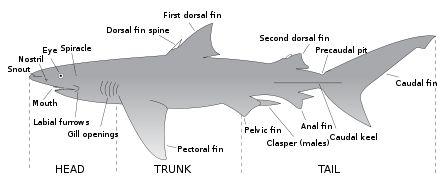
Sharks are ancient, complex and fascinating creatures that have been around in one form or another for more than 420 million years.

Since that time, sharks have diversified into 440 species, ranging in size from the small dwarf lanternshark, Etmopterus perryi, a deep sea species of only 17 centimetres (6.7 in) in length, to the whale shark, Rhincodon typus, the largest fish, which reaches approximately 12 metres (39 ft 4 in) and which feeds only on plankton, squid, and small fish by filter feeding. Sharks are found in all seas and are common down to depths of 2,000 metres (6,600 ft). They generally do not live in freshwater, with a few exceptions such as the bull shark and the river shark which can live both in seawater and freshwater. They breathe through five to seven gill slits. Sharks have a covering of dermal denticles that protects their skin from damage and parasites, and improves their fluid dynamics so the shark can move faster. They have several sets of replaceable teeth.

Well-known species such as the great white shark, tiger shark, blue shark, mako shark, and the hammerhead are apex predators, at the top of the underwater food chain. Their extraordinary skills as predators fascinate and frighten humans, even as their survival is under serious threat from fishing and other human activities.

That serious threat amounts to an estimated 100 MILLION sharks killed every year by people, many just for their fins.

That, too, is tragic.

Read Full Post »

Adventureland for spirit development

Here’s a scenario to ponder …

Say you’re hanging around your garden when suddenly a group of youths enter uninvited and begin acting like they own the place and you’re the intruder. What do you do?

Let’s make it clearer …

Your garden is in a remote area that requires a great deal of effort to reach, therefore visitors are very rare. Not only is this where you hang, it also provides all your food and shelter and needs constant vigilance as life is very difficult, resources spare, and defending what you have is the only chance of survival for you and your family. Historically, trespassers create havoc, steal what little food can be found and leave a mess.

So … do you welcome this surprise visit? Do you greet the interlopers with open arms and a comfy cushion, then go hide in your room so as not to annoy them with your presence?

If you happen to be a polar bear whose garden is the frozen north of Norway, you might not.

As today’s news shows, hospitality may be lacking, and the cost of a less-than-warm welcome is high.

Four victims of an Arctic polar bear attack that left a 17-year-old British boy dead are recovering, according to the UK’s ambassador to Norway.

Jane Owen, who visited the survivors in hospital, said they were talking and responding well to treatment.

Horatio Chapple, 17, from Wiltshire, was killed during a British Schools Exploring Society trip near a glacier on the Norwegian island of Spitsbergen.

The four who were hurt – two severely – included two leaders of the trip.

While some of the uninvited are recovering, the bear, of course, is dead.

Yes, I feel sorry for the dead kid, for his family, for those wounded, and find the whole situation tragic, but I’m also sorry for the bear, for its family, and can’t help but be more than a bit pissed off about the idea that an experience for humans too often comes as the cost of life for the creatures who inhabit the small spaces left available.

Contrary to popular thought, the world is not Disneyland and not everything on the planet needs to include people, even when they can afford the E Ticket.

Lars Erik Alfheim, vice-governor of Svalbard, said polar bears were common in the area, adding that they are “extremely dangerous” and can “attack without any notice”.

Mr Alfheim said there was no policy to ban travelling to the islands, but he added it was a wild environment and there were “a number of precautions that one needs to take when travelling here”.

And some of those “precautions” just might include being ready to kiss your ass goodbye if the locals take issue with your presence. Seems appropriate prep for a group who, ” … organises scientific expeditions to remote areas to develop teamwork and a spirit of adventure.”

Where humans and polar bears cross, bears lose, and lose big time:

Between 1980 and 1985 in Alaska, there was only one recorded injury caused by a polar bear, and no deaths

Over a 15-year period in Svalbard, Norway, other researchers documented polar bears killing one person and injuring three others. At least 46 polar bears were killed by people in the same time frame

In a 20-year period in Canada, six human deaths and 14 injuries were attributed to polar bears. During the same period, 251 bears were killed by people “in defence of life and property”

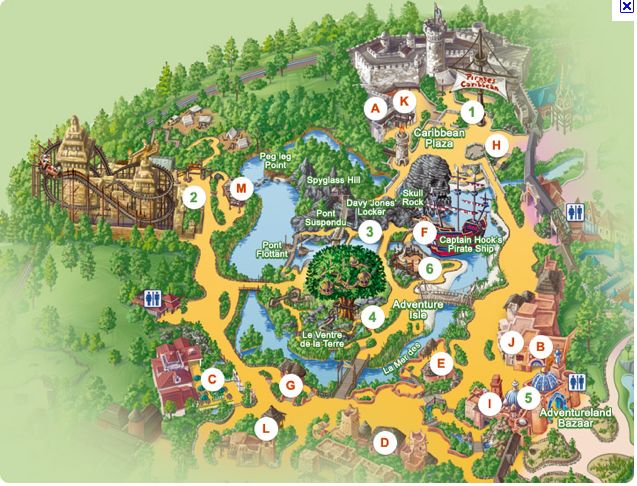
The spirit of a bear dead in the cause of a “spirit of adventure” makes no sense to me, and I can’t help but think teamwork could have been just as easily developed through a scavenger hunt on the Jungle Cruise. After all, it is in Adventureland.

Read Full Post »

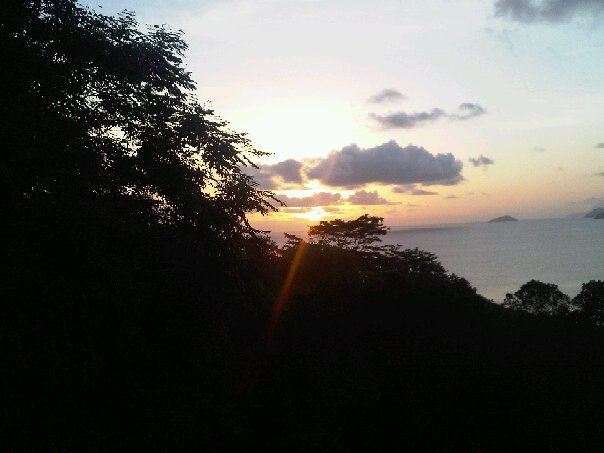
Tonight's sunset.

I think of my son often, and on evenings alone on the veranda watching the sunset he comes to mind in a way that always makes me smile.

The opening line of one of Jaren’s songs, “Swedish Nutball”, resonates as the sun sinks way too fast into the western sky.

I can feel the rotation of the earth …

I pretty much stop right there, as the rest of the lyrics aren’t exactly conducive to contemplating a lovely end to a day, but there is no doubt I do … feel the rotation of the earth.

Those who’ve never seen the face of Sol plunge at speed into that end of the ocean called Horizon near the Equator are missing one of our planet’s best thrill rides.

From the first kiss of sun to sea to the last wink of brightness over Horizon’s lip all of about 4 minutes pass … the sucker drops like a stone, so fast there is no question or quibbling over just how fast this globe we’re stuck to spins. Whooooooosh!

I own a vast amount of E tickets for this ride and try not to miss it as it comes around almost exactly every twenty-four hours, year in and year out. Being four degrees south of the North/South dividing line, the time varies by no more than a few minutes. Rather than longer days and shorter nights, or vice versa, we in the middle just see the sunset swing from one area of ocean to another, then back over the course of the year. (Google “Declination” if you’re interested, as for some reason the link won’t post.)

Most days I sit and watch, either a cup of tea or glass of wine at hand, but sometimes I do choose to stand for the event. Staring at our star as it does its dip, the beautifully illustrated awareness of how bloody fast this planet spins, can almost make me dizzy.

I live on the west coast of Mahé, a situation I love since it gives me this drama rather than the early morning show of the sun doing his impression of a Pop-Tart emerging from a toaster.

I tend to avoid the bugger as much as possible during that chariot ride it takes across the sky, seeing as how fried is not my best look, but when I see him heading toward the high dive to prepare for the plunge I will drop what I’m doing to watch the form, the style and the amazing ovation the sky and clouds give once he’s gone and the way that echos across the ocean.

That the show is all mine is special, but sharing the ride makes it even better.

Here’s Jaren NOT singing about sunsets …

And, yes, what I’m thinking now, he thought of first.

Read Full Post »

My friend Paul Sandstone over at Café Philos has a thread going now that ties in … a bit … with that World Ends Next Saturday nonsense I wrote about a couple of days ago.

Beginning with the the question, “Belief in God is Natural?”, Paul sites early reports on a Cognition, religion and Theology project at Oxford, and carries on from there with what I consider appropriate skepticism.

There are, at this hour, a handful of early reports that the Centre for Anthropology and Mind, which is associated with the prestigious University of Oxford, has concluded its Cognition, Religion and Theology Project — and that the Project has found it’s natural to believe in God.

But I doubt those reports are true. I cannot be certain and this in only a hunch — but it seems like the early reports have misinterpreted the Project’s findings.

The reports are saying such things as, “Human beings have natural tendencies to believe in God…“, and, “Religion comes naturally, even instinctively, to human beings…“, and, “Holding religious beliefs may be an intrinsically human characteristic…“.

Curiosity drove me to dig into the roots of the Oxford study which revealed it is funded by the John Templeton Foundation, an organization whose slogan is “Supporting Science — Investigating the big questions”.

Okay.

So, who was this Templeton dude? Seems an apt question, since getting an idea of the roots of what are considered “the big questions” may have a lot to do with whatever answers come out of the project.

Well … turns out Mr. Templeton just may have had an agenda when he set up his foundation.

He was a lifelong member of the Presbyterian Church. He served as an elder of the First Presbyterian Church of Englewood (NJ). He was a trustee on the board of Princeton Theological Seminary, the largest Presbyterian seminary, for 42 years and served as its chair for 12 years.

Meanwhile … back at Café Philos …

Now, let’s return to the early reports of the Project’s findings. When those reports say things like, “Human beings have natural tendencies to believe in God…”, they might be subtly misinterpreting the findings. That is, I would not at all be surprised if the Project found a natural human tendency to see agency behind events. But, for a number of reasons, I would be greatly surprised if the Project actually found a natural human tendency to see God behind events. Or even a natural human tendency to see any deity — let alone the deity that gets capitalize as “God” — behind events.

Paul goes on to make many valid points and interesting observations on humans, religion and gods of all shapes and sizes, which brought me to thoughts about apes. (Go figure … )

In the world of brilliant science and big questions, I have a few heroes, one being Frans de Waal, professor of Primate Behavior at Emory University and all-around smart guy.

Dr. de Waal was recently interviewed by a publication called “Religion Dispatches”, during which the subject of religion was raised … or religion as a moral dictate, guidebook, whatever.

Dr. de Waal’s take differs from, say, that of well known atheist … and smart guy … Richard Dawkins … another Paul refers to at the café … addressing the “big question” of tending toward religion as an offshoot of an evolutionary mandate toward compassion. (Waters that have been considerably muddied by what calls itself religion.)

Regarding Dawkins:

Atheists—some of them, at least—have talked themselves into a corner and they don’t know how to get out of it, because we need to find a way of explaining where morality comes from. I think the way to do that is to return to Darwin. Darwin tried to place morality within human evolution. And that’s what I’m trying to do, at least with my primate studies. I’m trying to say, look at the behavior of other primates—there are enough indications that they have what Darwin would call the social instincts needed to get to morality. They don’t exactly have it, but they’re close enough for me to see that there’s a continuity. I think that’s the way out of the dilemma. Talking about whether God exists or not just really doesn’t do any good for that problem.

Exactly.

A study at Oxford may come up with all sorts of illustrations of why humans believe in god, subscribe to religions, drink the Kool-aid, but unless some redefining is done when it comes to either what is god or what is human or what counts where how, what good does it do, and what does it mean?

Frans de Waal:

Where everything started for me was maternal care. It’s advantageous for female mammals to be sensitive to the mood states of their offspring, so they react when their offspring are distressed or in danger. That also explains why empathy is more developed in females than males in many species, including humans. From there it spread to other areas of social life. It’s contagious: if you have a cooperative society, you need to be concerned about the well-being of those you depend on.

If I live in a society where I depend on others, I need to be concerned if those others are doing well, and that’s where empathy and altruism come in. It’s also why we think you find empathy in all mammalian species. It’s not limited to humans, and it’s not limited to primates. It’s probably universal in mammals.

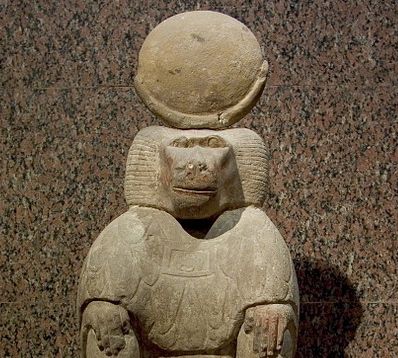
It seems if there is A God guiding Earthlings toward altruism through whatever means, it might be hairy. After all, there were Monkey Gods B.C..

Do we need them, though? Until a chimp waves from a balcony in Rome, I’m thinking … not …

Read Full Post »

During a long and pleasant conversation with Tom yesterday, we covered a bit of the territory involving the latest palaver over the … dumb da dumb doomend of the world, which according to some nut case in Oakland should be rolling around a week from Saturday.

May 21, 2011, is the latest attempt to get a jump on Judgment Day, courtesy of Oakland, Calif.-based Family Radio, a nonprofit evangelical Christian group.

Apparently, this particular flavor of nut has cracked before, but this time is really sure.

Family Radio, whose president, Harold Camping, predicted the End of Days before: Sept. 6, 1994. Camping had been “thrown off a correct calculation because of some verses in Matthew 24,” a company spokesman told ABC News this month.

The Christian radio broadcaster is apparently more confident this time around, spending big bucks on 5,000 billboards, posters, fliers and digital bus displays across the country.

And why not? Spend, spend and spend some more, I say, as what the hell else would one do on the last days?

Really. What?

Say the end really is nigh, there’s a week or a month or a year left before the planet explodes, implodes, offloads … whatever … and we somehow know this to be fact.

What?

What do we do differently?

Okay, we spend time with our loved ones, touch all the bases that need touching, convey all the emotions as best we can. Depending on the time allowed, perhaps we watch the sunset from a pyramid or ride to the top of the Eiffel Tower or swim the English Channel or otherwise check off bucket-list items.

Some might choose to get in all the get-backs they’ve been venomizing over for years. but the idea of taking an enemy out loses impact when we’re all in for it, dunnit? Why do some asshole the favor of an early checkout?

And there’s the point … we ARE all in for it. Sure, probably not at the same time under the same circumstances in the same conflagration or whatever, but the fact o’ the matter is, none of us get out of this alive so we might as well live as if we’ll die someday, somehow, somewhere.

That, of course, is hardly the point of the predictors of pending extinction, however, and maybe … just maybe … they’ve got the better handle on the big picture: End of the World = money in the bank.

Those who buy into the idea might very well run up their credit cards in what they are convinced is a “live for today” frenzy, but there’s hell to pay if they’ve been sold a bill of goods that doesn’t deliver.

For some, though, it delivers well enough …

Edgar Whisenant didn’t get it right the first time, either, when he predicted a mid-September 1988 Rapture, even publishing the books “88 Reasons Why the Rapture Will Be in 1988” and “On Borrowed Time.” No Apocalypse, no problem. The former NASA engineer simply pushed his predictions off to three subsequent years and wrote books along the way, none of which reportedly sold as well as the first two.

Interestingly, there’s no little advice on stuff you should have on hand to … and this I so don’t get … survive the end of the world.

Here’s just one list:

# Canned food something that does not need refrigeration
# Canned meats, spam , chicken, tuna etc you need at least 3 ounces of protein per person per day.
# Water can be stored in the 2 ½ gallon containers with the pour spout which are sturdy and easily stackable. Other sources of emergency water are discussed in the water section.
# Blankets should be available for all
# Water filter Brita or pump type
# Sugar cubes for energy, breakfast bars
# Small grill , propane barbeque or camping grill ( power is likely to be out)
# Cash for purchases if the power is out using small bills because change may not be possible.
# Parachute cord 100ft 550 pound test
# Duct tape one roll to seal around doors and window, tape bags together for emergency shelter or rain gear, and general mending.
# Needles and thread just sturdy thread clothes will need to be mended and occasionly a cut will need to be sewn shut as well
# Survival manual one that has a lot of pictures and information in it several are recommended on this site
# Plastic tarps with grommets at least 2 of 10 ft x 10ft each.
# Plastic coated playing cards
# Battery operated radio preferably crank type rechargeable and two changes of batteries
# Dishwashing soap and clean dish towels 2 or paper towels water can be scarce
# Manual can opener either the ecko hand crank type or the smaller survival type
# Trash bags 30 gallon or larger two for each person with twist ties. They can be used as emergency ponchos, trash bags, emergency toilets ( the plumbing may not work)
# Buy a 3 gallon paint bucket, one cheap toilet seat $5 and use the seat on the bucket and deodorise with aqua chem, an RV tank sanitizer to control the smell. Otherwise twist tie the bag closed it will smell bad in a confined area.
# Some sturdy dishes metal plates work fine and can be found at camping stores. A family sized mess kit will have pots plates and cups inside along with some silverware usually but check it.
# One or more really good flashlights. The new LED lights use a lot less power and last longer than regular bulbs.
# Bug repellent larger size since bugs will come in out of the rain as well
# General medications like aspirin ibuprophen, pepto bismol, mouthwash,
# Deodorant you may be living cramped for quite a while and a couple of washcloths and towels.
# Air matteresses are good but blankets and bedding are a must for sleeping.
# Candles the power is likely to be out a long time and it gets real dark without it.
# Box of wooden matches in plastic with the striker so they do not get wet
# Butane lighter at least one more is better one of the long ones to light the candles and stoves
# Coleman lantern and Coleman stove
# Two gallons of the liquid fuel they are interchangeable and it can be used to start a barbeque pit or wood fire later if the wood is wet.
# Prescription medications at least enough for two weeks lots of times you can get a 30 day supply for travel etc and just rotate it out to keep it fresh.
# Towels and wash cloths with a bar of soap
# Diapers and extra trash bags if you have infant children any lotions or powders you may need and dry or canned formula.
# Several changes of clothing which are comfortable and right for the season
# Tooth paste and brushes
# A portable toilet seat and extra 20 gallon size trash bags with wire ties for your shelter if indoors.
# Handy wipes or baby wipes, water may make cleaning up difficult.
# Sanitary napkins for any women likely.

Well, that could push the edges of the credit envelope, but if the 22 of May dawns there’s always next year … Yikes! 2012! … to fall back on if MasterCard comes a knocking.

Think I might just put together a series of eBooks on fun stuff to do in those last 48 hours of Earth …

Amorous Armageddon: End of the World Sex That’s Out of This World ($9.99)

Ashes, Ashes All Fall Down: Entertaining Kids In the Final Hours ($9.99)

Sudden Death: Fun Games for Judgment Day($9.99)

… and an iPhone app that will send and manage goodbyes, last wishes, apologies and excuses in 4,000 languages. ($1.99)

Better get on this before the world ends, or I do …

Read Full Post »

If you’ll give me a minute or two, I’m about to go off on yet another tangent about time, all in my good time, of course.

The fact that my time is very likely different from your time is the grabber here, and not just different now, but variable depending on your circumstances and mine.

WTF is this woman on about now? (Yes, I can hear you … )

It’s this from the New Yorker that gave me pause … and led my paws to the keyboard of my poor, dying Mac … on time spent and discussed with David Eagleman, one of the more interesting people around these days, a thirty-nine-year-old assistant professor of neuroscience at Baylor College of Medicine in Houston.

He is a man obsessed by time. As the head of a lab at Baylor, Eagleman has spent the past decade tracing the neural and psychological circuitry of the brain’s biological clocks. He has had the good fortune to arrive in his field at the same time as fMRI scanners, which allow neuroscientists to observe the brain at work, in the act of thinking. But his best results have often come through more inventive means: video games, optical illusions, physical challenges. Eagleman has a talent for testing the untestable, for taking seemingly sophomoric notions and using them to nail down the slippery stuff of consciousness. “There are an infinite number of boring things to do in science,” he told me. “But we live these short life spans. Why not do the thing that’s the coolest thing in the world to do?”

As head of a department that has most showing up wearing watches that haven’t worked for ages, Eagleman has a take on time I’d like to wrap my head around, but the second I feel I’m grasping an idea both the thought and the second are beyond me. The concept, for example, that time is a dimension, or that which asks, ” … how much of what we perceive exists outside of us and how much is a product of our minds?”

According to the guy at Baylor “brain time” … that’s our reality, not microseconds or millennia, since we don’t actually get either of those at any level that’s helpful … is subjective:

“Try this exercise,” he suggests in a recent essay. “Put this book down and go look in a mirror. Now move your eyes back and forth, so that you’re looking at your left eye, then at your right eye, then at your left eye again. When your eyes shift from one position to the other, they take time to move and land on the other location. But here’s the kicker: you never see your eyes move.” There’s no evidence of any gaps in your perception—no darkened stretches like bits of blank film—yet much of what you see has been edited out. Your brain has taken a complicated scene of eyes darting back and forth and recut it as a simple one: your eyes stare straight ahead. Where did the missing moments go?

Rather like the fact that one’s nose is always in the vision path but edited out of perceptions, it is true that we miss an awful lot of what is right in front of us. There are, of course, reasons our brains leave out many salient details, but it’s important we realize this happens, and happens all the time.

All the time being non-constant, as it is, some of the time shifts things around a good deal … like when you’re scared shitless and time slows in that aggravating way that allows perception of every little article of terror and laminates all.

I can still distinctly recall every detail of a car accident I was in when I was 14 … the images out the window as single frames of spinning world, the sound of metal under force, the smell of black rubber smoking across tarmac, the realization that my head was about to hit safety glass and the hope that I wouldn’t end up a bloody mess and that my father wouldn’t kill me for being in a situation I was so not supposed to have set myself up for. The whole experience took less than a few seconds, but I could easily manage a couple of pages of description that would feel about the same duration if read … slowly.

Eagleman studies this.

In one story, a man is thrown off his motorcycle after colliding with a car. As he’s sliding across the road, perhaps to his death, he hears his helmet bouncing against the asphalt. The sound has a catchy rhythm, he thinks, and he finds himself composing a little ditty to it in his head.

“Time is this rubbery thing,” Eagleman said. “It stretches out when you really turn your brain resources on, and when you say, ‘Oh, I got this, everything is as expected,’ it shrinks up.”

Being a wimp when it comes to things like jumping off high places, this goes far to explain what it is about that sort of nutso stuff appeals. Although the idea of having the sensations seem to last longer is nothing I’d vote for, I can almost understand why others would like that.

One of the seats of emotion and memory in the brain is the amygdala, he explained. When something threatens your life, this area seems to kick into overdrive, recording every last detail of the experience. The more detailed the memory, the longer the moment seems to last. “This explains why we think that time speeds up when we grow older,” Eagleman said—why childhood summers seem to go on forever, while old age slips by while we’re dozing. The more familiar the world becomes, the less information your brain writes down, and the more quickly time seems to pass.

There is more to this, but I seem to have run out of time. I may need to find something to scare me to slow things down a bit, but for now I’ll near the edge by trying to post this blog as my Mac heats up and meltdown threatens.

Read Full Post »

cognition
kägˈni sh ən
noun
the mental action or process of acquiring knowledge and understanding through thought, experience, and the senses.

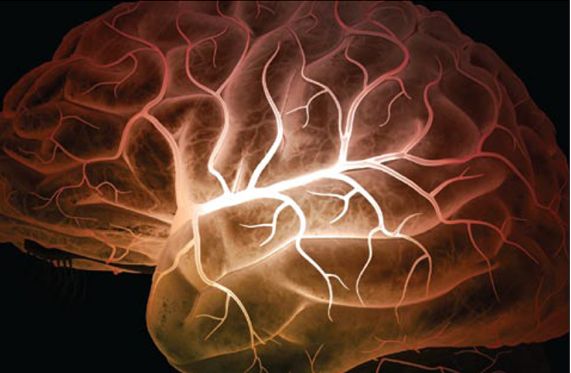
It seems science is well on the way to proving that, yes indeed, thoughts actually are things, but not in ways many like to consider them to be. Creative visualization for example, the process of wishful thinking that is said to have the power to produce desired results, could now be touted as little more than a molecule doing the backstroke in chemical soup.

It’s this article titled “Evolution of cognition might be down to brain chemistry”, in New Scientist that’s stirring the chowder this morning:

“Brain metabolism probably played an important role in evolution of human cognition,” Khaitovich says, “and one of the potentially most important changes was in glutamate metabolism.”

Glutamate is the “brain’s main energy metabolite”, he says. “And as the main excitatory neurotransmitter it is responsible for virtually every possible cognitive task, including learning and memory.”

Apparently glutamate is not thought, but rather the chemical that “that energises brain cells and ferries messages between them” — the grease on the wheels, so to speak — but there’s no doubt a search is on for the chemical … a combo of chems, perhaps tweaked with a jolt of electro-juice? … that is ideas and concepts.

How much of who and what we are is simple biology — not “simple” in an it’s-easy-to-grasp way, but will someday be a cinch to quantify — is a question I ponder often these days.

David Kingsley of Stanford University in California was not involved in the study, but his team recently revealed genetic differences accounting for humans’ larger brains. “It’s clear that humans have accumulated some interesting differences in the thinking regions of the brain,” he says. “It will be interesting to see how such differences arise from changes in our genomes and those of our closest relatives.”

Are we nothing more than a link on an evolutionary chain with reactions dictated by a dollop of this and a drip of that? Do we fall in love because the smell of someone trips a switch that floods our brain with a feel-good bisque? Is art created out primal dictates to pass along DNA? Are dreams just random spurts in some electro-chemical tango that hears sleep as a beat? Is thirst for knowledge simply an inner empty road we’re primed to navigate for the heck of it?

If this is all we are, biological beings at the mercy of meat and related juice, then … well … the point would be … ?

As meat au jus with glutamate, and whatever else has yet to be identified … My Self Glutamate sounds tenderizing … perhaps all these thought things are merely distractions; jingling keys that draw attention away from the tedious process of living only to eat, shit and reproduce, the true mandates if there is nothing more to us.

What we are has longed seemed to me a waste of evolutionary energy, however. If a hummingbird developed speedy wings and a long beak to fit a niche … if mandrills grew glorious asses because dense jungle habitat favored those who could keep track of others … if hibernation preserved life in cold climates (and, yes, all that did happen) … then why, oh why, did humans become so over-engineered in the thoughts/dreams/creation department instead of growing thicker hair and perfecting the art of arboreal living?

Why must the chemicals in my head put words into verse? What is the evolutionary benefit in concertos and cubism? Where does a broken heart fit into the picture? And why is there any picture at all?

If all this thought stuff is just a series of shiny objects grabbing our attention for a while as we plod, perhaps they’re what keep us plodding. Maybe the chemical for ego is the difference between offing ourselves out of sheer boredom and sticking around long enough to eat, shit and reproduce.

Given the state of the world, however, that prospect seems an evolutionary shot that backfired since just about everything else on our planet would be better off were we not so wrapped up in what we think are our thoughts, and may very well result in us doing ourselves in.

Awash in MSG as I am at the moment, I can’t help but go back to the combo of chemicals that has me asking again:

And the point would be … ?

Read Full Post »

A thought pondered publicly on my facebook page yesterday:

Hard to decide which is worse today … mother nature or human nature …

Since my thoughts were bouncing around between the hell in Japan going on now, the mess in Libya and the safety of friends in Bahrain … and feeling bloody helpless on all fronts … it seemed a valid point to focus upon.

Responses provide perspectives, as always …

Claire: nah – mother nature does not know spite – revenge – greed. She is an equal opportunities destroyer. Human nature picks off the weak, the frial, the least able to defend themselves.

Wow – that was a bleak thought!!

Bill: Gotta vote for human nature. Mother Nature is great. As Claire pointed out, she is equal opportunity. Do something stupid you get what you probably deserve. Act responsibly, sustainable and with the flow instead of against it and you’re golden. Mostly.

Yes, it does boil down to a case of Nature vs Nuture Murder.

There’s so often very little kind in mankind, as today’s world shows only too well. At a time when thousands upon thousands of fellow humans are suffering the consequences of living on our natural world, the best other thousands can come up with is beating the crap out of their neighbors.

Can we even imagine a world where dealing with the mindless harshness of our planet would be a group effort of global dimensions?

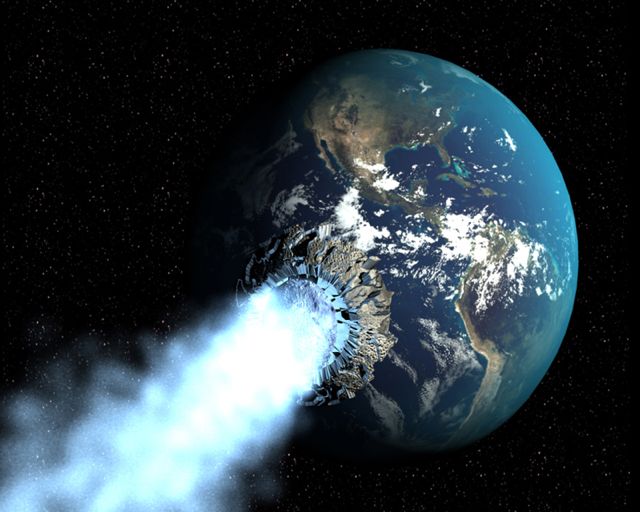
We all know shit happens … quakes, tsunamis, volcanic eruptions, fires, floods, droughts, avalanches, polar shifts, incoming asteroids, solar flares, and on and on and on … and that we are frail, furless creatures at the mercy of said shit. Doesn’t it seem that should be enough to bond us together as a species?

If resources were poured into hedging bets against the forces of nature instead of building weapons stores, our response to catastrophic events would look nothing like it does today. We’d live in safer, stronger places, have plenty of food and water set aside for emergencies and take care of each other, our children, and our futures.

After all, are we not sentient beings? Don’t we have the intelligence to see big pictures, understand consequences and make plans?

How can it happen that, given the instability and unpredictability of the rock we spin through space upon, the total stupidity of placing enough importance on ever-so-slight differences of opinion to have us killing each other makes any sense at all to anyone?

Sure, there were times when Japan was as if another planet and what happened there impacted no one else, when some asshole despot could wipe out a good percentage of his population and nobody would be the wiser. That, however, is no longer the world we live in, and we must be really fucking stupid if we think what happens over there can’t be biting our own personal ass within days or hours or minutes.

And maybe that is the answer: We ARE that fucking stupid.

We’ll continue as humans to be perpetually taken unawares when shit happens, to abuse each other in any way seems fit at any given moment, to foul our own dens and kill our own kind over things that don’t matter in the slightest in any big picture. We’ll learn little from disasters, continue making the same mistakes over and over again and suffer the consequences while shocked by events.

Yep. We are THAT fucking stupid.

Read Full Post »

On his way to the Theatre of Pompey (where he would be assassinated), Caesar saw a seer who had foretold that harm would come to him not later than the Ides of March. Caesar joked, “Well, the Ides of March have come”, to which the seer replied “Ay, they have come, but they are not gone.”

Well, we know how that turned out …

(And if somehow you don’t, read some history, or some Shakespeare and get with the program.)

Caesar:
Who is it in the press that calls on me?
I hear a tongue shriller than all the music
Cry “Caesar!” Speak, Caesar is turn’d to hear.

Soothsayer:
Beware the ides of March.

Caesar:
What man is that?

Brutus:
A soothsayer bids you beware the ides of March.

Yes, today is the Ides of March … the 15th … and given all going on, a bit of bewaring sounds like a plan.

Between recent revelations on personal betrayals and news updates from the wider world, I’m reeling, and suggesting those with an option to spend a day under the covers with a diverting novel should bloody well do exactly that.

While there, some counting of blessings might happen, too, since if you have covers to hide under you’re better off than thousands of others today. Sometimes it is all about perspective.

Anyone whose Ides do NOT include impending assassination, mass destruction, incoming artillery, hourly earthquakes and a forced hunt for food, water, shelter and loved ones should actually be feeling pretty fucking lucky about now.

Of course, that’s no need to push it. What happens next is anybody’s guess, and assuming you’re cool because you don’t happen to be in Japan or Libya or Ivory Coast or Bahrain … pick a mess, any mess … could be an assumption based on quicksand.

It is crystal clear today that we could all easily be within hours of anything from getting hit by a bus to a nuclear event with global consequences, and as depressing as that though may be, it should also set the wake-up call bell ringing.

What we have is what we have, and when we have it is now. If it sucks, we deal with it it. If it’s great, we damned well should appreciate and enjoy.

Spending the little time we have on the Woulda, Shoulda, Coulda cha-cha-cha of the past while hoping for the Tomorrow Tango to start very possibly could be last thing we do.

Yes, the Ides of March have come, and those of us still standing can and should take comfort, but as the seer said, “Ay, they have come, but they are not gone.”

It ain’t over ’til it’s over.

Read Full Post »

« Newer Posts - Older Posts »