Feeds:
Posts
Comments

Bill Tabb with this comment:

That first link…it’s the butterfly effect. Or perhaps it’s Heisenberg. Either way, you cannot use the energy without somehow affecting it. The wind blows, the turbine turns, the turbulence created causes a drop of rain to fall in Mali, a seed germinates……

And lets keep religion out of it. That just throws a spanner in the works.

As for Oxford, let us not forget that while Newton made incredible contributions to our knowledge of how the solar system and the universe works and why stuff falls down, he was also one of the preeminent alchemists of his day.

You now owe me a letter, Bill!

I started writing this blog in an effort to build a place I could vent all that didn’t fit on the professional sites I wrote for and as a way to keep in touch before facebook made that so easy. Through it I have met the most wonderful people, reconnected with many I’d worried I’d lost and learned much from all.

To say I’m grateful for every click and comment is understating how blessed I am, but I am truly at a loss when it comes to conveying my thankfulness.

I will occasionally read back through posts, relive moments, and each time I do I realize how much sharing small bits of my world has brought me in return. In joy and grief, in rage and in praise, through celebrations and solitude, I have not been alone.

Yes, I live on this tiny island in the middle of a huge sea, but by connecting as I can … and having you connect back … I feel the threads that bind me to the greater fabric, and I love the tug that comes with being part of the weave.

Thank you.

Thank you.

Paradise Preoccupied is very close to receiving its 4,000th comment. Wow.

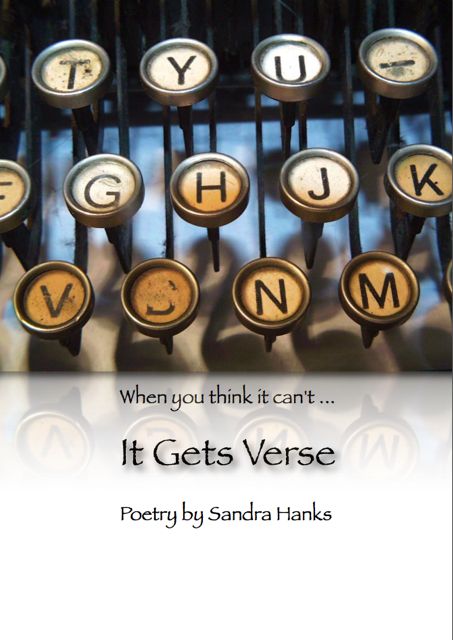
In appreciation, and because I find it fun, whoever posts number 4,000 will get a free copy of “It Gets Verse”.

If you’ve already purchased the eBook … well … hm … I’ll write a story just for you.

Being I’m neither new nor a scientist, it could well be that I’m spending too much time reading New Scientist these days. I know the story about wind farms suggesting wind and waves are not renewable resources confused the shit out of me, and if anyone bothering to click on that link and read could please explain the content I’d be grateful.

There’s no doubt I like a challenge and trying to wrap my head around sciency stuff is a pastime I enjoy whether that be grasping toward black holes in efforts to understand dense gravity or trying to incorporate an inner clock to include time travel.

Something I did not expect to run across in my daily perusal of Stuff Science, however, was this article on religion.

What form would the ideal religion take? Some might argue that instead of redesigning religion, we should get rid of it. But it is good for some things: religious people are happier and healthier, and religion offers community. Besides, secularism has passed its zenith, according to Jon Lanman, who studies atheism at the University of Oxford. In a globalised world, he says, migrations and economic instability breed fear, and when people’s values feel under threat, religion thrives.

For starters, the unsubstantiated “information” contained in the piece feels decidedly un-sciency for New Science with few links and no backup. Attribution given to Mr. Lanman … who “studies” atheism … doesn’t cover the postulation that “religious people are happier and healthier and religion offers community”, so is therefor “good”.

A bowling league offers community fercryinoutloud, and manages to do so without prompting any genocides I’ve heard of. As for the “happier and healthier” … well, someone’s obviously never seen the impact of Catholic guilt.

I do get that this article is fluff even though quoted sources apparently attend Oxford … ooooooh! …

Today’s religions come in four flavours, according to Harvey Whitehouse, also at Oxford. First, the “sacred party”, such as incense burning, bell ringing and celestial choral music in Catholicism. Second, “therapy”: for example, the practices of healing and casting out devils among some evangelical Christians. Third, “mystical quest”, such as the Buddhist quest for nirvana. And finally, “school”: detailed study of the Koran in Islam or reading the Torah in Judaism.

Okay … a “sacred party” where all but a few are relegated to the sidelines, “therapy” that encourages people to grow even wackier, a “mystical quest” that could just as easily mean a search for Atlantis, and “school” where the only study is some really old books.

On what level does that make any sense, except perhaps to an undergrad needing to fill pages? The fact that the piece gets even more graphic lets down the side even more discouragingly:

Numerous festivals, holidays and rituals would keep followers hooked. “Rites of terror” such as body mutilation are out – although they bind people together very intensely, they are not usually compatible with world religions (New Scientist, 19 December 2009, p 62). Still, highly rousing, traumatic rituals might still feature as initiation ceremonies, because people tend to be more committed to a religion and tolerant of its failings after paying a high price for entry.

The everyday rituals will focus on rhythmic dancing and chanting to stimulate the release of endorphins, which Robin Dunbar, also at Oxford, says are key to social cohesion. To keep people coming back, he also prescribes “some myths that break the laws of physics, but not too much”, and no extreme mysticism, as it tends to lead to schisms.

So, body mutilation is out, but dancing and chanting lead to social cohesion? Can’t help but wonder what’s going on at parties at Oxford these days, but whatever is happening seems to have the effect of leading attendees to assume their thoughts have more merit than they do.

With many gods and great tolerance of idiosyncratic local practices, the new religion will be highly adaptable to the needs of different congregations without losing its unifying identity. The religion will also emphasise worldly affairs – it would promote the use of contraceptives and small families and be big on environmental issues, philanthropy, pacifism and cooperation.

Yeah … that’ll do it.

Of course, there are those fiddly bits concerning money and power that root religions before they flower, tax-free status and a whole bunch of non-negotiable rules, but if you attend Oxford and get your papers published in New Scientist, coming up with “Utopianity” must seem an accomplishment.

The thought that humans need a new religion is, in itself, an excuse not to have to think much further than the end of the block … upon which stands a church most likely … as developing more effective ways of fostering the human in humanity would take a lot more creativity.

Since science should be all about creativity, I will be sending a link to this post along with my subscription cancellation.

(Apologies: this post was slapped together during infrequent minutes of Internet access and while babying my computer. Conducive to good writing? Not so much …)

cognition
kägˈni sh ən
noun
the mental action or process of acquiring knowledge and understanding through thought, experience, and the senses.

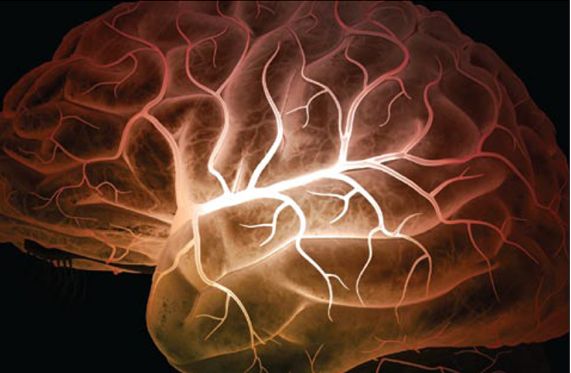
It seems science is well on the way to proving that, yes indeed, thoughts actually are things, but not in ways many like to consider them to be. Creative visualization for example, the process of wishful thinking that is said to have the power to produce desired results, could now be touted as little more than a molecule doing the backstroke in chemical soup.

It’s this article titled “Evolution of cognition might be down to brain chemistry”, in New Scientist that’s stirring the chowder this morning:

“Brain metabolism probably played an important role in evolution of human cognition,” Khaitovich says, “and one of the potentially most important changes was in glutamate metabolism.”

Glutamate is the “brain’s main energy metabolite”, he says. “And as the main excitatory neurotransmitter it is responsible for virtually every possible cognitive task, including learning and memory.”

Apparently glutamate is not thought, but rather the chemical that “that energises brain cells and ferries messages between them” — the grease on the wheels, so to speak — but there’s no doubt a search is on for the chemical … a combo of chems, perhaps tweaked with a jolt of electro-juice? … that is ideas and concepts.

How much of who and what we are is simple biology — not “simple” in an it’s-easy-to-grasp way, but will someday be a cinch to quantify — is a question I ponder often these days.

David Kingsley of Stanford University in California was not involved in the study, but his team recently revealed genetic differences accounting for humans’ larger brains. “It’s clear that humans have accumulated some interesting differences in the thinking regions of the brain,” he says. “It will be interesting to see how such differences arise from changes in our genomes and those of our closest relatives.”

Are we nothing more than a link on an evolutionary chain with reactions dictated by a dollop of this and a drip of that? Do we fall in love because the smell of someone trips a switch that floods our brain with a feel-good bisque? Is art created out primal dictates to pass along DNA? Are dreams just random spurts in some electro-chemical tango that hears sleep as a beat? Is thirst for knowledge simply an inner empty road we’re primed to navigate for the heck of it?

If this is all we are, biological beings at the mercy of meat and related juice, then … well … the point would be … ?

As meat au jus with glutamate, and whatever else has yet to be identified … My Self Glutamate sounds tenderizing … perhaps all these thought things are merely distractions; jingling keys that draw attention away from the tedious process of living only to eat, shit and reproduce, the true mandates if there is nothing more to us.

What we are has longed seemed to me a waste of evolutionary energy, however. If a hummingbird developed speedy wings and a long beak to fit a niche … if mandrills grew glorious asses because dense jungle habitat favored those who could keep track of others … if hibernation preserved life in cold climates (and, yes, all that did happen) … then why, oh why, did humans become so over-engineered in the thoughts/dreams/creation department instead of growing thicker hair and perfecting the art of arboreal living?

Why must the chemicals in my head put words into verse? What is the evolutionary benefit in concertos and cubism? Where does a broken heart fit into the picture? And why is there any picture at all?

If all this thought stuff is just a series of shiny objects grabbing our attention for a while as we plod, perhaps they’re what keep us plodding. Maybe the chemical for ego is the difference between offing ourselves out of sheer boredom and sticking around long enough to eat, shit and reproduce.

Given the state of the world, however, that prospect seems an evolutionary shot that backfired since just about everything else on our planet would be better off were we not so wrapped up in what we think are our thoughts, and may very well result in us doing ourselves in.

Awash in MSG as I am at the moment, I can’t help but go back to the combo of chemicals that has me asking again:

And the point would be … ?

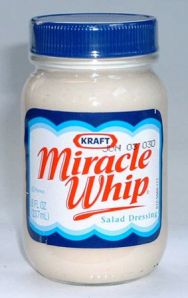
A jar of miracle ... make do

“All the tales of miracles, with which the Old and New Testament are filled, are fit only for impostors to preach and fools to believe”
~ Thomas Paine

Growing up as I did with spells of Catholicism constantly cast in my general direction, the idea of miracle cures seemed … well … reasonable for a while. The film version of St. Bernadette’s escapades at Lourdes did much to solidify images of the manifestations made possible by just enough faith to draw the attention of the Man Upstairs toward the suffering of those who jumped through the right hoops and deserved to be healed.

I was probably about ten when it dawned that such concepts pretty much left anyone unhealed in the shit pile of undeserving, a concept contrary to all those warm fuzzies created through the magic of Hollywood and the smoke and mirrors of Rome, and although I will to this day still acknowledge occasional unexplainable restorations of health and the sometimes-effective wonders of modern medicine the idea of miraculous cures seem nothing but more marketing of snake oil in various flavors for the obvious benefit of those collecting the profits.

I do understand the motivation behind the desperately ill, the hopelessly condemned; when there’s nothing left to do but grasp at straws the option can seem sensible, but since none of us get out of this alive, perhaps more than a bit futile or at most a temporary reprieve.

When a miracle can be bought at a reasonable price … a trip to France, maybe, or some set amount of hours on the knees while fingering beads X number of times … it’s a viable option for passing the time. Waiting for the magic to happen isn’t a bad way to spend that eleventh-hour, unless by doing so those last bits of life are sacrificed in the process.

When, however, attempts at intervention come in a jar labeled “Utter bollox at great cost”, the evil of canned hope becomes apparent, as evidenced in this article:

A Tanzanian pastor has asked people to stop going to his remote home for a “miracle cure” after thousands flocked there, causing chaos in the surrounding area.

Rev Ambilikile “Babu” Mwasapile, 76, says he does not want any new arrivals until after Friday 1 April, to let the crowds die down.

Local media report that about 52 people have died while waiting to see him.

A BBC reporter says the queues to see him stretch for 26km (16 miles).

Belief in magic and the powers of traditional healers are widespread in Tanzania.

Some witchdoctors say that the body parts of people with albinism are effective when making magic charms, leading to the killing of dozens of albinos in recent years.

The retired Evangelical Lutheran Church of Tanzania preacher is sick and tired of the crowds of people who are yanking loved ones out of hospitals and making the trek to his village … while dying both before and after spending time and money … as “medical experts” investigate and debate the intrinsic value of his snake oil.

Yeah, sure … this is Africa and such mumbo-jumbo is part of the culture in many areas, but it’s not the only place claptrap flies to the detriment of others.

Although Africa is presently one scene of devastation in the name of remedy, that’s only because one cornucopia of crap has been virtually wiped out in the parts of the world that insist there’s a cure in them thar hairs.

Rhino populations in Africa are facing the “worst poaching crisis for decades,” say conservationists.

Over the past three years, gangs are said to have killed more than 800 rhinos for their horns, which can fetch £22,000 per kilo on the black market.

Experts fear the rise in poaching could undermine recent efforts to stabilise black and white rhino populations.

… t is estimated that 333 rhinos were killed in South Africa alone last year, with a further 70 being shot dead so far this year.

Conservationists suspect that most of the illegally harvested rhino horn are destined for the traditional medicine markets of South-East Asia, and the growing demand and high prices are fuelling the sharp rise in poaching.

We’re not even talking hopeless desperation here, since murdering a magnificent animal seems a fair enough tradeoff for comfort:

Rhino horn is a time-honored component of traditional Chinese medicine (TCM). For thousands of years, TCM has credited rhino horn with the potency to cure an unusually wide array of maladies, from headaches to pus-filled boils–and even devil possession.

… Rhino horn has been an essential ingredient in traditional chinese medicine for centuries. An unfortunate proximity to China explains why the combined total of the three Asian rhino species (Javan, Sumatran, and greater one-horned rhino) is still smaller than Africa’s critically endangered black rhino population.

Despite China being a signatory to the Convention on International Trade in Endangered Species (CITES) and banning trade in rhinoceros horn and its derivatives in 1993, current rhino poaching levels suggest that the use of rhino horn continues unabated in traditional medicine markets.

According to Bernard Read’s 1931 translation of Li Shih-chen’s 1597 materia medica Pen Ts’ ao Kang Mu, rhino horn was prescribed for nearly everything: “To cure devil possession and keep away all evil spirits and miasmas. For gelsemium poisoning. To remove hallucinations and bewitching nightmares. Continuous administration lightens the body and makes one very robust. For typhoid, headache and feverish colds. For carbuncles and boils full of pus. For intermittent fevers with delirium. To expel fear and anxiety, to calm the liver and clear the vision. It is a sedative to the viscera, a tonic, antipyretic. It dissolves phlegm. It is an antidote to the evil miasma of hill streams. For infantile convulsions and dysentery. Ashed and taken with water to treat violent vomiting, food poisoning, and overdosage of poisonous drugs. For arthritis, melancholia, loss of the voice.”

Since rhino horn is made of the same stuff as fingernails … agglutinated hair … hiring nail biters to spit shards into a collection plate would make as much medical sense and perhaps save a species.

Of course, it seems our species … we furless bipedal wimps that we are … calculates our worth in profit-per-head, and it matters little if it’s grinding up albinos, raping child virgins or ridding the world of rhinos … tigers, bears, whatever … that generates income as long as someone can make a buck and others are so easily convinced to hand over their money for snake oil.

Perhaps there’s a way to turn this inborn stupidity to the advantage, however …

How about we try pushing the notion that powdered brain of greedy people will make one rich?

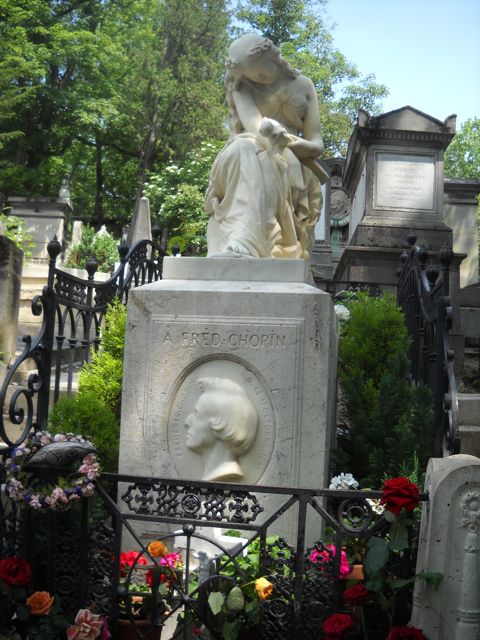
Chopin's grave: 2 June 2010

A few days ago I came across this story on the BBC about some long-lost letters from Frederic Chopin that kicked off a series of brain flares.

Six letters written by Frederic Chopin, thought to be lost in 1939, have been found and donated to a Warsaw museum dedicated to the Polish composer.

The letters, written by Chopin to his parents and sisters between 1845 and 1848, were believed lost after the outbreak of World War II.

After it emerged in 2003 that they still existed in a private collection, moves were made to secure them.

Chopin was born in Poland in 1810 but spent half of his life in France.

According to museum curator Alicja Knast, the letters were last displayed in public in Poland in 1932 and were still confirmed as being in Warsaw in 1939.

It is thought the letters went missing, like many other cultural artefacts, after the Nazis invaded Poland.

There’s a bit of family humor that came to mind immediately, as I have a step-nephew whose birth took my father in a literary direction … as was often his angle. Born to my Chinese sister, Debbie, and her Japanese husband, Dad decided the kids needed a nickname. What came to mind were a couple of James Clavell novels … Shogun and Tai-Pan, one being set in Japan, the other in China. He called the boy “Taigun”, because, as he said, “Sho-pan” wouldn’t work because he was Polish.

From there I jumped to Paris where I shot the photo you see here at the grave of the real Chopin on a day I solitarily rambled the Pére Lachaise Cemetery in the company of my son’s spirit on the first anniversary of his death … Jaren’s, not Chopin’s.

So it was the second of June last year I sat for a time at Chopin’s grave. Listening in my head to his “Nocturn”, I contemplated the accomplishments of his mere 39 years of life and, in keeping with my situation at that moment, his doomed relationship with the writer George Sand and the heartbreak that virtually ended his days as a composer … and as a man among the living.

His grave is lovely, a peaceful, perpetually flower-strewn resting place reminding all of not only the music, but also the passionate transplanted Pole amongst Parisians … his heart, by the way, rests in Poland at his wish it be removed upon his death and buried there … the complicated lover to a complicated woman.

As often is the case with artists, neither Chopin nor Sand were easy and their relationship was unconventional. She was an older woman with strong passions of her own and a long string of relationships.

“She was a thinking bosom and one who overpowered her young lovers, all Sybil — a Romantic.”
~ V.S. Pritchett

He was physically weak and needed such babying she referred to him often as her “third child” and a “beloved little corpse”.

Artistically, neither were easy:

Chopin is at the piano, quite oblivious of the fact that anyone is listening. He embarks on a sort of casual improvisation, then stops. ‘Go on, go on,’ exclaims Delacroix, ‘That’s not the end!’ ‘It’s not even a beginning. Nothing will come … nothing but reflections, shadows, shapes that won’t stay fixed. I’m trying to find the right colour, but I can’t even get the form …’ ‘You won’t find the one without the other,’ says Delacroix, ‘and both will come together.’ ‘What if I find nothing but moonlight?’ ‘Then you will have found the reflection of a reflection.’

That they lived and loved and died is history, as everything eventually becomes. Their lives were what they were, and 162 years after his death he fills me with music and sets me to pondering the bumpy, uncomfortable roads traveled and the resulting detritus of our journeys.

The news that letters have been found feels almost like a gift from that grave I visited, and I’m more than pleased that email wasn’t an option in those years between 1845 and 1848 when he wrote them.

I’ve not seen the letters, and it doesn’t matter much if I never do. Here, however, is an example of him finding the reflection of a reflection:

The strongest natures, when they are influenced, submit the most unreservedly; it is perhaps a sign of their strength.
~ Virginia Woolf

I came across this quote the other day and it’s been niggling at me ever since. Although I could rail against the idea of submission and would rarely put “strong nature” in the same thought, through the gestation process it has grown progressively more conspicuous in its sense.

It may be the weak we see as easily led down whatever primrose path might be laid at their feet, and there’s no doubt that happens. It takes only a glance toward the silly notions of religion and the fashion industry to note the queues forming in front of smoky mirrors, and the mass whiplash reaction to jingling keys is almost audible in many circles.

Like sheep to the slaughter, we’re accustomed to seeing the glazed-eyed caught in shiny headlights moving in whatever direction has been pointed, manipulated by the cheap, the easy, hardly bothering to question … rarely even forming a question … while assuming some version of free choice, perhaps even thoughtful consideration, when all the time it’s nothing more than simple manipulation that’s put them in line.

It happens en masse, as proven by the popularity of Britney Spears, muffin-top jeans on the overweight and the turnout at tent revivals (and their equivalent), but a one-by-one cherry-picked harvest happens, too, as evidenced by those in relationships so obviously made of nothing but the shifting sands of “Hey! Look over here!”.

This is, of course, not what Ms. Woolf had in mind.

Strong minds, when influenced and fully submitting can change the world. Although not all would agree, many would insist that those challenging the status quo in places like Egypt, Libya, Yemen and Syria might be strong natures influenced by circumstances into unreserved submission to a cause they find just.

It was strength that sent Jane Goodall to Tanzania forty-five years ago and her unreserved submitting to the importance of her work keeps her working today.

From Nelson Mandela to Martin Luther King, Jr. to Randy Shilts and other modern-day heroes, submission to a mission was nothing but a manifestation of great strength.

On a personal level, I’ve had some ponderings on my nature, which I consider strong, and the unreserved submissive stance I’ve taken from time to time. In my advocacy work it helps a great deal that I’ve “been influenced”, as when under attack for proposing what I know to be right I feel no need to qualify and can maintain focus for as long as it takes to get a point across.

The fact that I have paid for allowing myself to be duped into relationships, however, grates, and has had me questioning my strength … quite a bit lately … wondering if and why I can be so needy, so weak, that giving up bits of myself becomes something that feels okay.

It’s vital I acknowledge my vulnerability, step up and shake hands with the frail and insecure parts of me and go toe-to-toe with my deficiencies in dealing with loneliness, as there are lessons to be learned and still enough future left in the old girl to make avoiding any reruns a good idea, but in contemplating Virginia Woolf’s words I must also incorporate my strengths.

I’m choosing to see unreserved submission under the influence as a sign of just how strong I can be. I’m a woman of passions, and it takes balls to capitulate to those when presented with an option to run with them or away from them. Giving myself the freedom to surrender to feelings does feel braver than shutting down and living the rest of my days hunkered under a cloak self-administered anesthesia in a permanent state of numb even when the opposite ends up biting me on the ass and leaving bruises.

Yes, I face the paradox of me, but I’m a woman … strong/weak, ready to take care/needy for care of, confident/insecure, forgiving/unmercifully ruthless … and armed as such (I have two of them, thanks) I move through the days bolstered by strength and buffered by weaknesses.

Women are never stronger than when they arm themselves with their weakness. ~Marie de Vichy-Chamrond, Marquise du Deffand, Letters to Voltaire

It Gets Verse Book Review

I ntense
T ouching

G ritty
E ntertaining
T ender
S andra Hanks

V ulnerable
E ducational
R aw
S trong
E motional

Rhyme is sometimes trite
Other times just right
Then perhaps, a fright
Useful tool for the fight

I really do like it when
verse serves to inspire
another to try it, when
it lights a fire

See Amy’s solution
to sending her thoughts;
it’s a contribution
to the world of bon mots

In a swimsuit much like Mother's

There was a period of time when, as a child, I was pretty sure that Liz Taylor was my mother. No, not that I was her love child being raised in another family, but that she and my mother were one and the same.

National Velvet convinced me my mom could ride horses and should, therefore, buy me one. For reasons I completely get now, that didn’t go over so well.

Both born in 1932, my mom and Liz led somewhat parallel lives in that married-a-whole-buch-of-times-with-loads-of-drama sort of way, so even when I grew old enough to read headlines it would occasionally be confusing.

They also looked very much alike … two brunette, busty beauties skilled in grand entrances that drew the eye of every man in the room.

I distinctly recall walking down Market Street in San Francisco shortly after Butterfield 8 opened and seeing Ms. Taylor’s face looming large from posters outside cinemas and thinking, “That could be Mom.”

Of course, my mother was not a movie star, simply a suburban housewife spending her time giving me Toni home perms and sewing up pjs and playsuits for me and my brothers, but that didn’t seem … to me … to impact negatively on her glamour one bit. I can still conjure an image of her strolling into the Steinhart Aquarium in Golden Gate Park in a skin-tight black and white sheath dress, high heels and a HUGE hat as my brother and I checked out the crocodiles and all the men in the place checked out my mom.

I wasn’t allowed to see many of the films Liz starred in until I was old enough to have made the jump necessary to know the difference between the woman who’d married Richard Burton and the one who’d divorced my dad, so it took a while to catch up to the cultural assessment that had one a world famous celeb and the other just my mother, but the blend continued nonetheless.

Now Elizabeth Taylor is dead and my mom is not well. Both lived. Both aged. Both did life in the way that life must be done.

I love you, Mom, and, Liz … I thank you for sharing yourself and adding to my childhood confusion.

Karmageddon

Karmageddon

A portmanteau of “Karma” and “Armageddon.” References “shit hitting the fan” in an extreme way while acknowledging one’s contributions to that event.

Specifically, when all the (usually unpleasant) stuff you’ve done comes back to you at once.

And ain’t that a bitch?

A recent spate of aspersions cast toward me and whatever karmatic debt I face has me contemplating, and … You know what? … I’m pretty okay.

More than okay, actually, since the scale has been rather more heavily weighted on the “reap” side than the “sow” of late, so I’m just waiting for that pendulum swing that has things leveling out, if not lucky enough at the mo to do more than stock away some karma points for future use.

As she has planted, so does she harvest; such is the field of karma.
~Sri Guru Granth Sahib

There are those, however, for whom the Four Horses Asses of the Apology have yet to all arrive at the stable for their big shit, so Karmageddon looms. Shame.

The karma game is not one of holding and folding, even though the element of knowing when to walk away and when to run may be part of it. It’s more Monopoly than poker, but where investments in goodness have bigger payoffs than houses on Park Lane and consequences can be more dire than landing in gaol until the next roll of the dice. (And, yes, it’s the British version I’ve seen for years, so can’t recall the Atlantic City board.)

Of course, goodness doesn’t always happen and even the sweetest of us will sometimes sour the mix, but the karma-conscious can manage pre-geddon maneuvers … sincere apologies, compensatory gestures, explanations that don’t include excuses and the like.

In a bit of interesting timing, Superhero Bobby posted a Bruce Lee quote on his facebook page this morning that ties in nicely:

Mistakes are always forgivable, if one has the courage to admit them.

Yes … that “admission of guilt” thing goes a long way toward sidestepping Karmageddon, and it does take guts.

As we all know, Bruce Lee was no wimp, so one would have to assume that in seeking forgiveness he would have been courageous enough to admit mistakes, not only to those perhaps wounded by them, but also to himself, and since karma is all about lessons, that would seem to be the salient point.

Although justification may come easily to one who’s wronged another, it too often lands on the “this is going to bite you on the ass someday” side of the karma scale, and regret, being an internal manifestation … and frequently self-serving … doesn’t tend to tip things toward the reward side, either, unless it is strong enough to keep one from screwing up so badly in the same way ever again.

No, it’s all about the lessons learned and, although there are some who appear to get through life avoiding the morals and messages, Karmageddon awaits. In one way or another paybacks happen, shit hits fan and messes are made, and it matters not if you throw in your hand and run like hell, you’re still going to end up with shit all over you.

Personally, I prefer to keep things clean from the get-go, and failing in that, to tidy after myself as I go.

My actions are my only true belongings. I cannot escape the consequences of my actions. My actions are the ground upon which I stand. ~Thich Nhat Hanh