Feeds:
Posts
Comments

Archive for September, 2010

Because things are the way they are, things will not stay the way they are. ~Bertold Brecht

An interview with me sparked by my contribution to the new book Female Nomad and Friends … “ is soon to be published.

Bestselling author Rita Golden Gelman launches Female Nomad and Friends: Tales of Breaking Free and Breaking Bread Around the World (A Three Rivers Press Original), June 1, 2010, in Seattle. Forty-one authors tell their stories of adventuring around the world; all but two of them are women.

With “adventuring around the world” as a focus, the interviewer voiced an interest in my world and the changes I’ve seen since first venturing as far as Seychelles back in 1993, prompting a casting back of my mind to early days here and a brief wander through the almost-two-decades leading to the ‘modern’ island life I live now.

I’ve seen many changes to my personal circumstances, but life boiling down, as it does, to the nuts and bolts of plodding one day to the next, it’s nuts and bolts we’re looking at this morning.

I’ll start with the nuts, admitting that my mother sends me walnuts from California, but you can now often find almonds in the shops, and hardware-ish establishments seem well stocked in screws, bolts and tacks, although most are Chinese-made and break easily. The place in town that sells underwear and children’s shoes still has car tires parked at the front door, and any search for specific items involves a hunt through retailers whose shelves seem to have been arranged by Sybil.

All those years back, a phone call to my mom in the US involved a trip to town. Cable & Wireless, the only telecommunication company at the time, offered international calling booths, and for a mere $12.00 a minute would send my voice halfway around the world. Now, almost everyone over 15 has a stylish cell phone permanently plastered to their texting fingers and queues of folks with 10 rupees in their pocket to recharge prepaids at half the top-up cost stretch around town. I not only have three phones, but also an internet connection … some of the time … that offers up a daily alternative to the one daily newspaper, Seychelles Nation, a publication that has no news on Sunday.

Having spent time in many countries by 1993, I was astounded to find this island the only place I was not able to buy a Coke. SeyPearl was the sole provider of soft drinks, and Seybrew was the only brand of beer. Although Pepsi is still hard to come by and I’ve yet to see a Dr. Pepper, Coca Cola has taught this part of the world to sing and some restaurants even offer Corona, lime and all.

Before cable TV was made available, and immediately became de rigueur, SBC was the only television station. With limited programming and an interesting social sense, every evening at 8:30 it would go off-air for an hour to allow people to eat dinner. 11pm saw the end of the broadcast day and came with an admonition to viewers to ‘go to bed’. Now, however, it’s 24/7 and people here fully grasp the reference when I refer to life in Seychelles being rather like “Lost” meets “Desperate Housewives”.

The number of cars on the road has increased exponentially, as traffic and number plates prove; my first car here sported S4016, meaning it was one of 4,016 vehicles registered in the country. New ones on the road now are close to hitting 30,000, and although we did get 5 kilometers of dual carriage way … two lanes of traffic in each direction for American readers … between here and Victoria, most roads keep their narrow windiness, hairpin turns and steep grades.

The world has contracted greatly and sucked Seychelles into the homogenized ball along with it. Seychelles living is not nearly the unique experience it once was … both for the good and for the not-so-good …

BUT …

The country is stunningly beautiful, the sea is as close to pristine as water that globally connects to all water can be, we locals consider beaches crowded when we have to share with more than 20 people, and we still have not one single fast food franchise.

There could come a day when my view includes oil rigs, shopping malls rise up and become teen hangouts and a McDonald’s drive-thru beckons, but that is not today. Check back in 2026 …
Read Full Post »

Continuing on from yesterday’s post where I’ve been taking conversations about maleness for a wander around the blog.

I titled this post with a quote from Marie Curie because it was thoughts of her that tugged me toward today’s tangent.

After hours of researching testosterone-driven aggression, infidelity, abuse, slavery, torture … pick a term for what happens to millions daily, any term … I settled in to do some light reading on patriarchy, the history and manifestations of this man’s world we live in.

Although historically, male domination of societies has prevailed … unevenly often, as is evidenced by ancient differences between Greek and Egyptian cultures and such modern poles as, say, California and Kandahar … prehistorically, matriarchies ran the show for something like 40,000 years.

Matriarchal societies are now virtually nonexistent, although a bare few are still functioning in remote corners of the world. The Mosuo of South East China, for example, a culture in which women rule the roost and the word “rape” doesn’t exist.

Few Mosuo women will have more than one partner at a time, even if they are not expected to do so. Mosuo women can change partners as often as they like. In fact, they practice “serial monogamies”, and some relationships can last for a lifetime. So they are not a culture sexually promiscuous as one might think.

Google “mass rape” and see how different the patriarchal world is. From Bosnia to post-WWII Europe, to today’s Congo, rape is not only an active verb in the vocabulary, it’s a living outrage committed by millions leaving millions of victims.

Add in feckless mates, absent fathers, violent crime in general and we get a whopper of a messy man sandwich that’s causing a global bellyache none may end up surviving.

Can we, for just a moment or two, try to imagine a world where women were able to maintain their ancient power?

Okay. Maybe that’s too much.

Can we imagine a world where the power western women have today, limited as that still is, was allocated … what? … maybe 200 years ago?

Back to Marie Curie for a moment.

Maire Curie won the Nobel Prize for Physics in 1903 … the second year prizes were awarded. (She also won the prize for Chemistry in 1911.) In total, a Nobel has been given 41 times to a woman. (Five in 2009 alone.)

What have they won for? Here are a few examples …

Marie Curie: for her discovery of radium and polonium

Irène Joliot-Curie: for their synthesis of new radioactive elements

Gabriela Mistral: for her lyric poetry which, inspired by powerful emotions, has made her name a symbol of the idealistic aspirations of the entire Latin American world

Dorothy Crowfoot Hodgkin: for her determinations by X-ray techniques of the structures of important biochemical substances

Rosalyn Sussman Yalow: for the development of radioimmunoassays of peptide hormones

Nadine Gordimer: who through her magnificent epic writing has – in the words of Alfred Nobel – been of very great benefit to humanity

Aung San Suu Kyi: for her non-violent struggle for democracy and human rights

In the same period of time, 765 Nobel Prizes have gone to men, also for some great stuff that has made a difference in the world.

And here’s where we get to the imagining bit …

What could our world be like if … even just for the past 200 years … women had had the same opportunities to contribute?

In a bit more than 100 years, look what just 41 women who struggled like hell managed to do.

As Marie Curie, two-time Nobel Laureate was forced to admit:

I have frequently been questioned, especially by women, of how I could reconcile family life with a scientific career. Well, it has not been easy.

Did anyone EVER ask her husband, with whom she shared the first award, that question? I’m betting NOT.

Has humanity been served by an ancient shift that left women powerless and put men firmly in control?

What would I know? I’m just a girl …

Further reading for the interested:

http://www.japss.org/upload/8._Sharmon%5B1%5D.pdf

http://www.musawah.org/docs/pubs/wanted/Wanted-AW-EN.pdf

j-dv.org/writings/essays/witch.pdf

http://www.humanecologyreview.org/pastissues/her62/62catton.pdf

Read Full Post »

Recent posts on topics like the Catholic church and a suspected tendency for men to go feral when women are out of the mix have spawned some interesting and wide-ranging conversations coming my way.

Men being the focus of discussion, we begin slowly today, and with the small issue of infidelity, a hobby women have been known to pursue, as well.

I conducted an informal poll a while back that asked, of men, the question:

If you had a chance to nail a hot babe, and if your partner … with whom you are in a good and committed relationship … was very unlikely to find out about it, would you?

Sorry to say, not one man gave an emphatic no. Some did hesitate, but upon investigation the reticence seemed to have more to do with “how unlikely” than anything else. (Women, by the way, when asked the same question, answered with a unanimous “NO”, followed by: Why in hell would I do something that stupid?)

Maybe it’s only sleazeballs in my world? Maybe. But the following ad seems to indicate differently …

Moving right along …

War. Slavery. Abuse.

USC researcher Leo Braudy’s book “From Chivalry to Terrorism: War and the Changing Nature of Masculinity” is reported to address some of the issues under discussion:

At its core, “From Chivalry to Terrorism” deals with the metamorphosis of masculinity through the ages.

“I don’t believe all men are destined to be macho or that manliness is unchanging and absolute,” said Braudy, who has written 10 other books. “So many socio-biological arguments are fatalistic: ‘Men have testosterone, so war will always happen.’ I’m very dubious about the claim that all masculinity is the same, either across history or in a particular era.”

His reflections on chivalry started with an assortment of essays encompassing Braudy’s variety of interests: a long review of several books on Custer; an article comparing a pair of 17th-century poems on premature ejaculation; an essay on Method acting as a metaphor for the 1950s.

17th Century poems on premature ejaculation? Hm. Something like this, perhaps:

Although I muchly love to thrust
I cannot keep my wood, so trust
thee, my dear, to understand
If not, I’ll simply use mine hand

Sorry. Not 17th Century, but five minutes ago, and I digress …

I, too, am dubious about claims that all men are the same, but that’s not the question being asked so often right now.

In attempts to understand the state of the world, the topic of how much of the bad shit that happens daily can be chalked up to testosterone and its effects does come up. There is evidence that reducing the juice has profound impact on aggression in sex offenders:

Attempts to reduce aggression and sexual predation in male sex offenders have included surgical castration and chemical castration (the use of female hormones to suppress testosterone levels). Studies suggest that either approach can be effective; a 1989 German study by Wille and Beier, for instance, compared 99 surgically castrated sex offenders and 35 non-castrated sex offenders about a decade after their release from prison, and found that the recidivism rate of castrated offenders was 3%, while the rate for non-castrated offenders was 46%.

Interesting enough information to have a dear friend, a decade-long voluntary and happy celibate, a woman, suggest an experiment that, on the surface at least, seems to make good sense. It goes like this: Since clerical celibacy — a discipline, not a doctrine, by the way — is very apparently problematic and results in the victimization of children and no little conflict in the minds and nether regions of the guys in dresses — would it not make sense to have catholic priests the world over step up for chemical castration … just to see how it works out? Thinking, “What harm could it do?”, she follows with speculation on the richness of such a vast database and the potential to avert a load of damage to innocents, adding: What the heck do these guys need full nuts for, anyway?

The thought is not without precedent, since some places have made chemical castration a consequence of assault, although after the fact and conviction, not in anticipation of.

When it comes to war and all, it’s not only the hormone-driven territorial imperative, but the desire for money, for power, for control … oh! wait! … Are those guy things?

As a general pattern of behavior, in territorial species the competition between males which we formerly believed was one for the possession of females is in truth for possession of property.

Man … is as much a territorial animal as is a mockingbird singing in the clear California night. We act as we do for reasons of our evolutionary past, not our cultural present, and our behavior is as much a mark of our species as is the shape of a human thigh bone or the configuration of nerves in a corner of the human brain. If we defend the title to our land or the sovereignty of our country, we do it for reasons no different, no less innate, no less ineradicable, than do lower animals. The dog barking at you from behind his master’s fence acts for a motive indistinguishable from that of his master when the fence was built.

To be continued …

Read Full Post »

Bits on Men

I like men. In fact, I love men, collectively as a gender and individually. A father, three brothers and two sons were born male, and great, and many of my best friends are men. I have up-close-and-personal loved some amazing men. Men contribute to the world in ways appropriate to half the human population, and the art, lit, music, science, discovery and more that have issued from men over the centuries form the basis of what we like to think of as civilization. (For some thoughts on why there’s an imbalance of input from women, take a read through A Room of One’s Own, or any bit of history of our species.)

I adore men’s bodies, can be enraptured by their minds, find conversation with members of that opposite sex entertaining, compelling and often instructive. The smell of them is seductive, the sight can be alluring and their touch can bring sparkle to a day and spark a fire in a dark night that sets me to glowing.

Yes, men are wonderful …

but … and here’s the caveat we all knew was coming …

… there appears to be a marked tendency to jettison wonderful when women aren’t looking … or when women have no power to slap them upside the head on a regular basis.

Whether it be a mother, wife, an Empress or a best friend, having a woman’s perspective perched on one shoulder seems to greatly temper temptations touted by that other-shoulder-devil, the male … what? … ego? imperative?

Although an extreme example, a common practice in Afghanistan makes a point:

It’s after midnight. I’m at a wedding party in a remote village in northern Afghanistan.

There is no sign of the bride or groom, or any women, only men. Some of them are armed, some of them are taking drugs.

Almost everyone’s attention is focused on a 15-year-old boy. He’s dancing for the crowd in a long and shiny woman’s dress, his face covered by a red scarf.

He is wearing fake breasts and bells around his ankles. Someone offers him some US dollars and he grabs them with his teeth.

This is an ancient tradition. People call it bachabaze which literally means “playing with boys”.

The most disturbing thing is what happens after the parties. Often the boys are taken to hotels and sexually abused.

The men behind the practice are often wealthy and powerful. Some of them keep several bachas (boys) and use them as status symbols – a display of their riches. The boys, who can be as young as 12, are usually orphans or from very poor families.

It’s no question that women in Afghanistan have no power. Men in that country don’t have the worry of a wife or mother or female casual observer pointing out that they’re jerks. No, they can debauch with gay abandon. And they do.

“Bachabaze” is slavery, prostitution, evil … and, apparently, an acceptable hobby.

“Some people like dog fighting, some practice cockfighting. Everyone has their hobby, for me, it’s bachabaze,” …

EveryONE, of course, meaning every man.

Yep, all fun and games.

Will even the gentlest male go feral without the taming influence of woman? Does removing women from an equation assure a downward spiral toward decadence?

It would seem so when one considers the consequences of war and the proclivities of male-dominated institutions … the catholic church comes to mind. (See this report on mass rape now happening in the DRC and just about any old news source for info on sex abuse in the church.)

Historically speaking, some might cite Sparta as an example of male rule pulling off something special, but contrary modern perceptions it wasn’t a lack of female power that allowed the rise of that society.

“During the times of the ancient Greeks, women were generally considered inferior to men and afforded very few rights and privileges. In these male dominated societies, a woman’s only function was to bear children and attend to the needs of her husband. However, the Spartans thought very highly of their women and granted them more freedoms than anywhere else in Greece. This is because unlike the women in other cities, Spartan women played an active role in the life of the polis. The role of Spartan women was not merely to produce male warriors, but to uphold Spartan ideals and ensure that the men maintained the standards which Spartan society was built upon.”

While the Greeks were doing the Greek thing and letting Arisotle set the patriarchal tone, down in Egypt things were far different, which may be why anal sex is not referred to as “the Egyptian thing” …

Egypt left no philosophical record, but Herodotus left a record of his shock at the contrast between the roles of Egyptian women and the women of Athens. He observed that they attended market and were employed in trade. In ancient Egypt a middle-class woman might sit on a local tribunal, engage in real estate transactions, and inherit or bequeath property. Women also secured loans, and witnessed legal documents.

Yes, I love men, but I do worry about them. Left to their own devices, they seem to lack sense, and stick them in an environment where no women have any say over anything that goes on and things can deteriorate rapidly.

The thing is, it seems that men are actually happier when not left to those devices. They live longer, are more productive and off themselves half as often.

So, although men may rail at the thought of a world … or a house … in which women have equal power, it’s a partnership of the sexes that can make life on this planet livable.

Read Full Post »

Pppptttttooooeeeeeeeeeeee …

That’s the sound of me spitting nails due to a mad-enough-to-do-so reaction to this article from the BBC titled: Archbishop says UK taxpayer should help fund Pope visit.

Yes, Peeps, I am pulling myself out of my own miserable ass for long enough today to take the papal bull by the hornies and tug the beast roughly through some needling to bang my damned drum again.

Although I haven’t been a UK taxpayer for more than a decade, the nasty taste of a childhood tainted by a Catholic upbringing will always linger, and the arrogance of the church is a hackle-raising prompt to spew some of the leftover venom still clogging my throat like a scorched wafer of desiccated dead guy skin. Plus, I have loads of friends who will be footing that £12 million bill … and I’d so much rather they come visit me, or make their mortgage payment, or enjoy a night out, than pay for the lavish accommodation the popester and entourage will enjoy.

An online poll of 2,005 people, published this week, found 79% had “no personal interest” in the visit.

The survey, by think tank Theos, also found 77% thought taxpayers should not help pay for it.

But Archbishop Nichols told the BBC’s Andrew Marr programme it was right the taxpayer and the Church shared the bill because the Pope was coming at the invitation of the government.

“It is a state visit, and the day that this country closes its doors and says we can’t afford state visits is a very sad day because it would be a real gesture of isolationism,” he said.

Isolationism? Hm. I’m thinking more like good sense and a refusal to kowtow to an archaic institution that feeds itself on misery, fosters greed and avoids accountability at all costs.

And speaking of costs … it’s not like the church isn’t rolling in tax-free dosh, can’t afford better than Britain the pomp that comes with papal circumstance and isn’t using the trip for PR in hopes of diverting attention from the fact that the dudes in fancy dress attending the party have been stuffing damning evidence of sexual abuse of children … along with a lot of other nasty stuff … under their skirts for many, many years.

“And I think we should remember that the Pope comes as the spiritual leader of one in five of all the people on this planet, so this is not a minor figure, as it were.

“This is the leader of probably the oldest international institution, that serves humanity in a tremendous way right around the globe.”

Old Ben … the “spiritual leader of one in five of all the people on this planet” … hm. Who’s doing the counting … and if that’s even close to accurate, he’s doing a pretty crap job of spiritual leading.

Some numbers … just for the hell of it …

Major Religions of the World Ranked by Number of Adherents

1. Christianity: 2.1 billion (Groups which self-identify as part of Christianity include (but are not limited to): African Independent Churches (AICs), the Aglipayan Church, Amish, Anglicans, Armenian Apostolic, Assemblies of God; Baptists, Calvary Chapel, Catholics, Christadelphians, Christian Science, the Community of Christ, the Church of Jesus Christ of Latter-day Saints (“Mormons”), Coptic Christians, Eastern Orthodox churches, Ethiopian Orthodox, Evangelicals, Iglesia ni Cristo, Jehovah’s Witnesses, the Local Church, Lutherans, Methodists, Monophysites, Nestorians, the New Apostolic Church, Pentecostals, Plymouth Brethren, Presbyterians, the Salvation Army, Seventh-Day Adventists, Shakers, Stone-Campbell churches (Disciples of Christ; Churches of Christ; the “Christian Church and Churches of Christ”; the International Church of Christ); Uniate churches, United Church of Christ/Congregationalists, the Unity Church, Universal Church of the Kingdom of God, Vineyard churches and others.)
2. Islam: 1.5 billion
3. Secular/Nonreligious/Agnostic/Atheist: 1.1 billion
3. Hinduism: 900 million
4. Chinese traditional religion: 394 million
5. Buddhism: 376 million
6. primal-indigenous: 300 million
7. African Traditional & Diasporic: 100 million
8. Sikhism: 23 million
9. Juche: 19 million
10. Spiritism: 15 million
11. Judaism: 14 million
12. Baha’i: 7 million
13. Jainism: 4.2 million
14. Shinto: 4 million
15. Cao Dai: 4 million
16. Zoroastrianism: 2.6 million
17. Tenrikyo: 2 million
18. Neo-Paganism: 1 million
19. Unitarian-Universalism: 800 thousand
20.Rastafarianism: 600 thousand

Okay. So there are some who find solace and comfort within the confines of the specifically catholic institution, but apparently that’s barely 20% of the folks who’ll be coughing up the cash, and for that kind of money I’m betting a good chunk of the 79% not buying into there being anything on the menu for them would be happy enough to invite folks over for a lovely Sunday roast dinner, some good company … even a confession or two.

Earlier this week, an aide to Archbishop Nichols, Edmund Adamus, told Catholic news agency Zenit that Britain had become a “selfish, hedonistic wasteland”.

Pot? Kettle?

But the Archbishop said he disagreed with that assessment.

“I think our society is characterised as much by generosity and genuine concern of one for another, and I think religious faith is taken quite seriously by probably a majority of people in this country.”

So, that means an invite is forthcoming for a free, fun-filled, all inclusive holiday for some Shankaracharya? That the Dalai Lama gets a free ride on the back of the British taxpayer on his next visit? Will Rabbi Kushner get as much as a discounted knish in London? (I won’t even bother wondering what reception an ayatollah, caliph or imam can expect.) And does anyone recall Bob Marley getting out of paying up on hotel bills when he played England?

So … why £12 million for the mayor of Vatican City? Habit?

Read Full Post »

(Apologies to international readers unfamiliar with baseball lingo and a pledge that this post has little to do with the sport, being actually about fruit and furry flying animals, but needed a segue … or two … as I work my way back in to blogging.)

Yeah, yeah … another strike out. So goes an inning on the big diamond of life. Still have my balls, though, and am happily stepping up to the plate. I’m ready to send any curves, sliders and sinkers lobbed toward me up, up and over the fence, yet patient enough to take a walk if that’s what will score and get me home.

Yes, hope, like baseball, springs eternal, and with Spring on the way here in the Southern Hemisphere it is a perfect time to concentrate on things home, rather than away games, ignore crowds adoring the opposing team with little respect for fair territory and tag up.

Thankfully, bats are deffo not lacking.

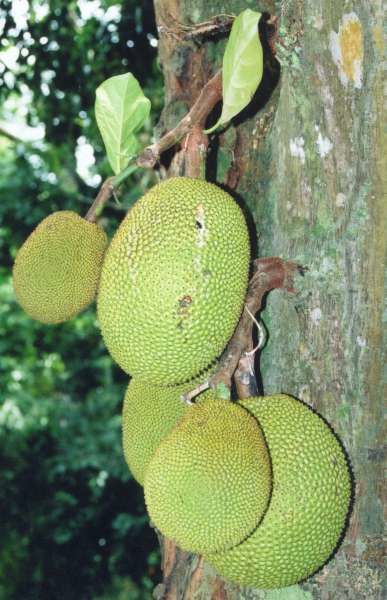
Another ripe jack fruit in the tree at the bottom of my garden is the venue for flying fox fests that infuse the tropical night, typically tranquil, with a rollicking, rambunctious racket that have many a Seychellois thinking curry chauve-souris for dinner could kill two bats with one stone.

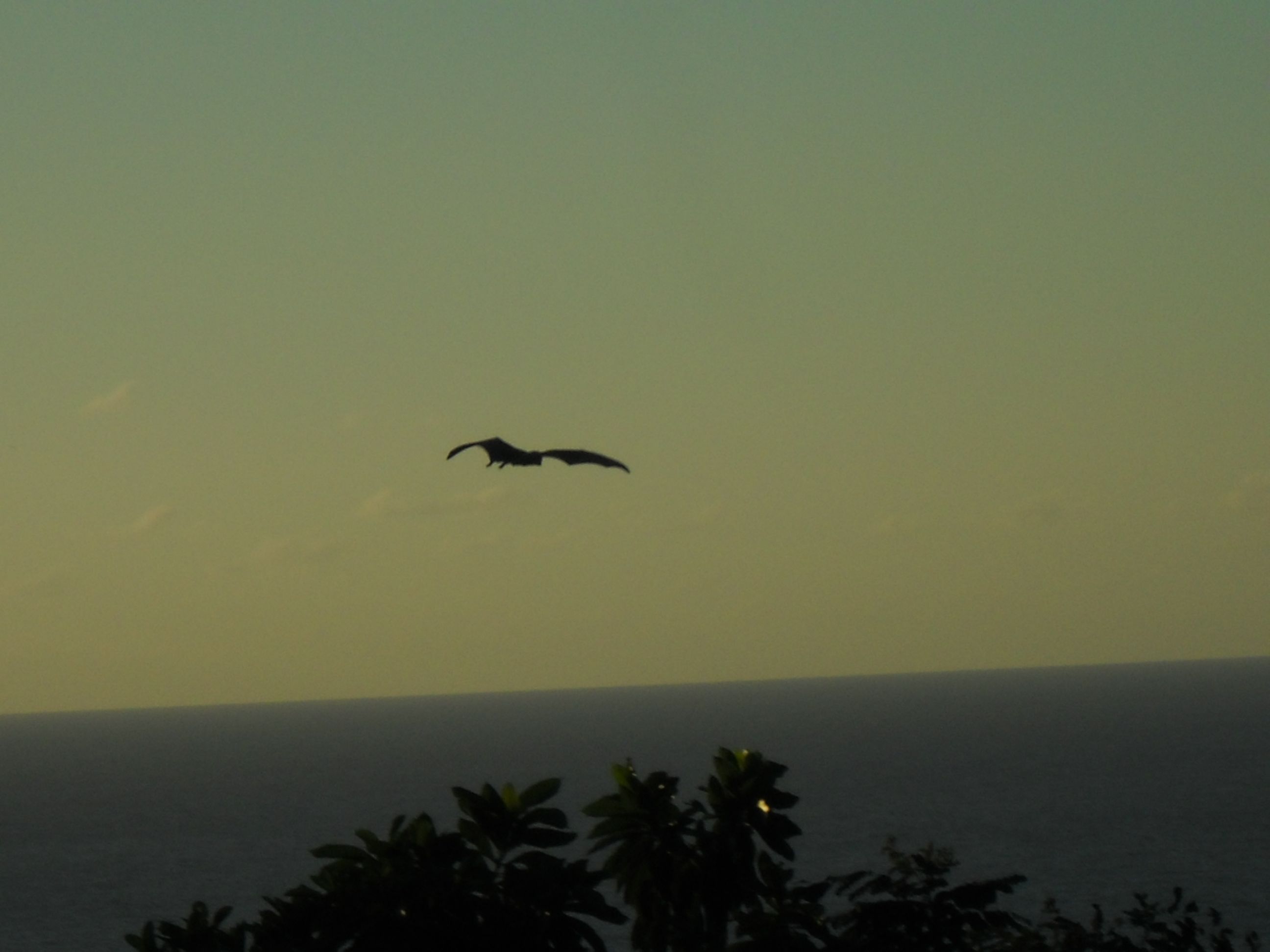
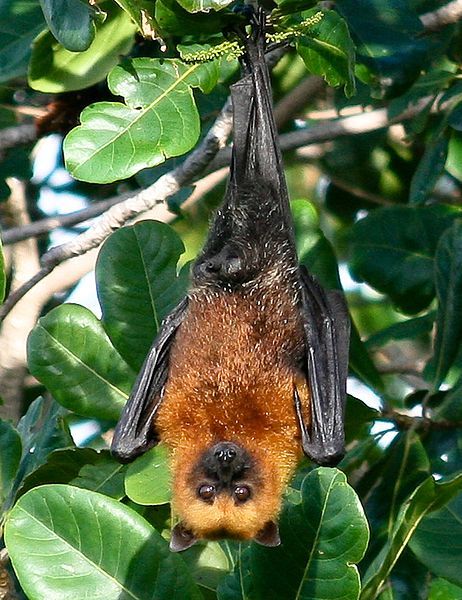
I am a big fan of Pteropus seychellensis … the Seychelles fruit bat … and NOT on the plate. They put on one hell of a show of aerial acrobatics on a daily basis and add an element of drama to sunsets and rainbows. They’re also so cute.

Seychelles Flying Fox

I know there are some who suffer from chiroptophobia and am guessing pointing out that fruit bats don’t fit the designation the fear of bats has in the Latin won’t make much of a dent in any phobic armour constructed over the years from bad movies and worse stereotypes. The fact that they have sweet little faces, not the monster-like visage of some of the more perfected insectivores since sonar isn’t their guidance system, does have me going all awwwwww over them, but others might be just a tad put off by the leathery wings thing.

No matter. Even the most vampire-fearing reader should appreciate how interesting these animals are.

The Seychelles is rather poor in the amount of endemic mammals. The two endemic mammals treated here are the two endemic bats of the Seychelles. Coleura seychellensis, Sheath-tailed bat. A small insectivorous bat (10g) that reside in caves. Present on mahe and Silhouette island. An extremely rare bat with possibly less than 50 individuals.

Pteropus seychellensis seychellensis, Seychelles fruit bat. Almost black with rusty brown face and ventral side, and black/brown muzzle. A fructivorous species.

Being the only endemic mammal in Seychelles, you’d think bats would be held in higher regard, but currying … unfortunately not with favor, but flavoring … seems to be the top praise they garner.

The Seychelles fruit bat or Seychelles flying fox … is found on the granitic islands of Seychelles. It is a significant component of the ecosystems for the islands, dispersing the seeds of many tree species.

The huge jack fruit tree now serving as smorgasbord most likely began its germination in the gut of an ancestor of one of the cuties now scuttling across a branch, as did much of the fruit growing wild on this island. We can thank our little furry friends for making almost any hike on Mahé come complete with a snack somewhere, should one feel the need for a fructose boost.

I’ve known a couple of bats as pets, and although I far prefer to see them flying free they can be mighty cuddly and they like to lick. (Since bats can’t take off from the ground, if a young one falls from its mother, it’s doomed. Occasionally people find fallen babies and raise them up.)

In researching info on our bats this morning, I found an answer to a question friends and I have asked many times while Anse wallowing over the years: Why do these guys tempt fate in daredevil dives seaward that see them skimming the surface of the Indian Ocean so closely that one false wingbeat will trap them?

Over the past few years there have been anecdotal reports of Seychelles fruit bats flying low over the sea, apparently drinking. These reports, by a number of different observers, always describe a single bat flying down from a hill or mountain and dipping down to the surface of the sea. In none of the observations could it be determined for certain what the bat was doing and it was assumed that it must have been drinking. Observations have been made from the islands of Mahé, Silhouette and Aride in different months of the year (including January, March and October) but always when the sea was calm.

On 15th March 2002 a fruit bat was observed descending to the sea at Anse Patates, Silhouette island. The bat was observed from a boat approximately 300m off shore, and was estimated to be 150m away from the boat and an equal distance to the shore. Sea conditions were calm, with no air movement. The bat dipped down to the surface of the sea 4 times in the space of 2 minutes (13:07-9hrs). Due to the proximity to the bat it was possible to see that as the bat descended to the surface of the sea it dipped its breast into the water. The head was raised slightly, preventing the mouth contacting the sea. The behaviour was observed frequently in 2003; several times off the coast of Praslin and in March 2003 at least 8 bats were seen dipping down to the sea at Anse Mondon on the north coast of Silhouette. This included one bat making three repeat flights to the sea. All these bats were roosting in trees along the coast.

From these observations it is clear that the bats were not drinking but were deliberately immersing its fur in the sea. Salt-water immersion may be a strategy to remove parasites which would be expected to be abundant in a social mammal. Although this may be an effective way of removing parasites, bats using this behaviour may be at risk of falling in the sea, a risk which would be minimised by choosing exceptionally calm weather.


Blog and learn … unfurl the wings … turn a page …

(Photo credits: Wiki & Sam Benoiton)

Read Full Post »

Sandra, you seem to put a lot of your personal life out there for all the world to see. You publish under your real name, write about life, love, fears, kids and just about everything else in your world. Doesn’t it bother you that people have so much access to what might be better kept private?
Anonymous

True, not quite, yes, and no … reasons follow:

1. Because I don’t trust writers who refuse to put their name to their work, it’s long felt important that people know who I am. By not disguising my identity, I accept accountability, and given that so much of my work over the years has swirled around controversial, contentious issues that could have impact on lives, stepping up and stating clearly who I am and where I’m coming from has been important.

2. Contrary to some perceptions, I don’t actually write about everything in my life. There are huge swathes of living that don’t come under the pen because a) it’s not interesting, b) there’s nothing of value to share with readers, c) it’s not my story to tell, d) I’m saving it for a book, or e) I don’t bloody want to.

3. I find life as an open book rewarding, personally and financially. I’m a writer; opening books is what writing is about.

4. Writing about pain is cathartic. It’s neither fun, nor easy, but not only does it feel right at the time I’m spewing, I reap rewards of validation and compassion that would be hard to come by were I to sit on my story and stew.

5. I’m a cockeyed optimist when it comes to honesty. I actually feel that the more truth there is in the world, the more chance there is for improvement. Like putting a brick in the toilet, recycling or driving an energy-efficient car, writing the truth feels like doing my bit.

6. I live on an island in the middle of nowhere. It’s not like every wacko in Waco can pop by for a stalking.

7. I live on an island in the middle of nowhere. It’s not like I can cultivate a local contingent of hundreds of brilliant conversationalists to keep me sharp and interested.

8. People who come into my world understand that parts of my life end up in print. If I were a painter, I’d paint it; as a poet I poem it. Art comes from life. Send me something profound and I’ll quote you. Impress me and I’ll publicize you. Love me and I’ll celebrate you. Hurt me and I’ll whine about you. If that wraps my accountability around others who would rather not have life repeat on them, well, they knew that on the way in the door.

Nuff said …

Read Full Post »

« Newer Posts