Feeds:
Posts
Comments

Archive for June, 2007

I’m starting out this week’s wrap of the news from Cambodia with three links to one of my pro blogs where I posted an interview with Kari Grady Grossman, author of “Bones That Float: A Story of Adopting Cambodia”. Kari was gracious and loquacious, and the interview, like the woman and the book, is interesting and informative.

Part 1 is here. Part 2 is here, and part 3 is here.

I also want to give a link to a great source of info from Cambodia that also has a terrific blog roll — Details are Sketchy. Check it out.

Now, for the news …

The environmental group, Global Witness, released a report highly critical of government officials and the role they play in illegal logging in Cambodia that has many of the powers that be more than a little hot and bothered. In fact, the report itself has been banned from the country.

Like that’s going to make it go away! Sheesh. You’d think they’d understand by now that that’s the best way to get everyone to read the thing.

“The report centers its accusations on the government leader (Prime Minister Hun Sen) with an aim to provoke political animosity in the country, which exceeds the business of this organization,” said Information Minister Khieu Kanharith.

Not that reading will make all that much difference. As the group noted:

International donors, who bankroll the impoverished Southeast Asian nation, do virtually nothing to stop the plunder.

“When are the donors going to start addressing the asset-stripping, Mafioso behavior of the current regime?” Simon Taylor, the Global Witness director, said in a statement Friday.

In an interview ahead of the release of the report, Taylor described the logging business as “part of a massive asset stripping for the benefit of a small kleptocratic elite.

“The forests of Cambodia have been ransacked over the past decade by this mafia with little or no benefit flowing down to the ordinary people,” he said.

The report specifically focused on the Seng Keang Company, the country’s most powerful logging syndicate headed by Dy Chouch, Hun Sen’s first cousin.

When, indeed?

Later in the week came time to start urging donors to review funding for Global Witness!

Cambodia’s embassy in London called the allegations “totally groundless, unacceptable rubbish” and called on Britain, Canada, Ireland, Sweden, and the Netherlands to “seriously re-consider their support in funding Global Witness in the future.”

Yeah … like it’s their fault for noticing.

And it’s not just Global Witness pissing off Hun Sen this week. UN human rights envoy, Yash Ghai, has worked his way under the PM’s fingernails like a splinter of sharp of bamboo again, and the PM isn’t shy about giving him the cold shoulder …

‘This guy comes from a country which completely violates human rights,’ the premier added. ‘You can come here, but I do not need you. If I live to be more than 1,000 years old, I will still never meet with you, so please do not come to see me. The prime minister is not obliged to meet you.’

Hun Sen said Ghai’s report could be compared to a Cambodian proverb that says the dog barks, but the ox cart still rolls forward. ‘However, I will not compare you to a dog,’ he said, referring to Yash Ghai.

Okay, that’s not exactly diplomatic language, but Hun Sen does make a couple of valid points.

First, he, “issued a press release that did not deny human-rights abuses existed in the country but claimed Ghai’s report was unfair, biased and failed to acknowledge any progress the government had made, focusing instead only on negatives.”

Fair enough.

Second, and I love this:

Hun Sen said Monday that he had told former UN secretary general Kofi Annan personally that he never expected to hear a good report on Cambodia’s human-rights record while the human-rights envoy worked for a salary.

‘If you say good things about the government’s human-rights efforts, you will lose your salary,’ he said, adding that he viewed UN human-rights officials as tourists.

Keeping in mind Kari Grady Grossman’s observations from her book that the UN is almost single-handed responsible for the development of prostitution as an industry in Cambodia, I’d say the PM isn’t off base.

Not off base, perhaps, but certainly no where near a level playing field, as this story marking the one year anniversary of mass evictions illustrates.

On June 5th of last year, a pre-dawn eviction of more than 1,700 families from a Phnom Penh site set for development to the village of Trapeang Krasaing 13 miles away was eerily reminiscent of the 17th of April in 1975.

The problem begins, rights groups say, when government officials sell off vast swathes of property to a growing host of private companies promising to develop the land.

Ironically, the roadside leading out to Trapeang Krasaing is lined with billboards advertising yet-to-be-built apartment blocks, condominiums or planned communities of tidy single-family homes.

“There is all of this luxury development going on and the poor people are being discarded,” said one land rights advocate.

Many of those displaced — refugees of one calamity or another, from fires to flood, drought or civil strife — have lived for years on previously worthless real estate.

But the same land can now fetch millions.

Those legally entitled to their property are rarely fairly compensated, and there are very few avenues to fighting land grabs.

Interestingly, the German ambassador to Cambodia is urging the country join the Extractive Industries Transparency Initiative … How’s that for a catchy title? … an oil ethics group, to learn to properly manage what is bound to be lucrative old revenues about to start pouring in.

Hey! They haven’t even cottoned on to how to deal honestly, legally, ethically and morally with trees yet!

And now on to business …

Cambodia is planning to set up a limited stock market by 2009.

“The introduction of a financial market is very important,” Prime Minister Hun Sen said.

“It can help to mobilise the Cambodian people’s savings and channel them into long-term investments in social, economic and infrastructure projects.”

The World Bank has approved $33.5 million in grants that are to make cheap electricity available to rural Cambodians.

Under the World Bank’s Greater Mekong Sub-region (GMS) Power Trade Program, a grant of US$18.5 million to the Kingdom of Cambodia will be used to construct cross-border transmission lines to neighboring Lao PDR and Vietnam. Along with transmission links under construction with Vietnam through the IDA-funded Rural Electrification Project, the new funding will further expand power trade with Vietnam, enabling Cambodia to import electricity and bring down the cost for poor consumers.

You know … I’m really fond of my appliances and all, but cheap electricity is a tricky thing. There’s not much sense having it unless you have a bunch of stuff to plug in, so there’s a potential trap for the poor. Plus, the changes in society that happen when “Desperate Housewives” suddenly becomes an evening option can be very scary.

It puts me in mind of seeing Bart Simpson tattoos on Iban ‘warriors’ in Borneo. it took no time at all for 10,000 years of traditional body art to bite the dust in favor of the latest from America. Yikes, that’s frightening.

While the World Bank is handing out dough, the IMF has a “rosy overall impression” of Cambodia’s national economy.

‘Prudent macroeconomic policy implementation has provided stability, in turn boosting investors’ and consumers’ confidence, and has underpinned very strong macroeconomic performance,’ the statement said.
‘Impressive rates of growth have been sustained, inflation remains low, external debt is sustainable and headway is being made in a number of important structural reforms.

‘The mission noted that the environment provides ideal conditions to re-energise reforms in key areas where progress has been less rapid, and to address the key constraints to broader poverty reduction.’

It said these factors had encouraged significantly increasing Foreign Direct Investment (FDI) which augured well for the economy.

The IMF said it estimates real Gross Domestic Product (GDP) to increase by around nine-per-cent this year, fanned by increased agricultural production and ‘robust growth’ in the areas of tourism, garment export and construction.

There were some caveats, however, mainly about the garment industry and the possibility of climate change impacting agriculture.

A new AIDS Treatment Center has opened in Svay Reing Province thanks to a collaboration between the Cambodian government and the AIDS Healthcare Foundation.

Australia is giving $7.5 million in climate change aid, and one of America’s richest men, Sumner M. Redstone, has announced a half-million dollar grand to the Cambodian Children’s Fund. He might be rich as all get out, but he’s a little slow on the uptake, apparently …

Sumner M. Redstone, said, “Until very recently I was unaware of the horrible conditions under which multitudes of children live in Cambodia.

Seems he’s planning to keep the money rolling in, though, and for that he can be as late to the table as he likes.

And that’s it for this week.

Have a great weekend!
Read Full Post »

A little slice of island life you don’t see unless you live on one …

There’s an interesting sort of person one encounters when one moves from the real world to a small tropical island, the sort I call: ‘the re-inventor’.

Like an cartoon I recall from a 1964-ish copy of Playboy that made its way around Longfellow Junior High featuring an obvious Tart looking more than a little ‘rode hard and put away wet’ explaining to a girlfriend, “It’s okay. I’ll just move to a new town and start all over as a virgin …”, some people actually figure that an entry visa to paradise entitles them to create an entirely new life story for themselves, then pass it around like a tray full of canapes at a beach-side cocktail party.

Sure, this is common enough, and relatively harmless, on holiday. I recall a friend in California some years ago who bought herself a Club Med vacation in Mexico thinking that she’d meet some ‘nice men’, only to find that every single (and the single bit is iffy) one of them was a rich doctor with a Porsche parked in the garage of their swinging, pricey condo back home.

Yeah. Right.

All part of the fun and fantasy of holidays, perhaps, but it’s damned hard to keep up the game of “Let’s pretend” when it must go on past the usual yearly break. That takes some very good self-convincing … or sociopathic tendencies.

We’ve had a re-inventor here lately, and being way out of this loopy woman’s loop, I’m slightly amused. Others are less so, as she’s created rifts between friends and thrown around some mighty accusations designed to cast herself in some light no one quite understands the point of.

From stem to stern, she’s as phony as they come. Heck! She’s even made up a new name for herself … along with a load of BS about being dubbed the four-syllable, pseudo-exotic tongue-twister she prefers over her dirt-common real name by an African king who fell in love with her as she taught him to Tango.

Yeah, she’s an Argentine tango dancer.

OR a German psychotherapist with a ‘salon’ full of analysts running itself back in Berlin, making a fortune for her as she crashes out in people’s guest rooms after claiming a need for company or protection, or offering to put the function back in dysfunctional families for the price of bed and breakfast. (This apparently involves having sex with most family members, of course.)

Her story seemed to change with her audience … always a fatal error for re-inventors in small countries, as the rest of us love to compare notes — there’s not a lot else to do, you see — and inconsistencies glare very quickly.

Memories are long, as well, and apparently this is a return try for this fake tango shrink, so just before getting the hell out of Dodge last week her past was beginning to repeat on her.

She wasn’t exactly run out of town on a rail, but it’s assumed that she was feeling the tide turn. That can cause perilously shifting sands on a small island.

Read Full Post »

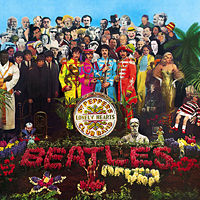
Sgt. PepperI can remember where I was the first time I saw and heard Sgt. Pepper. I’m not going into any detail about stances … neither circum nor sub … but I’ll admit to a drummer named Charlie and some really pretty colors that drifted around as “Lucy in the Sky With Diamonds” premiered in my head FORTY years ago this month.
Excuse me? Can that be right?

Well, of course it can.

It was June, 1967, and I was just about to turn sixteen. I’d recently been relocated from the San Francisco Bay Area to a hell of a Hooterville in Northern California called Red Bluff.

There was no doubt that I was too cool for school, and was even the subject of a call-in radio show on KBLF (K-bluff? Perfect … ), where hick parents accused me of wearing tights to ‘hide the needle marks in my legs’ … yes, that’s how much they knew about drug use — morons … and worried that I was out to corrupt the heck out of their drunken, redneck, brawling, screwing darlings with my peacenick ways and long-haired friends from out of town.

Yes, I had, thankfully managed to locate some hippies after my own heart in the bigger town up I-5 — Redding.

Days in the upper Central Valley in June are hot, and the heat lingers long after the sun takes its 9 pm dive over the horizon. It was an expanse of grass in someone’s front yard that seemed the ideal place to stretch out with Charlie and listen to the brand new Beatle’s album.

It was magic … total, complete, compelling, enthralling magic. Every track amazed in new ways, and with a little help from my friends who popped out with a new doobie every few minutes, Charlie and I were swimming in harmony, beat, notes, riffs and lyrics.

Who now doesn’t know all the words to “When I’m Sixty-four”, end any mention of “It was 20 years ago today … ” with anything other than, “Sgt. Pepper taught the band to play”, and hasn’t woken up more than once with the special refrain of “Good Morning Good Morning”, a la the Fab Four running through the brain along with a bit of chicken talkin’?

Back then, however, it was all new, and it was breathtaking.

Paul McCartney is almost more than sixty-four now, and though I doubt he got many Valentines this year … being in the throes of a messy divorce and all … he does still have hair.

Heck, John Lennon has been dead for twenty-seven-and-a-half years, a thought that still makes me so very sad at the loss the world suffered on the 8th of December in 1980.

I’m weeks away from hitting the downhill slide from 55.

June 2007. Forty years after Sgt. Pepper. Wow.

And here’s a thought … it’s almost half way to 2008 already.

Read Full Post »

Tomorrow is the 5th of June, Senk Zen in Creole, the Seychelles version of the 4th of July. It’s not called Independence Day, however, because that holiday comes later in the month, on the 29th of June, and marks the hand-over from British rule on the day in 1976, almost 200 years after the US wrestled away their right to self-rule from the same bunch.

The 5th of June is Liberation Day … this year the 30th anniversary of Liberation Day … the occasion on which in 1977 the country was “liberated” from the government installed by the Brits not quite one year before.

Count on history to settle the spin into a proper orbit — one man’s coup becomes a country’s deliverance, revolutions morph into struggles for liberty, and radical insurgents grow to become legions of brave freedom fighters.

Yes, perspective is everything, and water under the bridge provides a POV that favors what floats.

The phrase coup d’etat will not be uttered much around here, even though that is pretty much what occurred thirty years ago tomorrow. The sitting President left the country for a short visit to the UK, the Prime Minister took over without permission to do so, and then ran the country as a one-party communist state for seventeen years. It wasn’t a particularly violent overthrow … the Seychellois are not a particularly violent people … but it wasn’t without incident.

Thirty years down the pike, there are still grudges held and forgiveness is a long way off for some people, but for the most part the official ‘take’ on the events of three decades ago stands with little challenge.

Days like today tend to bring out the Red in the rhetoric, as today’s Seychelles Nation Newspaper illustrates.

The majority of Seychellois will tomorrow celebrate a very memorable date that is very dear to our hearts: the 30th anniversary of June 5, 1977 when a group of fearless Seychellois changed the course of this country for the better, forever.

This group of Seychellois made the dreams of the people their pre-occupation when they lit the flame of the country’s liberation which led to extraordinary development and progress.

Yeah … I know … some fancy fingerwork (like footwork, but on a keyboard) often takes over where proper English would do a better job, but that’s what happens when so many people had all of their higher education provided in universities in Russia, Cuba or the PRC.

Although lines like, “The strife continues for our better future and respect of our true Creole identity, without consideration of religion, origin, political belief or social status.” sound straight out of Mao’s machine and tend to muck up the meaning considerably, the point they are trying to make is that the country is better off because of the events of the 5th of June 1977.

So, is it?

I can say with little doubt that if the coup had not happened I would not be living in Seychelles now.

The first president, the guy who blinked, was very big on developing the country for tourism and playboys. Well, something like that. He had ideas of turning the place into a Heffner-esque archipelago that would have quickly put hotels on every beach … all with the grooviest of 70’s architecture, you can bet … a tragic turn of circumstance that would have had the 1993 version of the country I first encountered more like Acapulco than the incredible corner of paradise that welcomed me with virgin beaches and a citizenry that had not learned, or needed, to view tourists as begging targets.

Although the idea was to have ‘no building taller than a coconut tree’, the free-for-all developing that was likely to have taken place would have crowded out much of what made Seychelles so special in my eyes by the time I arrived.

Seventeen years of a one-party communist state may sound like a sentence of suffering to some, but for the great majority of Seychellois that time settled over them like a cosy, yet lightweight, quilt. Life was peaceful. Life was easy. Nothing much happened.

With the USSR turning inward as it broke up, support for faithful little communist countries dried up, and as the world changed … as it always does … Seychelles needed to change with it.

The first multi-party elections took place in 1993, and the man who’d orchestrated the coup and had been running the show ever since won by a huge margin. More elections have followed, and his party keeps winning.

Thirty years post-‘liberation’, and the country still has no beggars. No one here is hungry or homeless. Education and medical care have been free for so long that the literacy rate is well over 90% for the total population, and over 98% when the pre-liberation old folks are removed from the calculation … higher than that in Spain … and healthcare is better than all of Africa, much of Asia and parts of Europe.

The down-side reflects the ease of life, with work ethics and entrepreneurial spirit taking hits when the beach beckons and island fever inspires naps. It is hard to get things done and mediocrity is frequently taken for brilliance … one only needs to be barely good enough to excel, and this isn’t good for a country in the long run.

From where I sit .. .that would be on my veranda overlooking Anse Soleil with a view of the Indian Ocean toward Silhouette … history has served Liberation Day up nicely, and although development is now eating the islands faster than I’d like, those seventeen years following the coup were like a factor 40,000 sunblock that protected Seychelles from the ugliness of 1970’s building styles, 1980’s greed, and kept folks here too busy afterward for 1990’s divisive religious issues or 2000’s wars.

Yes, I’ll be celebrating the 5th of June.

Read Full Post »

The Ohio Supreme Court ruled last week that parents who seek to regain custody of children who’ve been placed in the care of others for their protection should have to prove that something has changed in the child’s life that would make placement back with them look like someone’s version of the right thing to do.

In a rather confusing story in The Cincinnati Post, the circumstances surrounding the placement of an infant with grandparents and the regaining of custody by parents years later is explained.

Apparently, the child, Brayden James, an infant at the time, was placed with his grandparents after being hospitalized for bruises and broken ribs inflicted by his parents.

Some years later, the parents argued that the part of the law that required them to show a change in circumstances was “unconstitutional because it deprived them of their fundamental right as the natural parents to raise their 8-year-old son”.

Excuse me?

Don’t know about how others might feel, but in my book breaking a baby’s ribs completely negates any rights, and anyone who does that … even if they take ‘parenting and anger management classes’ afterwards … do not get a second chance. That’s how kids end up dead.

And, as if giving birth should ever convey fundamental rights to natural parents. What the hell is that about? Giving birth is a biological function that produces a human being, not a pink slip of ownership.

As so often happens, the case has been going on for years, with a trial in 2004 ruling that Brayden be returned to his parents. The grandparents have taken it further, and the Supreme Court’s recent decision takes the position that a child’s stability should be placed above the demands of the natural parents.

“The clear intent of that statute is to spare children from a constant tug of war,” the 1997 ruling said.

The attorney for the parents is warning that the ruling “… will have a chilling effect on young parents seeking temporary custody arrangements for their children. He said the key element of the case was that his clients are Brayden’s parents, and the Hutchinson’s are not.”

I’d say, the key element is that his clients broke a baby’s ribs, and the Hutchinsons did not.

It would be interesting to be able to check back on this child from time to time.

Read Full Post »

Following the saga of the mother/child whale combo taking a detour in their migration to visit California’s capital takes me back.

I was living in Sacramento when the last humpback made the trip upriver and still feel privileged by the visit. That massive, intelligent presence made mince out of the ‘experts’ determined in their conviction that they knew more than he about where to go and what to do, but then, like now, it turned out that the whale ended up heading back out to sea when good and ready.

Of course, not every whale tale ends happily. Like all living creatures, whales die, and given the size of the part of themselves left behind the death looks dramatic.

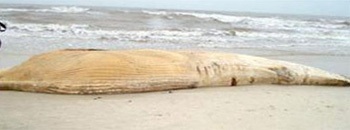
Take for example a mid-May find on a Vietnamese beach near Da Nang … a seven-and-a-half foot long, 485 pound ‘white whale’ I’ve dubbed “Moby Dead”.Moby Dead

A blip of an article ends the few sentences covering the alleged find by saying the local fisherman who found the carcass buried it, “the same day according to their traditional customs.”

Even with the photo, I’m leery of this story … as leery as a river-traveling whale should be of guys with loudspeakers shouting who-knows-what down a tube upstream. (Seeing that no one really speaks fluent whale, the message could be very different from what’s meant.)

A local Vietnamese fisherman with a camera and motivation to get a story in the papers? And ‘traditional customs’ on whale funerals? Seems a bit odd that a fisherman would get all sensitive over what he would have to think of as just a big old dead fish. (Yes, I do know that whales are mammals, and perhaps I’m being a snotty elitist in assuming that rural citizens of developing countries may have more on their minds than classifications of animals, but that’s me this morning.)

Okay. Maybe.

But I wonder if this story isn’t just a bit too much like that giant dead pig Anderson Cooper is so fascinated with these days. You must know the one. If I’m hearing about that all the way over on this side of the planet on this smaller-than-a-giant-pig-sized island, I have to think y’all are sick to death of the big pig.

Anybody buy the pig story? And any thoughts on Ahab’s nemesis washing up near Da Nang?

I should send this to my dear friend, Roger Payne, he being THE whale guy in the world, and ask his opinion.

I think I will. Watch this space.

Read Full Post »

Are the Khmer Rouge trials closer to becoming more than an joke with no punch line? Perhaps.

Yesterday saw the beginning of a two-week meeting of the Judges of the Extraordinary Chambers in the Courts of Cambodia (ECCC) … the official website is here … that is supposed to resolve all remaining disputes between Cambodian and International jurists on how the tribunal will be run.

Once the internal rules are settled, investigations can begin. Not to say that they WILL begin, but that it will then be possible. Investigators are to be sworn in on the 13th.

I, for one, will be amazed if they actually manage to accomplish anything … amazed, impressed and very happy to eat my cynicism. This being a UN gig, I so have my doubts about it being more than an exercise in keeping people employed.

And speaking of the UN …

UN special representative of the secretary-general, Yash Ghai, made a return trip to Cambodia this week, surprisingly.

Although he welcomed legal reforms in the country and expressed hope that there are more to come addressing unjust court actions and human rights violations, he criticized a recent decision of the Appeal Court to uphold convictions for the murder of a trade union leader, “despite strong exculpatory evidence and ‘fundamentally flawed’ proceedings.

“The upholding of these sentences is a grave injustice and the Special Representative reiterates his calls for a thorough, impartial and credible investigation into the murder of Chea Vichea, and for the prosecution of those responsible,” he said in a statement.

He was apparently pleased with the way the commune council elections were conducted, but voiced concern over continuing intimidation of worker’s movement leaders.

Only Deputy PM Sar Kheng would meet with him during the visit. No one else was ‘available’ to see him.

Cambodia’s Human Rights Committee Chairman has rejected Amnesty International’s Annual Report that alleges the Cambodian government doesn’t respect human rights, evicts residents from their land, won’t pass an anti-corruption law, and obstructs the process of the courts.

In a statement I can’t figure out at all, the Chairman said, “If they said we chased Cambodian people out of Phnom Penh and they love Cambodian nation, we as Cambodians love it a thousand times more than they do.”

Huh?

And the UN International Fund for Agricultural Development is announcing support for a $11.5 million project aimed at helping rural poor.

Saying this is the agencies first targeting of the poor, ethnic, rural population … really? … the “Rural Livelihoods Improvement Project” is supposed to do something … haven’t heard what yet … with 22,600 households in Kratie, Preah Vihear and Ratanakiri provinces.

Bringing is cash, the tourist trade saw a 20% jump in the first four months of this year over the same period in 2006. (2006 drew 1.7 million tourists, generating $10.5 million)

This bump in the biz is attributed in part to new routes between Cambodia, Viet Nam and Thailand, with a 70% increase in Vietnamese tourists.

Here’s a story I don’t get:

A recent survey by the Adventist Development and Relief Agency (ADRA) showed that a tobacco control policy will receive enormous support in Cambodia …

Hmmmm. A country that can’t manage much in the way of reform and where very close to anything goes is reported to be gung-ho about an “immediate ban” on cigarette advertising.

Please. Can’t we deal with adoption issues first?

And here’s something to keep an eye on; a group of South Korean companies is saying it will be spending somewhere around $2 billion to build a whole new city on 119 hectares on the northern edge of Phnom Penh>

Oh my.

Yes, folks, Cambodia is booming, and total bursting at the seams isn’t far off.

A side effect? Possibly evictions, as detailed by the NGO LICADHO.

Borei Keila, located opposite the Bak Tuok High School in central Phnom Penh in Veal Vong commune of 7 Makara district, covers 14.12 hectares of land and it is divided into 10 communities. It houses at least 1,776 families —including 515 families who are house renters and 86 families who reportedly have HIV/AIDS. Villagers first settled on the land, the site of a former police training facility, in 1992.

In early 2003, in the lead up to the July 2003 general election, a “land-sharing” arrangement was proposed for Borei Keila, which would allow a private company to develop part of the area for its own commercial purposes while providing alternative housing to the residents there. The idea was hailed because, rather than the villagers being evicted, they would be compensated for the loss of their land by being given apartments in new buildings to be constructed on part of the site.

It hasn’t quite worked out that way, however. Read the story for a lot of details.

And China’s big-four steel companies are preparing to start operations in Cambodia at a comcession with 200,000,000 tons estimated as iron ore reserves.

And, of course, stories about new golf courses are become a regular feature of Cambodian news.

Under the plan, the golf course will cover an area of 120ha with half each to be located in Viet Nam and Cambodia. The golf course will consist of a park, 18 hole-course, hotels, restaurants, and tax free shops.

Progress? Schmogress!

The British government is handing out radios to members of the Khmer Cham, Cambodia’s Muslim community, in an effort to give them access to Cham-language programs.

The British Embassy in Phnom Penh claimed in a statement, “The program helps to engage the Muslim community throughout Cambodia and works to promote peace, democracy, human rights, and combat terrorism.”

Bernard Krisher, formerly of “Newsweek”, is raising money to build more than 300 small schools in rural Cambodia.

A school can be built for as little as $13,000 from a private donor, which is then matched by about $20,000 by one of the two international aid organizations. Schools built on land donated by a village include three to six classrooms, desks and chairs. Fully constructed schools are given to the village.

Follow the link for more info.

A tragic story of love and death, this article about a Cambodian widow and her young American husband who died in a fall while hiking, and about her struggle to be allowed to come to America, has a familiar theme.

Here’s a nice little piece about Cambodian classical dance and a group of dancers who fled the KR and kept Apsara alive.

A history like Cambodia does give the country an edge in somethings, and no shortage of contestants for wheelchair races could be one.

They’re preparing for competition next year in Beijing under banners that read: You don’t need legs to run like the wind.”

And that’s it for this week.

Read Full Post »

« Newer Posts