Feeds:
Posts
Comments

Yes, today it’s about time. It is also about immortality. A weird mix, perhaps … especially in a post starting out with the intro from one of the dumbest shows in TV history … but in actuality is where the rubber meets the road we travel.

Now he has departed from this strange world a little ahead of me. That signifies nothing. For us believing physicists the distinction between past, present, and future is only a stubbornly persistent illusion. ~Albert Einstein

I like it. There’s something William Penn in that, since he did say, “For death is no more than a turning of us over from time to eternity,” and that seems a freeing conversion.

But I’m not dead yet and today is an illusion. Hm. Does that mean I can just go back to sleep? Sure. But if today is an illusion, and so is tomorrow … the past, present and future … it’s probably a better idea to pay attention and see if I can figure at least some of it out. After all, if someone was to saw me in half someday, I wouldn’t sleep through that, even if it was merely deception of the entertaining kind.

Instead of plopping back to the pillow, I’m giving my mind a wander around the wonder of time, a favorite confused meander, prompted by this article in the Huff Post titled: Is Death the End? Experiments Suggest You Create Time.

We watch our loved ones age and die, and we assume that an external entity called time is responsible for the crime. But experiments increasingly cast doubt on the existence of time as we know it. In fact, the reality of time has long been questioned by philosophers and physicists. When we speak of time, we’re usually referring to change.

Philosophers have been taking this on for as long as there have been philosophers, going back to the oh-so-cool-named Zeno, who came up with the Arrow Paradox mentioned in the article.

Zeno states that for motion to occur, an object must change the position which it occupies. He gives an example of an arrow in flight. He states that in any one instant of time, for the arrow to be moving it must either move to where it is, or it must move to where it is not. However, it cannot move to where it is not, because this is a single instant, and it cannot move to where it is because it is already there. In other words, in any instant of time there is no motion occurring, because an instant is a snapshot. Therefore, if it cannot move in a single instant it cannot move in any instant, making any motion impossible.

… this paradox starts by dividing time—and not into segments, but into points.

Wrapped your head around that one? Then take on the the idea that “space and time are forms of animal intuition”, simply “tools of the mind and thus don’t exist as external objects independent of life.”

An experiment published in 1990 suggests that Zeno was right. In this experiment, scientists demonstrated the quantum equivalent of the adage that “a watched pot doesn’t boil.” This behavior, the “quantum Zeno effect,” turns out to be a function of observation. “It seems,”said physicist Peter Coveney, “that the act of looking at an atom prevents it from changing”. Theoretically, if a nuclear bomb were watched intently enough — that is, if you could check its atoms every million trillionth of a second — it wouldn’t explode. Bizarre? The problem lies not in the experiments but in our way of thinking about time. Biocentrism is the only comprehensible way to explain these results, which are only “weird” in the context of the existing paradigm.

We are limited by our biology, peeps, packed into a container that can only perceive space and time in relation to our point in both.

Oh! For Stephen Hawking’s brain, who said, “There is no way to remove the observer — us — from our perceptions of the world … In classical physics, the past is assumed to exist as a definite series of events, but according to quantum physics, the past, like the future, is indefinite and exists only as a spectrum of possibilities.” The guy who finds thinking about paradoxes great fun and probably never gets headaches like the one I’m developing just writing this bloody post.

The whole series, plus another 5-parter, is on YouTube, so if you have the inclination you can fill up on his ideas … since it seems time is not a problem.

Check out the bit in the episode above about the worm holes that are everywhere. Tiny, yes, but I can’t help wondering what that’s all about and what would be different if there weren’t there.

Yes, those tiny, tiny passages through time exist in the quantum world, but is that not our world, too?

But this “two-world” view (that is, the view that there is one set of laws for quantum objects and another for the rest of the universe, including us) has no basis in reason and is being challenged in labs around the world. Last year, researchers published a study in Nature suggesting that quantum behavior extends into the everyday realm. Pairs of ions were coaxed to entangle, and then their properties remained bound together when separated by large distances (“spooky action at a distance,” as Einstein put it) as if there were no time or space. And in 2005, KHCO3 crystals exhibited entanglement ridges half an inch high, demonstrating that quantum behavior could nudge into the ordinary world of human-scale objects.

Do you realize that we all see our own noses all the time? It’s right there in our vision every time we open our eyes, but our brain ignores it. Our noses are big … some more than others … not anything close to microscopic, yet invisible to us unless we consciously focus attention. What in the nanosphere is just as ‘there’ that we’re missing?

Okay. So we know time is not linear, and although it’s trippy to watch someone talking on a cell phone in footage shot in 1928, that’s really not the point. Time travel … backward, forward, sideways … sounds like fun, sure — who wouldn’t want to hear Lincoln deliver the Gettysburg Address or tool around in a flying car or see themselves young and their lost loved ones walking around — but if there is no time, aren’t we doing that already?

Maybe we’re just missing our noses again …

The Rangoli of Lights

‘Tis the season to be jolly over a wide range of holidays celebrated by loads of people in various points on the globe and things brighten up considerably after the ghoulish glee of Halloween in the US and Dia de los Muertos in Mexico as the lights go on in India.

Yes, it’s Diwali, दीपावली in Sanskrit, and also known as Deepavali, the Festival of Lights.

The name Diwali is itself a contraction of the word “Deepavali”, which translates into row of lamps. Diwali involves the lighting of small clay lamps (diyas) (or Deep in Sanskrit: दीप) filled with oil to signify the triumph of good over evil. During Diwali, all the celebrants wear new clothes and share sweets and snacks with family members and friends.

I did my bit today by stopping into the Indian-owned shops I frequent with wishes for a Happy Diwali and was treated to big smiles, lovely whiffs of incense and a gander at more-than-usually elaborate alter offerings. The Hindu temple in town will be hoppin’ tonight!

Unlike in the Christian world where only one version of any given holiday is deemed acceptable and all those pagan vestiges like putting trees in houses and hunting for colored eggs are considered mere fluff, those of various beliefs embrace Diwali for a host of different reasons.

Where the Hindus in some regions spend their holiday worshipping Lord Ganesha and mark the marriage of Lakshmi to Vishnu, those in Bengal dedicate the festival to Mother Kali, their goddess of strength.

The Jains use the occasion to celebrate the moment Mahavira attained Nirvana:

Diwali has a very special significance in Jainism, just like Buddha Purnima, the date of Buddha’s Nirvana, is for Buddhists as Easter is for Christians. Lord Mahavira, the last of the Jain Tirthankaras, attained Nirvana or Moksha on this day at Pavapuri on Oct. 15, 527 BC, on Chaturdashi of Kartika, as Tilyapannatti of Yativrashaba from the sixth century states:

Mahavira is responsible for establishing the Dharma followed by Jains even today. According to tradition, the chief disciple of Mahavira, Ganadhara Gautam Swami also attained complete knowledge (Kevalgyana) on this day, thus making Diwali one of the most important Jain festivals.

For the Sikhs, the lights have a glow all their own:

Diwali is a Hindu festival of lights that was appropriated by the Sikhs to celebrate the release from prison of Guru Hargobind, the sixth Guru, from prison in 1619. The Golden Temple was illuminated with lights to welcome the Guru home, and Sikhs continue this tradition by lighting lamps on Diwali each year. The Golden Temple is illuminated with thousands of lights.

There are, of course, roots trailing all the way back to the earth, as all religions to if you follow the path far enough:

Deepavali marks the end of the harvest season in most of India. Farmers give thanks for the bounty of the year gone by, and pray for a good harvest for the year to come. Traditionally this marked the closing of accounts for businesses dependent on the agrarian cycle, and is the last major celebration before winter. Lakshmi symbolizes wealth and prosperity, and her blessings are invoked for a good year ahead.

No matter what the specific focus of worship, there’s a shared perception of Diwali that I find … well … illuminating:

In each legend, myth and story of Deepawali lies the significance of the victory of good over evil; and it is with each Deepawali and the lights that illuminate our homes and hearts, that this simple truth finds new reason and hope. From darkness unto light — the light that empowers us to commit ourselves to good deeds, that which brings us closer to divinity. During Diwali, lights illuminate every corner of India and the scent of incense sticks hangs in the air, mingled with the sounds of fire-crackers, joy, togetherness and hope. Diwali is celebrated around the globe.

So, Happy Diwali to all! No matter what your belief may be, light and good deeds deserve celebrating!

LIFE

Since we’re heading toward the end of another year, I’m starting the mental wrap … and rap … of 2010 and coming to some compelling conclusions. Yes, I’m sure I’ll be sharing more of these than is possibly wise over the next weeks, but there’s one that hit me upside the head this morning that cannot go without being harvested for blog fodder.

It has come to me in some weird bolt of lightning from a clear sky … it is lovely here today, but that’s merely an aside … that at the beginning of this year my love life officially received the XXX rating.

Although some might be ashamed to find themselves rated XXX, while others would be bursting with pride, for me it’s nothing more than the way it is. Neither an achievement, nor a humiliation, one thing leading to another, as it goes, leading to this.

Perhaps it’s my present work writing erotica that prompts this specific self-labeling, but there is no denying the assignation … or designation for those sidelined by the “ass” bit in a post about the Triple X … and I do know that I’m far from a rare woman in having earned three of the bloody things. (My mother is XXXX, so there’s something in the genes, perhaps.)

It has taken a lot of fortitude and no little imagination to reach the point where XXX marks the spot I inhabit, and that tendency I was born with to throw caution to the wind and indulge passion. Sure, it turns and bites me on the ass … and, yes, sometimes I even like that … but living and loving any other way has never seemed an option.

I put too much into it. I know this. Too often I’m full-bore, heedless, yes, yes, YES!

Three of those yeses earned me my X1, X2 and X3. In order of appearance: Stan, Scott and Mark.

Sorry, if you want to read about graphic sex buy the next book when it comes, but this post is about having been married, then unmarried, three times, and if you feel that I’ve lured you in with hints of satisfaction … well … welcome to the club … that’s happened to me three fucking times. Okay … three times that involved paperwork … more that never got that far.

Yes … yes, yes, yes led to ex, ex, ex, and although there’s probably a poem in there somewhere I’m in no mood to put this to verse today.

Rather, I’m pondering the possibilities of ever again contemplating heading toward the end of the alphabet that begins with M and ends in X, since that has been my only Xperience … although I’ve done bloody well with everything up to about F. (I did do the E thing for some years, and still have the ring, thankyouverymuch, but it hit L and that was that.)

It could be best that I take my XXX rating and rest on my laurels. Okay, rest won’t happen since I’m not one for ZZZZZZZZ as a steady diet, but I have no desire to add another X.

I now have a toy I call by the anglicised version of what in Spanish is pronounced Haysoooose , so named because, although I am far from religious, calling that out comes natural when I do. It is true he’s not much of a conversationalist, no challenge at all and missing all but the one limb, but I know where he is and what he’s up to, and we do have our rating in common.

Dia de los Muertos

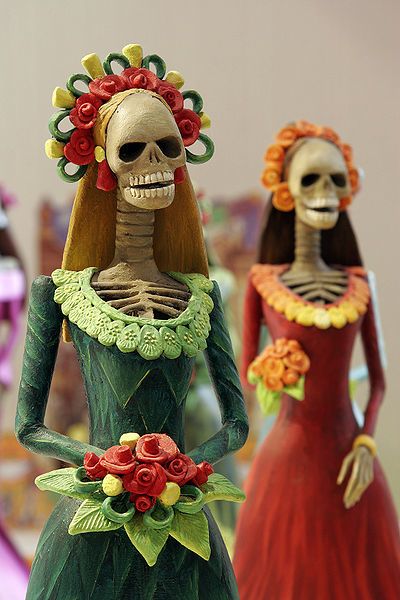
Today is the Day of the Dead, an event marked with celebration in Mexico, which is an idea that pleases me mucho.

The Day of the Dead celebrations in Mexico can be traced back to the indigenous cultures. Rituals celebrating the deaths of ancestors have been observed by these civilizations perhaps for as long as 2,500–3,000 years.

There is something so rational about skeletal characters parading around cities while sugar skulls and bottles of tequila, mezcal and pulque get offered up for their “spiritual essence”, then consumed by those still living.

It makes more sense to me than dressing up as superheroes or princesses and ignoring the whole death thing, as seems to be more the case in the US.

Death being the one thing we should all be positive about as an eventuality, it is amazing how surprised most people are by it, and how stubbornly negative. As the ancients put it:

There’s nothing certain in a man’s life except this: That he must lose it. ~Aeschylus, Agamemnon

No one knows whether death is really the greatest blessing a man can have, but they fear it is the greatest curse, as if they knew well. ~Plato

Death may be the greatest of all human blessings. ~Socrates

Yeah, yeah … all that wisdom does jackshit for bringing any cheer when we someone we love dies. FUCK! There’s not a day I breathe that doesn’t have the fact of my son’s death rattling agonizingly somewhere inside me, and that will not stop. Nor should it.

A man’s dying is more the survivors’ affair than his own. ~Thomas Mann

It’s been 17 months today since Jaren died, and although I do now manage some days in a row without tears, I carry the loss of him wherever I am. As his mother, that’s not only my job, it is my privilege.

He who has gone, so we but cherish his memory, abides with us, more potent, nay, more present than the living man. ~Antoine de Saint-Exupery

Now he has departed from this strange world a little ahead of me. That signifies nothing. For us believing physicists the distinction between past, present, and future is only a stubbornly persistent illusion. ~Albert Einstein

Although I would not choose to picture the dead I love dancing in their bones, there is something very comforting in the fact that some do see the life in that, and having loved a Mexican for a long time I can so fully appreciate the bright colors, the music, the fiesta, the food and family, that can make a party out of death, and wish I’d had some of that growing up.

Instead, as Dia de los Muertos comes around this year, what I get is dreams … and that’s okay, too. I see my son in what I consider visits, not all pleasant, but I’ll take what I can get. Some are disturbing, but what’s more disturbing than having a dead child? I can take it.

In something that could almost seem like weird symmetry, my mom’s husband died yesterday. He was not a man I was close to in any way, but she was, and her loss is tremendous. He was 80 and sick and probably more than a bit tired of being 80 and sick, so I have to assume this turn of events in easier on him than it is on her.

A dying man needs to die, as a sleepy man needs to sleep, and there comes a time when it is wrong, as well as useless, to resist. ~Stewart Alsop

I’m spouting what I can of words of comfort and hoping it takes only a small toll on her health and well being … she being neither young nor spectacularly healthy, herself … but I know only too well, as does she, having lost her father when she was only 12, that dealing with death is a game of solitaire.

For the moment, I can give her only this:

People do not die for us immediately, but remain bathed in a sort of aura of life which bears no relation to true immortality but through which they continue to occupy our thoughts in the same way as when they were alive. It is as though they were traveling abroad. ~Marcel Proust

So, while in Mexico skeletons cavort carelessly … and how else would a skeleton cavort? … in celebration of death, the living cope as they can, not only with their dead, with with the idea of their death.

Because I could not stop for Death,
He kindly stopped for me.
The Carriage held but just ourselves
And Immortality
~Emily Dickinson

Feliz el Die de los Muertos, todo. Feliz …Celebre, mi amor!

Where to start? That’s a tough one this morning because this story in the Huff Post is wonky on so many levels. Of course, it was the headline that drew my attention: Retired Chaplains Come Out Against DADT Repeal, Citing ‘Religious Freedom’.

Sure, I knew pissed off was coming, but I am surprised that I can still be surprised by the complexity of convolutions possible when minds warped by religion put bent thinking to words. I’m in no fit state for eloquent this early on a Saturday in paradise, so you’ll be settling for the annoying sound of sarcasm dripping.

Before wading in, however, let’s start by watching Bill Maher deliver a new rule.

Done? Good.

Moving right along …

Dozens of retired military chaplains say that serving both God and the U.S. armed forces will become impossible for chaplains whose faiths consider homosexuality a sin if the “don’t ask, don’t tell” policy is thrown out.

“The bottom line is religious freedom,” said retired Army Brig. Gen. Douglas Lee, one of 65 former chaplains who signed a letter urging President Barack Obama and Defense Secretary Robert Gates to keep “don’t ask, don’t tell.”

Amazing how the word “freedom” is deemed to have so much oomph when it follows “religious”, ain’t it? It’s ever-so-much more vital that bigotry is allowed to flourish than pushing for any recognition that what consenting adults get up to in the privacy of their own pants in no one’s fucking business, is it?

Of course, we’re not just talking run-of-the-mill clergy here, but those dedicating their careers to serving the military. Hm.

The Southern Baptist Convention, the Roman Catholic Church, the Orthodox Church in America, the Presbyterian Church in America, and the Rabbinical Alliance of America have issued statements or written to the Obama administration this year with their concerns that repealing “don’t ask, don’t tell” could force their chaplains to choose between serving God and serving the military.

Now THERE’S potential for a quandary. Salute, or genuflect? What is the chain of command? Wonder if that’s ever come up before … like … hm … maybe when sending troops out to kill and be killed over some bullshit tale of WMDs?

The Orthodox Church in America, for example, condemns homosexuality and mandates that the appropriate action its ministers should take toward gay people who seek counseling is to steer them to repent and renounce the gay lifestyle.

“If such an attitude were regarded as ‘prejudice’ or the denunciation of homosexuality as ‘hate language,’ or the like, we would be forced to pull out our chaplains from military service,” the church informed the Pentagon in May.

I’m thinkin’ more along the lines of dishonorable discharge, actually … and maybe a lawsuit.

Anyone who can make a living passing the plate and the pap for the armed forces should damned well know how to keep their yaps shut; loose lips do more than sink ships, so GET OVER IT!

Can’t let this bit of hypocrisy by:

The Catholic Church likewise deems homosexual behavior a sin.

“This means that Catholic chaplains must show compassion for persons with a homosexual orientation, but can never condone – even silently – homosexual behavior,” Archbishop Timothy Broglio said in a June letter calling for “don’t ask” to remain in place. Broglio leads the Archdiocese for Military Services and is the church’s chief liaison to the military.

Oh, paaaaallllllleeeeeeeease! Since when, Archie? Your unit has been silently condoning, dodging and covering for priests jumping into any old fox hole for a long, long time, so shut the fuck up.

And get this:

Every officer in the military, including chaplains, is evaluated in an annual report. One criterion is whether the officer supports the military’s equal opportunity policy. If gays and lesbians are included in that policy, careers of chaplains who criticize homosexuality could suffer.

WTF? IF gays and lesbians are included? That suggests that they are not up til now, even under DADT, which I have to assume means that the confidentiality of the confessional hasn’t been a happening thing. Wonder what the catholic god who made that rule has been thinking. Probably understands that he’s been outranked.

A post on a blog sent by a friend inspired mine today. Titled Musings on the Craft: Eloquence, I’m in complete agreement, but my mind took a wander.

What follows is the comment I submitted for moderation:

In my preteen years, my father handed me his copy of The Elements of Style with an admonishment to learn it all, but at my peril. Himself a slave to the rules for far too much of his adult life, his hope was that I would incorporate the niggley bits well enough to have them second nature and familiar to the point of contempt when appropriate.

Although driven to the destination called Distraction by the all-too-frequently cavalier typist-cum-writer — how many high school teachers dreaded my blue pencil — years of editing the work of others and multitudinous hours online harvesting info for fodder have honed my double-edged sword allowing swift cutting through crap even while noting a less-than-passing nod toward the convenient signposts of grammar and spelling.

Language as a living thing is a creature dear to my heart, and as it evolves, even through such bizarre mutations as text talk and mass rule, I’m comfy enough in the knowledge that the end of this road is beyond my alloted travel time to follow the bouncing ball when there’s enough to let me sing along.

Am I saying rules don’t matter? Nope. They do, and when I rule the world Strunk and White will be served up more often than Big Macs and the ubiquitous doyouwantfrieswiththat will come with punctuation.

In the meantime, however, I’m embracing the ease of communicating in writing that is opening channels and has peeps who had never contemplated what words look like punching in messages left and right.

As I have typed many times: No prob. This is chat, not lit.

So …

thx urgr8

Not bad for an old broad ...

We turn not older with years, but newer every day. ~ Emily Dickinson

Some time back while perusing facebook, I came across a status update from a friend whose grandfather had just celebrated his 90-something birthday. In the comments it was asked if he’d spoken of any regrets he might carry from his many years of life. The answer went something like this:

The one thing I regret most is having felt old in my 50s and 60s. I wasted those decades because I had convinced myself that I was too old to enjoy them in many of the ways I well could have.

Of course!

To someone close to hitting 100, 50 is a kid only half way through, and with 50 more years on offer.

Although there is little to no chance I’ll ever get anywhere near 100, I’ve incorporated this man’s thinking and keep the words of Mark Twain handy:

Age is an issue of mind over matter. If you don’t mind, it doesn’t matter.

And the fact is, I don’t mind. I don’t mind my age … I’m really crap with numbers, and like Erma Bombeck, “As a graduate of the Zsa Zsa Gabor School of Creative mathematics, I honestly do not know how old I am”, and in dog years, I’m dead …. and I don’t mind the ages of the people in my life. I don’t mind that my youngest child is 5 and that my oldest is 41 or that my last boyfriend is 39 or that some of my friends are in their 70s and others are in their 20s. I don’t mind that my mother is close to 80 … although I wish she was more comfortable.

I do mind that my son died at 38, my father at 69 and the boy I could have grown old with at 19.

As that prolific sage, Anon, once said:

Do not regret growing older. It is a privilege denied to many.

No. I don’t regret my years. In fact, there are few minutes that ring the regret bell for me.

I do, however, fear senectitude … not the numbers, but the toll … much more than I fear death, although both come in the natural order of things.

It is old age, rather than death, that is to be contrasted with life. Old age is life’s parody, whereas death transforms life into a destiny: in a way it preserves it by giving it the absolute dimension. Death does away with time.
~ Simone de Beauvoir

But I’m not there yet … neither destination … and although I’m faced daily with the evidence of my own personal senescence, I can still ignore much of it, so I do. I wear what I damned well please, parent little kids, dance with whomever I like, talk too much, sing loud, add tattoos to my collection, do tequila shots, take my top off at the beach … whateverthefuck I want to do, I do.

There is no pleasure worth forgoing just for an extra three years in the geriatric ward. ~ John Mortimer

No shit.

Given that I’m single again, I have been giving some thought to just how many years of cute I have left in me, so was encouraged by an article in the news today that showed Jane Fonda, 72, and Raquel Welsh, 70, looking and obviously feeling good.

Despite their combined age of 142, Jane Fonda and Raquel Welch were still turning heads as they appeared together at a charity event in Beverly Hills.

Okay … it sucks that men get away with this all the time without anyone making a big deal of their age (Did anyone ever think Cary Grant at 70 or Gregory Peck at 84 looked anything but hot?), but this is Planet Earth in 2010, so I live with it.

I know people decades younger who are too old for me … lackluster, boring twits with little imagination and no curiosity, wastes of space and youth … and that’s depressing as hell. Thoreau was too right when he said, “None are so old as those who have outlived enthusiasm.”

Anyone who stops learning is old, whether at twenty or eighty. ~ Henry Ford

I know that timing has been lucky for me. I’m a Boomer and people have been talkin’ ’bout my generation for decades. I’m aging along with the likes of Keith Richards, although he has years on me, as he wades back through his foggy past and reminds us all what a fuckin’ good time we’ve had … and how much fun we’re still having.

And because my generation has buying power, marketing is finally setting out to make us feel pretty … after all, we’re neither blind, nor stupid, so do know that what hugs a 20-year-old ass won’t ride quite the same on one that’s been ridden longer … and models in their 40s, 50s and 60s are making the point of beauty beyond presumed boundaries well.

‘It’s been really fulfilling to create shots that celebrate the wonder of getting older.
‘It’s important to challenge what we see in our media with a broader reflection of beauty.
‘Enjoy the magic of these women, their confidence, their attitudes and their allure.
‘These wonderful faces express the joy of getting older – not something we see enough of.’

Would I turn back the clock if I could? Nah, although I’m not opposed to a bit of the old nip and tuck to make it look like the calendar missed a few pages and may go that route someday. I see nothing wrong with someone opting for a trade-in on a new set of tits or less eye baggage. I, like Oscar Wilde, do have limits, however:

To get back my youth I would do anything in the world, except take exercise, get up early, or be respectable.

As Brigette Bardot so aptly put it: It’s sad to grow old, but nice to ripen.

Yes … I’m ripening, and I’m okay with that. What was once firm isn’t so much now, my hair has less brown in it daily and I don’t shake off a hangover with anywhere near the ease I did a few years ago, but I’m still here and I’m still cute and I’m smarter than I used to be. And I have a good bloody time.

Unless I’m lucky enough to have death sneak up and bite me on the ass, the day will come, however, when I’ll wake up one morning and know I’m old. I’m hoping it will be a false alarm:

There is always some specific moment when we realize our youth is gone; but years after, we know it was much later. ~Mignon McLaughlin

Call me delusional, but I’ve not yet experienced that “specific moment” and I plan on putting that off as long as I can. After all …

How old would you be if you didn’t know how old you were?
~Satchel Paige

Sunday … time for a bit of R.E.M.

The hint of the century
Consider this
The slip that brought me
To my knees failed
What if all these fantasies
Come flailing around

From the Huffington Post, this, from David Briggs titled, “An Inconvenient Truth: More Religious Freedom Means Less Religious Conflict”, starts off the day.

Before going into the piece, I will point out that religious freedom also includes the right to be free FROM religion, and although I’m not especially comfy with the idea of atheism or humanism or secularism … whatever … being considered a religion, non-or-othewise, some lumping happens; it must do with secularism hitting Number 3 on the religion-in-the-world charts.

With that established, moving right along …

Citing info in a new offering from Cambridge University Press, The Price of Freedom Denied”, Briggs makes the point well that ramming religion down the throats of anyone is a very bad idea with horrific consequences.

The more severe the levels of religious restriction, the greater the risk of violent persecution, the authors found. Forty-four percent of governments interfering with the right to worship had more than 200 cases of violent religious persecution; only 9 percent of countries with freedom of worship had similar rates of abuse.

And I will add … or NOT to worship … a point he’s not making, but I so am.

Of course, we’re not just talking Islamic nasties in the Muslim world … the disgusting treatment of women, for starters … although there are plenty of those to wag fingers toward.

Hate crimes motivated by a religious bias have been reported to the FBI in nearly all 50 states for every year in the 21st century. In 2006, there were documented reports of one person being killed, 178 assaulted and 718 properties damaged or destroyed due to religious bias.

Although this article focuses mainly on the Ground Zero Mosque and stuff about zoning, my thinking goes more toward those not even included in those numbers, the kids who were literally bullied to death with religion granting the right to bully at the same time the right to love is denied.

Like it or not, religious nut jobs, you do not get to win this one. Really. Just because you’ve imbibed the anti-whatever Kool-Aid does not mean anyone else has to take even a sip.

“We don’t have a law against offending anyone’s sensibilities,” said political scientist Anthony Gill of the University of Washington. “This is just the messiness of democracy.”

You’d think the religious would be most in favor of religious freedom, but that is never the case. So convinced are they of their “rightness”, everyone else MUST be wrong, and that translates to running up their own asses and spending a whole load of time in the dark. Slinging shit is the logical outcome.

Seems the lack of light has so many missing so much of the actually point …

“The clear message is that even though religious freedoms are inconvenient, they’re the very thing that diffuses religious tensions,” Finke said. “Their religious freedoms are my religious freedoms.”

Amen.

religion
re-li-gion [riˈlijən]
noun: the belief in and worship of a superhuman controlling power, esp. a personal God or gods

From a Roman Catholic priest dripping water on my tiny brow as an infant, to the forced placing of tabs of LDS on my pre-teen tongue, to Jehova’s Witnesses disturbing afternoon delight sessions and beyond, attempts to shove religion down my throat have come often in my life. Thanks to a rather thick skin, an agile mind and a father who found it all more than a bit ridiculous, I managed to get by without swallowing the Kool-Aid, no matter what the flavor.

I don’t simply consider myself non-religious, but anti, and as any student of just about any bit of history can account, there’s good reason to take aim at the faithful when accepting blame for horrors is the target. (Check out the data here for a look at the part religion had played in genocides in just the last 60 years.)

Yesterday’s post addressed issues of religion-inspired hatred and its present-day deadly impact on people who happen to love folks with similar equipment and provided some insights from really smart guy Frans de Waal that, alongside discussions happening in my world these days, have me thinking about what might be the reverse of “religion”.

Of course, the religious would suggest words like ‘evil’, or ‘infidel’, or ‘unsaved’, or ‘headed for hell on a rail’, or simply ‘damned’, while others might put forth ‘atheist’ or ‘secularist’ to fill in the posed blank.

Dr. de Waal proposes that the possibility of a blank at all is not likely:

Any framework we develop to advocate a certain moral outlook is bound to produce its own list of principles, its own prophets, and attract its own devoted followers, so that it will soon look like any old religion.

As often happens when I’m seeking info, it presents, as it does today in this article in the Huff Post that echos the good doctor’s thoughts without meaning to.

The author, Chris Stedman is a self-proclaimed “atheist promoting religious tolerance and interfaith work” … a designation I find confusing.

His take seems to be that atheists are somehow bound to spend time and energy trying to talk people down from their religious … what? … perch? … pedestal? … pulpit? … whatever … and convert them to atheism.

Sure, there is Richard Dawkins, vociferous and strident and poster child for what Stedman … and others … refer to as “Evangelical Atheism”, but compare the number of Dawkins in the world with the legions of bishops, elders, imams, priests, missionaries and others proselytizing the length and breadth of Planet Earth and you can’t help but come back with the idea that touting un-touting is a rather lonely endeavor.

Stedman says otherwise, but without attribution, so I’m not sure where this comes from:

When a large and vocal number of atheists say that their number one goal is convincing people to abandon their faith, it comes as no surprise that our community is construed as extreme and aggressive.

Personally, I’m a big fan of going toe-to-toe with those carrying the cross of luring people to accept Jesus Christ as their personal trainer … or whatever … as both the arrogance and the dangers involved in doing that just piss me off. This has much to do with recent events that have me drawing a line in the sand and trying on the idea of fighting intolerance with intolerance, being a bit frustrated with all the other cheek turning us non-believers are famous for. Being “construed as extreme and aggressive” actually sounds okay to me. After all, if you wanna end war and stuff, ya gotta sing loud.

Which brings me back to the Stedman piece:

“I may lose all of my credibility for saying this,” I said with a chuckle, “but I have zero interest in talking people out of their religious beliefs. The only religious beliefs I take issue with are ones that infringe on individual freedoms — for example, when someone’s religious belief informs their conviction that I, as a queer person, should not be free to marry whoever I choose. But their belief in God, when it does not contribute to actions that inhibit my liberty, is of no concern to me.”

EXACTLY.

Who gives a flying fuck what someone else holds dear as a belief? I couldn’t care less if folks think dancing naked around a pile of mangos will assure them of fruit in the afterlife … if wishing upon a star will grow them wings … if imagining a bit of stale bread to be some dead guy’s skin … go for it! Think of something wacky and live your life according to your wackiness. Just don’t screw around with anyone else’s whack unless you’re invited … and it’s a party … and your own doesn’t depend on getting theirs to match yours. Oh … and you’re not making a few bucks out of the deal.

Where Stedman loses me, however, is where he approaches that line Dr. de Waal so aptly defined … where what results comes out looking “like any old religion” … in other words, here:

It’s just a hypothesis, but I wonder if fewer nonreligious people would actively try to dismantle religious communities if we had a more coherent community of our own. Perhaps if we spend less energy negatively “evangelizing,” we’ll find ourselves well positioned to reach out in ways that build bridges instead of tearing them down.

He suggests reaching out to religious liberals and moderates in efforts to work together, an idea that feels like missing the point.

For starters, where’s the common ground between people who believe that the world began 6,000 years ago in the Garden of Eden and those who know that’s just stupid? Okay … maybe those people aren’t religious liberals. Maybe moderates understand the science behind geology and astronomy and evolution and have somehow modified their take on just how literally the bible should be interpreted, and if that’s the case, what is there to talk about?

If one side of the table sees homosexuality as evil incarnate and the other side is gay, where’s the starting point for discussion? If the religious group has no problem with what and who the gay group does in the privacy of their own pants, what’s the issue?

Religious liberals and moderates who keep their thoughts to themselves, support the rights of others, care for their kids and don’t kick the dog are pretty much like the average, everyday secularist, so the only reason I can see for trying to get some sort of coalition going might be called politics. I’m okay with that, but it also misses the point.

“Active dismantling” is appropriate when the fact is that religious fuckwads go out of their way to ram their warped agenda down and around the necks of any- and everyone. Their methods range from the devious — It’s our duty to save you from damnation — to the militant — God hates fags! — and pervasive. They’re also panicked by the idea that people may begin thinking for themselves, so bloody aggressive in their manipulation of hearts and minds.

Here’s a disgusting example of that manipulation … a video sent by a church to junior high kids to get them to save the souls of their classmates:

Shocked? Revolted? Horrified by the minds that would put that together for CHILDREN? Deeply concerned about the kids who had that dumped upon them? I certainly hope so …

When was the last time you had a secular humanist or atheist even so much as knock on your door to tell you you’re doomed, doomed, I say! (Or even: You’re an idiot.) … please read this pamphlet? That happens like almost never … and when it does, it’s only to make a point … like the guys in this video.

There’s also the issue of smarts. Anyone who actually believes the bullshit fed to them by any religion insisting that they own the rights to all right, that every other idea that can occur to anyone is not only wrong, but inherently evil, has to be either dumb as a shovel or capable of a disconnect to rival Sybil and therefore not a good candidate for any position that could make any difference to anyone under any circumstance.

Building bridges can be a nobel undertaking, but not always possible. When the divide is so wide the other side can’t even be imagined, much less seen, it’s often better to mind the gap. Of course, if the other side starts lobbing grenades, throw ’em back!

Frans de Waal / Wiki images

Yeah, yeah … it’s bad form to discuss politics and religion in polite company. Shoot me now, but I’ve never been able to take either of those issues off the table no matter how well behaved fellow talkers may be, even though I’m well aware of how pointless debate on the topics always is.

Up until recently, my world has been mainly peopled by those whose biggest religious difference amounted to disagreements over how god-like they were … or weren’t, that being closer to my view. Lately, though, the potential scope of the divide created a rift valley that makes the one in Africa seem no bigger than the gap between my two front teeth … a cute little trademark (I’ve been told) that only becomes inconvenient when I bite into hot pizza.

Of course the debate rages and rears its ugly head one hell of a lot lately. Much of the blame for the spate of suicides amongst gay teens lately can be laid directly at the genuflected knees of the christian self-rightous, and the Tea Party race to pull the US back to 19th century thinking divides the country in ways that are hard to follow, much less absorb.

No idea why it’s taking three paragraphs to get to the point of this post, but this article from the NY Times is what I’m all about.

Written by one of my personal heroes, Dr. Frans de Waal, and titled “Morals Without God?”, it says it all brilliantly, making and substantiating points I consider unassailable on evolution and altruism, on religion and logical reasons for, and on atheism in its various manifestations.

Take for example Dr. de Waal’s observations on the deeper meanings of “inequity aversion” in chimps … a process whereby chimpanzees don’t like it one bit when things aren’t fair:

According to most philosophers, we reason ourselves towards a moral position. Even if we do not invoke God, it is still a top-down process of us formulating the principles and then imposing those on human conduct. But would it be realistic to ask people to be considerate of others if we had not already a natural inclination to be so? Would it make sense to appeal to fairness and justice in the absence of powerful reactions to their absence? Imagine the cognitive burden if every decision we took needed to be vetted against handed-down principles. Instead, I am a firm believer in the Humean position that reason is the slave of the passions. We started out with moral sentiments and intuitions, which is also where we find the greatest continuity with other primates. Rather than having developed morality from scratch, we received a huge helping hand from our background as social animals.

I find it interesting that hardcore atheist Richard Dawkins shares at least part of the view held by christians that postulates humans are born flawed, although his idea of gaining redemption has more to do with socialization than baptism and salvation.

Let us try to teach generosity and altruism, because we are born selfish.

Frans de Waal disagrees and gives evolutionary biological arguments in favor of our species having more good going for us that we realize.

Even though altruistic behavior evolved for the advantages it confers, this does not make it selfishly motivated. Future benefits rarely figure in the minds of animals. For example, animals engage in sex without knowing its reproductive consequences, and even humans had to develop the morning-after pill. This is because sexual motivation is unconcerned with the reason why sex exists. The same is true for the altruistic impulse, which is unconcerned with evolutionary consequences. It is this disconnect between evolution and motivation that befuddled the Veneer Theorists, and made them reduce everything to selfishness. The most quoted line of their bleak literature says it all: “Scratch an ‘altruist,’ and watch a ‘hypocrite’ bleed.”

Then later in the article:

Mammals may derive pleasure from helping others in the same way that humans feel good doing good. Nature often equips life’s essentials — sex, eating, nursing — with built-in gratification. One study found that pleasure centers in the human brain light up when we give to charity. This is of course no reason to call such behavior “selfish” as it would make the word totally meaningless. A selfish individual has no trouble walking away from another in need. Someone is drowning: let him drown. Someone cries: let her cry. These are truly selfish reactions, which are quite different from empathic ones. Yes, we experience a “warm glow,” and perhaps some other animals do as well, but since this glow reaches us via the other, and only via the other, the helping is genuinely other-oriented.

The idea that god separates us from the animals and makes humanity human, meaning that without a god people would revert to savagery … or never would have left it … is addressed very well, right after this quote from Al Sharpton that echos a wide belief in religious circles: “If there is no order to the universe, and therefore some being, some force that ordered it, then who determines what is right or wrong? There is nothing immoral if there’s nothing in charge.”

Similarly, I have heard people echo Dostoevsky’s Ivan Karamazov, exclaiming that “If there is no God, I am free to rape my neighbor!”

Perhaps it is just me, but I am wary of anyone whose belief system is the only thing standing between them and repulsive behavior. Why not assume that our humanity, including the self-control needed for livable societies, is built into us? Does anyone truly believe that our ancestors lacked social norms before they had religion? Did they never assist others in need, or complain about an unfair deal? Humans must have worried about the functioning of their communities well before the current religions arose, which is only a few thousand years ago. Not that religion is irrelevant — I will get to this — but it is an add-on rather than the wellspring of morality.

Nope … it’s not just you Doc!

Even Martin Luther King Jr. … a man of the cloth and professionally religious … appeared to understand that we’re equipped the at least some of the right stuff when he said, “Every man must decide whether he will walk in the light of creative altruism or in the darkness of destructive selfishness,” although he may well have gone on to insist that can only be done under certain well-dictated formulas.

I get it that ignoring the science is a huge part of the system that keeps the faithful from questioning, as Dr. de Waal puts it: Deep down, creationists realize they will never win factual arguments with science. This is why they have construed their own science-like universe, known as Intelligent Design, and eagerly jump on every tidbit of information that seems to go their way.

What I don’t get is how that continues to happen in a modern world with high literacy rates. Sure, we once filled in the gaps of our knowledge with fantastical fairy tales … that was a function of language … but eventually learned that the world is round, that thunder isn’t anyone yelling at us, that smoking really isn’t good for a body and where babies come from.

We’re nowhere near the end of our learning, but it is interesting how some choose to cherry-pick what science they buy and what gets rejected out-of-hand. Our brains are bigger than those of other primates, (but don’t have any extra parts, so it’s plain enough our relation), yet they seem to have a better handle on what it takes to form and maintain cohesive societies with no need of some dude sitting in judgement to keep them from annihilating each other and the world around them. We started at the same place, so where did we screw it up?

It’s a human thing, as Dr. de Waal points out: Humans are so sensitive to public opinion that we only need to see a picture of two eyes glued to the wall to respond with good behavior, which explains the image in some religions of an all-seeing eye to symbolize an omniscient God.

We strive for a logically coherent system, and have debates about how the death penalty fits arguments for the sanctity of life, or whether an unchosen sexual orientation can be wrong. These debates are uniquely human. We have no evidence that other animals judge the appropriateness of actions that do not affect themselves. The great pioneer of morality research, the Finn Edward Westermarck, explained what makes the moral emotions special: “Moral emotions are disconnected from one’s immediate situation: they deal with good and bad at a more abstract, disinterested level.” This is what sets human morality apart: a move towards universal standards combined with an elaborate system of justification, monitoring and punishment.

So, that’s what it’s all about: justification, monitoring and punishment. That says a mouthful, don’t it? It takes a human to us/them, and doesn’t that just work out so well. Not. Why anyone would choose to deny common roots with non-human primates is as puzzling to me as why some insist that homosexuality is a choice without wondering why anyone would jump into that very difficult life. Apparently humans on the whole need to relinquish person responsibility, need to judge and be judged and base actions on results.

I leave the summation to Dr. de Waal:

I take these hints of community concern as yet another sign that the building blocks of morality are older than humanity, and that we do not need God to explain how we got where we are today. On the other hand, what would happen if we were able to excise religion from society? I doubt that science and the naturalistic worldview could fill the void and become an inspiration for the good. Any framework we develop to advocate a certain moral outlook is bound to produce its own list of principles, its own prophets, and attract its own devoted followers, so that it will soon look like any old religion.

I can just hope we eventually evolve to be a bit smarter ….