Feeds:
Posts
Comments

Archive for the ‘Music I like’ Category

Christmas 2010 is history and we’re now at New Year’s Eve … the traditional day for making lists and checking them often, adding, subtracting, watching hopes multiply and dividing the wheat from the chaff.

MMX was not a great year, but since death didn’t intrude into my immediate world, it wasn’t terrible, either. It was what it was, and it’s over.

Before flinging my arms wide in welcome to 2011, I’ll say goodbye to the old year and dance with its ghosts for a while.

Although I love Burns’ Scots version, a translation into modern English helps make the point:

Should old acquaintance be forgot,
and never brought to mind ?
Should old acquaintance be forgot,
and old lang syne ?

CHORUS:
For auld lang syne, my dear,
for auld lang syne,
we’ll take a cup of kindness yet,
for auld lang syne.

And surely you’ll buy your pint cup !
and surely I’ll buy mine !
And we’ll take a cup o’ kindness yet,
for auld lang syne.

CHORUS

We two have run about the slopes,
and picked the daisies fine ;
But we’ve wandered many a weary foot,
since auld lang syne.

CHORUS

We two have paddled in the stream,
from morning sun till dine† ;
But seas between us broad have roared
since auld lang syne.

CHORUS

And there’s a hand my trusty friend !
And give us a hand o’ thine !
And we’ll take a right good-will draught,
for auld lang syne.

CHORUS

To all dear friends, to those I love and who love me, to the casual reader who pops in on occasion, to everyone who wandered through my world over the past 365 days … although seas between us braid hae roar’d, I offer gratitude, my hand and a right good-will draught o’ kindness.

Adios 2010 …

Read Full Post »

Yesterday I wrote about infamous dates, an appropriate topic on Pearl Harbor Day.

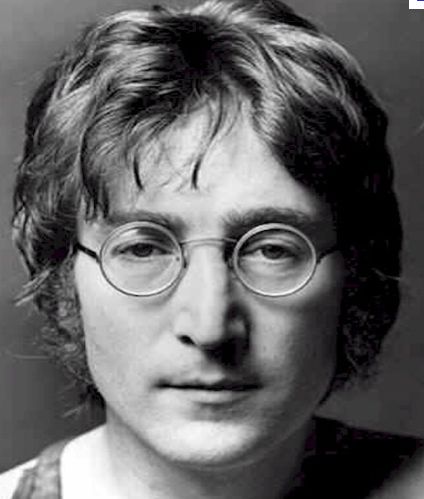
Today is another one of those. Although not on the same scale of lives lost or immediate consequence, December 8, 1980 saw a moment that defines a generation, and world, thirty years after the fact of an act of murder.

The death of John Lennon put paid to an era born in the sixties and dying with John.

It could be the timing was coincidental … another decade had closed and the 80’s loomed large and voracious. Flower-power was giving way to the darker, disenchanted tones of Goth, Ronald Reagan was White House-bound and the 80s stretched before us like a ladder to be climbed one pricey rung after the other.

Could it be, however, it was the event that instigated at least some of the changes?

The violent death of a gentle musician and poet at the hand of a publicity-seeking nutjob seems a demarcation point.

Perhaps my rearview mirror has fogged over the past 30 years, but I recall the decades before Dec. 8, 1980 as hopeful … angst-ridden, yes, but that angst flowed from frustration that the world wasn’t moving quite quickly enough toward the peaceful garden we could still imagine at the time.

We’d seen our share of horrors, but felt we’d learned stuff … important stuff that could and would matter. We felt it was possible to actually give peace a chance.

Greed started driving the bus in the 80s and angst turned to the stone of cynicism. As communism fell by the wayside, that perceived specter morphed into the solid form of expanding markets, multiple debt crises, famine and a whole bunch of wars.

Hippies turned into Yuppies, Porsche became the new VW van and conspicuous consumption took over where conscientious objection left off.

Even the drugs got meaner as coke and crack took the place of acid and weed and ad copy became a viable outlet for poets since the pay was so much better.

I’m guessing those who missed the world John Lennon lived and influenced will consider this a geezer ramble … revisionist history not appreciative of the wonders of the past three decades, or not appreciative enough.

Could be. Could be.

But I can’t help but wonder how different the last thirty years might have been if that fuckwad Mark Chapman had not decided to stake his claim to fame by blowing holes through one of the world’s most important proponents of thoughtful consideration and hope.

The music, alone, we’ve been robbed of has left us poorer.

So … on this day, as every 8th of December, I celebrate the life and rue the death of John Lennon, wonder and imagine …

Read Full Post »

I very much doubt that, back in 1956, anyone congratulating Herbert Kubly — journalist-turned-university professor — on winning that year’s National Book Award could have imagined the life that would play out for a girl of ten at the time. If somehow a mid-1950s mind was able to wrap around what was later known as Punk, the idea of the woman eventually dubbed “Godmother of Punk” winning a National Book Award of her own might have brought on apoplexy.

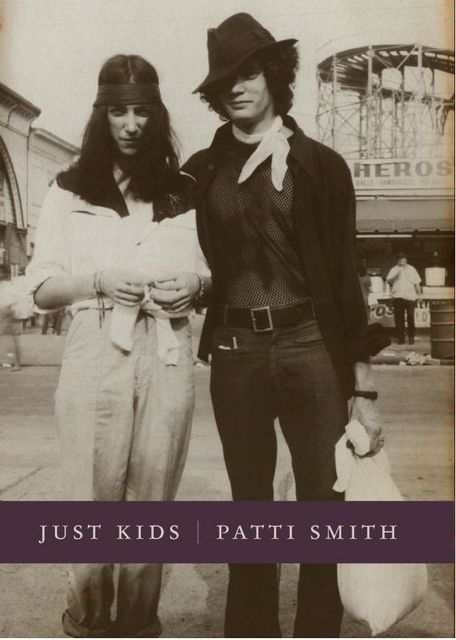
It has happend. Yes, Patti Smith IS this year’s non-fiction winner for her book Just Kids.

It was the summer Coltrane died, the summer of love and riots, and the summer when a chance encounter in Brooklyn led two young people on a path of art, devotion, and initiation.

Patti Smith would evolve as a poet and performer, and Robert Mapplethorpe would direct his highly provocative style toward photography. Bound in innocence and enthusiasm, they traversed the city from Coney Island to Forty-second Street, and eventually to the celebrated round table of Max’s Kansas City, where the Andy Warhol contingent held court. In 1969, the pair set up camp at the Hotel Chelsea and soon entered a community of the famous and infamous—the influential artists of the day and the colorful fringe. It was a time of heightened awareness, when the worlds of poetry, rock and roll, art, and sexual politics were colliding and exploding. In this milieu, two kids made a pact to take care of each other. Scrappy, romantic, committed to create, and fueled by their mutual dreams and drives, they would prod and provide for one another during the hungry years.

Just Kids begins as a love story and ends as an elegy. It serves as a salute to New York City during the late sixties and seventies and to its rich and poor, its hustlers and hellions. A true fable, it is a portrait of two young artists’ ascent, a prelude to fame.

Patti came to music through poetry, a logical step that resonates on just about every level I have and made me a fan many years ago. Her lyrics have spoken , and with a generation I listened, absorbed and was absolved.

Her verse and voice still inspire:

Dancing Barefoot

she is benediction
she is addicted to thee
she is the root connection
she is connecting with he

here I go and I don’t know why
I spin so ceaselessly
could it be he’s taking over me…

I’m dancing barefoot
heading for a spin
some strange music draws me in
makes me come on like some heroin/e

she is sublimation
she is the essence of thee
she is concentrating on
he, who is chosen by she

here I go and I don’t know why
I spin so ceaselessly,
could it be he’s taking over me…

she is re-creation
she, intoxicated by thee
she has the slow sensation that
he is levitating with she …

here I go and I don’t know why,
I spin so ceaselessly,
’til I lose my sense of gravity…

And now, what has been called a “beautifully crafted love letter to Robert Mapplethorpe” has been oh-so-appropriately honored.

My congratulations and gratitude to the National Book Foundation for their supreme good sense.

You can read an excerpt from the book here, but here’s a bit from that:

We used to laugh at our small selves, saying that I was a bad girl trying to be good and that he was a good boy trying to be bad. Through the years these roles would reverse, then reverse again, until we came to accept our dual natures. We contained opposing principles, light and dark.

I was a dreamy somnambulant child. I vexed my teachers with my precocious reading ability paired with an inability to apply it to anything they deemed practical. One by one they noted in my reports that I daydreamed far too much, was always somewhere else. Where that somewhere was I cannot say, but it often landed me in the corner sitting on a high stool in full view of all in a conical paper hat.

I would later make large detailed drawings of these humorously humiliating moments for Robert. He delighted in them, seeming to appreciate all the qualities that repelled or alienated me from others. Through this visual dialogue my youthful memories became his.

Although it was far from fairy tale fodder and did not end up in happily-ever-after, the Smith/Mapplethorpe relationship … two dedicated artists sharing the path … stirs in my heart and mixes the sediment lodged there into the fluid of what it takes to create.

Ladies and gentlemen, Patti Smith … Dancing Barefoot …

Read Full Post »

Funny how that happens, the serendipity thing, but some friends are so close … even from 10,000 miles away … they know without knowing how things need to fit.

What am I on about?

Last night, just before turning out the lights — at about quarter after one — the following verse spilled from my fingers … heart … whatever … because that’s the way my heart and fingers cope.

He Calls

He calls
he says, Please …
don’t tell
Don’t tell about the history
Don’t tell about the future
promises
lies
compromise

He calls
he pleads, Please,
don’t let them know
the truth in the history
the vision of the future
promises
lies
compromise

He calls
we laugh, Please!
don’t forget
Don’t need to hear the history
Don’t need to know the future
promises
lies
compromise

He calls
we fight, Please!
don’t cry
Forget about the history
ponder on a future
promises
lies
compromise

He calls
we kiss, Please …
don’t judge
Glorious was the history
nebulous is future
promises
lies
compromise

Waking up this morning, what waits is music from Robbie, my cosmic twin, who has a keen grasp of my heart and often knows my mind before I do. (He’s a bit spooky, he is.) …

Now, I write a lot of poetry, and most is for therapeutic purposes, very little seeing the light of day, but on this bright, sunny morning in Seychelles, it seems this must.

Serendipty do … or something …

Read Full Post »

Today I celebrate the life of John Lennon who would be 70 years old had he not been murdered almost 30 years ago. His life and his music changed the world, and his death marked the end of an era of hope and the beginning of the ’80s … a decade of shallow greed and small-mindedness that metastasized throughout our culture and manifests today in polarizing self-righteousness.

How much different our world might be if a poor excuse for a human had not gunned down John Lennon on the 8 December 1980 we cannot know, but that sick and simple act most certainly robbed us all of the wisdom of a great mind, the direction of a generous spirit, the sagacity of a benevolent participant in life’s parade, the perspective of a compassionate genius and a whole lot of music.

We are left with what he had time to give. I share some here today …

“A dream you dream alone is only a dream. A dream you dream together is reality. ”

“If someone thinks that love and peace is a cliche that must have been left behind in the Sixties, that’s his problem. Love and peace are eternal.”

“God is a concept by which we measure our pain.”

“The more I see the less I know for sure.”

Imagine all the people living life in peace. You may say I’m a dreamer, but I’m not the only one. I hope someday you’ll join us, and the world will be as one.

Read Full Post »

The Creator wants us to Drum. (God) wants us to corrupt the world with drums, dance, and chants. We’ve already corrupted the world with power and greed, which has gotten us nowhere. Now’s the time to corrupt the world with drum, dance, and chants.—-Babatunde Olatungi, Nigerian master drummer

Although the refrain “Feckin’ musicians” has been running through my head and out my mouth more than a little bit lately, I fully admit to having a soft spot … yes, in my head as well as in my heart … for those who create and perform amazing feats of sostenuto virtuosity. The brilliance of a maestro appeals on all levels, and the passion it takes to make music attracts in ways powdered rhino horn can only fake (much to the detriment of a population of wonderful creatures).

Musicians are gifted in a language I don’t speak and construct worlds from far different materials than those I have at my fingertips. The mystery of those worlds can catch my imagination and have me drifting for a very long time on a sea of contented wonder. They also understand my drives and passions, encouraging exploration of my own depths and applauding my less-melodic results, never to question a need to shut myself up within my head and live for a while in realms of my making or a demand to cough up a paycheck to prove my creations have merit. They can also take me out of my orbit and show me other ways a planet spins.

Contributions from the musical world are legion, and there’s no need here to wax lyrical on the rich layers music adds to life and to love. Thanks, however, to new lessons learned from a wonderful teacher who takes the time to show me parts of the world I don’t normally get to see, I have learned some about how music heals.

Of course, I’ve long known that music has charms to soothe the savage breast, as Congreve so succinctly summed a couple of hundred years ago, and have used lilting strains and building crescendos to get myself through traumas both emotional and physical. What I have missed until now, though is the healing powers of drums.

Experts believe that rhythmic drumming can aid health by inducing a deep sense of relaxation, reducing stress, and lowering blood pressure.

Mickey Hart, drummer for The Dead spent a lifetime studying not only the history of drumming, but the effects on the human condition, as well.

In 2000, Mickey Hart became a member of the Board of Directors of the Institute for Music and Neurologic Function, a not-for-profit organization whose mission is to seek to establish new knowledge and develop more effective therapies which awaken, stimulate and heal through the extraordinary power of music — continuing his investigation into the connection between healing and rhythm, and the neural basis of rhythm.

The Institute for Music and Neurologic Function in New York understands the benefits:

Its aim is to restore, maintain and improve the physical, emotional and neurologic functioning in people who have been debilitated through stroke, trauma, dementia, Alzheimer’s disease, Parkinson’s and other processes through the systematic use of music.

Oliver Sacks, famed neurologist and author of many works on the wonders of the mind, provides the scientific guiding hand for the institute. His discovery that drumming interrupts the chaos that is Tourette’s syndrome led to studies of the impact of rhythms on other disorders of the brain.

To hear drumming is to feel it in our bones … I like when it rattles my teeth, too … and the sensation resonates. It’s our heartbeat and our history.

The drum family is considered the most representative of African instruments, found in societies and tribes across the continent. The drums speak in codes the language of the tribes, and are frequently used to communicate news and messages between towns.

The talking drums of West Africa are renowned for their ability to closely imitate the rhythms and intonations of the spoken word, the more skilled players can reproduce dialogue understood by a knowledgeable audience. By sending the messages along, they can be carried for miles.

It is said that the djembe dates from as far back as 500AD, made from a curved tree trunk and goatskin. … Dubbed the ‘magic drum’ for its ability to move people and the ‘healing drum’ for its history as a fundamental tool in healing traditions.

Yes, Koestier did grasp one aspect of the drum when he wrote, “The most persistent sound which reverberates through men’s history is the beating of war drums”, but magic and healing are also the legacy.

And talking, thankfully.

Read Full Post »

“I used to live in a room full of mirrors; all I could see was me. I take my spirit and I crash my mirrors, now the whole world is here for me to see.” ~ Jimi Hendrix

One of the great things about not being young is having a raft of experience that has pitched up in some interesting places during momentous occasions, so when a day like today comes along I don’t have only vague notions of pop culture-fed imaginings, but personal recollections that pull me along and surround me in a sea of memories I can touch, smell and taste.

I can cast my mind back to the day before today 40 years ago … September 17, 1970 … and conjure that world of long, flowing locks on everyone, Indian bedspread material curtains on widows of VW vans, the fragrance of brown rice bubbling with patchouli and weed undertones wafting just about everywhere, the tingly-tongue-taste about to bloom to bare feet from a dot of blotter.

Was there ever another such time? Has history ever gifted such a hopeful youth, one so committed and convinced it perched on the edge of greatness and could easily force feed a future on hope, dreams and hallelujah hallucinations of humanity humbled?

There was a war happening and we shook off our parents’ orchestrated baaing and sang back into their faces that we should all give peace a chance instead of playing dominos and watching our friends and brothers fall in organized lines … confident in the fact that if you want to end war and stuff, you gotta sing loud.

Much of mass media was kept well beyond our reach, but we had our music, and it took over the world. Any song had anthem potential and could become a rallying point, and those who made the music became heros … but everyday heros. The stars of those times inhabited the world we lived in, not some distant, exotic celestial body. They created music for the world, not at it, dissecting and reflecting common experience. (Even the most obscure themes were easily grasped when minds eagerly altered to span distance, ethnicity, exposure and any other differences that weren’t.)

Yes, it was a sanguine saga, a buoyant, confident and expectant generation, but by definition youth lacks experience and growing up had to happen.

Some of that growing up started today 40 years ago … September 18, 1970 … hence this post, today being the anniversary of the death of one of the best guitarist to ever pluck a string, Jimi Hendrix.

Sixteen days later, the world lost Janis. Nine months after that it was Morrison.

We had been accustom to death by war, by accident, by disease, but we’d rather missed the specter of death by life … by excess of passion, by a profligacy of youth, by presumption that power manifested assured immortality.

Or did we?

We grew up … for sure … grasped impermanence and assimilated the assumption of disillusionment into our core just like every generation before us. We’ve shifted gears and goals, darkened the rose tint on our shades, and some have developed a conservative shell to fend off what they once may have embraced.

But … and this is huge …

the music lives, and will outlive us.

Read Full Post »

Music ... for the soul. Photo: Kim Pockpas

Music ... for the soul. Photo: Kim Pockpas

It has longed seemed to me that as humans we are over-engineered and severely limited by our biology.

I suppose that could be why Yoda’s line … in addition to many issuing from sources less mainstream and more respected … resonates:

Luminous beings are we, not this crude matter.

Crude matter, for sure, even when we fix ourselves up, often to the detriment of luminosity.

What could be the reason for minds that allow us to imagine everything, but bodies that begin falling apart as soon as we’re born, spend a lifetime secreting disgusting fluids, can’t see in the dark, breathe under water or fly?

Only one answer makes sense to me, and that is that this life is merely a pit stop, a quick duck-in for some sort of tuning up or tuning in or tuning out … whatever ends up being made of our time.

I know many who are convinced that this is it, that in becoming human we have hit the wall, that we’re born, we live, we die, and that’s the whole story, and I have no problem with that, except that it makes no sense … it’s just bloody wasteful.

We can easily track the reasons for many evolutionary developments … whales lost their legs because they hampered swimming, mandrills developed colorful butts to keep track of each other in dense forest … and much of human change, from bipedalism allowing for quicker spotting of predators, leading to shapely asses in the process, to color vision letting us find ripe fruits, fits the program. At some point, however, it just got silly.

Science may argue that our capacity to dream up Shakespearian plays, grand music, art and philosophy is some sort of side dish, a naturally occurring consequence arising in tandem with the ability to hunt and gather, but I’d have to ask: What would be the point?

Did we need to be able to put man on the moon to put food on the table … Did we need a table? … and reproduce? Other animals that have been around much longer than we have, tortoises, for example, haven’t been compelled as a species to invent French horns to enrich their environment .

Our evolutionary biology has worked against us as we’ve been honed. We’ve lost the capacity to smell sexual readiness, fear and illness as we’ve relied more and more upon vision, even while knowing well that we can’t trust our eyes much of the time, the hand being quicker than and all that.

And as great as our minds can be, our bodies limit us; our brains can only process so much of the information in our world. We know, for instance, that time is not linear. This has been proven, but can we wrap our heads around that? Even those who can quote formulas live one day at a time.

Stephen Hawking, for one, who said: “It is not clear that intelligence has any long-term survival value.”

How much in our world do we miss, ignore, refuse to incorporate into our version of reality? We know that we are constantly surrounded by energy; light and heat are two we notice, but it’s likely that there is much more. We may even sense the occasional touch of something, but not being able to classify we chalk it up to whatever …

There was a case of a “new tribal people” discovered in South America some years back. Poor slobs were inundated by scientists wanting to study this unique and untouched society. At one point one of the researchers, noting the weekly overflight of an airplane, asked the people what this object in the sky was called in their culture. He was looked at with amusement … poor guy was obviously batty … because the plane simply did not exist in their world. They didn’t even see it.

It is possible that we exist in simultaneous multiple universes, even though we can conceive of them wonderfully without really “getting it”, so are very likely missing a lot.

Or are we? Perhaps we know more than we think we do. After all, we create art and music for our souls … the part of us we know and touch without proof. We are more than our biology, and death is a door, nothing more.

Okay. Tangent over …

Read Full Post »
More music

Here’s Ernesto Cortazar playing my song last week in Germany:

Enjoy …

Read Full Post »

I am so completely awash with thoughts as I start this post that finding a jumping-of point is gluing my fingers to my keyboard as my brain attempts to sort out a beginning, a middle and an end.

Ah … screw it … Dive, dive …

First, an admission: I have never seen an “Idol” show. Not since Arthur Godfrey’s Amateur Hour have I watched hopeful performers set themselves up on television to take the hits that standing metaphorically naked in front of the world can bring. I know who Simon Cowell is only because I own the Shrek DVD that has him as a special feature, but have no idea who others are who sit in judgement.

So …

I’m confused.

Postings on facebook today included many people linking to a vid from a program called “Britains Got Talent” … is there supposed to be an apostrophe there somewhere? … that shows a woman singing.

The “hook” here seems to be that she’s not a babe. Susan Boyle is a 47-year-old rather plain looking person from Scotland who has obviously managed to avoid being styled. She has bushy eyebrows, a double chin and a bit of extra weight under her matronly dress. Her hair is thinning, her accent billboards her roots, and her manner, although confident enough considering the cameras and the crowd, hints of self-deprication.

Since this is a program featuring talent, not a beauty pageant, I am having a hard time understanding why eyes are rolling in the audience and judges barely cover smirks as she introduces herself … much less the stunned reaction when she opens her mouth and belts out a perfect version of the difficult “I Dreamed a Dream” from Les Miserables.

Since when did someone have to look pretty … in some canned-for-mass- consumption sort of way … to sing beautifully?

Since the advent of music vids, perhaps? Are we no longer able to hear the magic without seeing the performer, and the explanation of just exactly what it is we’re listening to?

Many are referring to this moment in British TV as inspirational. Why? Because a dowdy lass of some years can sing?

Sorry, but I just find the shock and awe of it all disturbing.

Congratulations, Susan Boyle. You were beautiful before you opened your mouth.

Read Full Post »

« Newer Posts - Older Posts »