Feeds:
Posts
Comments

Archive for the ‘History’ Category

Yesterday’s post on You=tube and being all DaDaDandy needs a follow, and although I’m far from growing wings and going chirpy I may possibly have something percolating between synapses that offers other than gloom for a Tuesday.

When in discussions with folks who subscribe to Life is Short and Then You Die and That’s All She Wrote line of thought, one question that pops into mind is: Why?

Not, “Why do you think this is all there is?”, because that actually makes a lot of sense, but “Why?” as a broader issue.

Although I do understand the biological imperative we carry to find meaning to life in our efforts to figure out what’s going on and therefore somehow protect ourselves with the result being we stick around longer, that doesn’t feel quite enough to get us to the point of doing so so well.

In the course of evolution, changes in species arise because something new and different works, and works well enough and is repeated often enough to have those with it make more others than those without. Many new adaptations are very costly involving trade-offs in expenditures of energy.

Bright coloring in male birds, for instance, takes more energy, but results in breeding opportunities, so it works and is worth it.

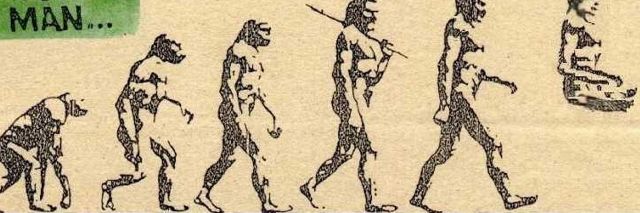
Humans stand rather than crawl after developing big ass muscles, an improvement on mobility allowing us to use our hands which led to tool making and a decent living for manicurists. The ability to use tools made killing big stuff possible so we starting living in groups … which spread the cost a bit as the society as well as individuals anted up … and talking to each other so we could manage to deal with mammoth leftovers.

Fine. DadaDandy, even.

Where the evolutionary sense runs off the rails for me, however, is where we got so bloody smart.

Where is the biological imperative in moving from beating on a log while blowing through a reed to Mozart? For that matter, why did we start blowing on reeds in the first place? Chimps have been around as long as we have and done well without making music, so what is it in us that needs it to soothe the savage breast?

What good has it done our species to build extra brain making it possible to turn completely effective grunts to poetry, to develop compassion to the point of giving the shirts off our back to help another in need and the determination to go where no one has gone before even when we well know there’s a dearth of fruiting trees in them thar hills?

Big brains need a lot of calories to form and to work. Why go that way when longer arms or wings or bigger lungs may have served better?

If there’s one thing going on making me suspect there’s more than one thing going on, it would be that we’re over-engineered for what’s needed for survival in this world. Because that over-engineering is so expensive, it seems there must be a better reason for it than simple process of effective mutation explains, and because of that there just might be more to us.

So, from a Monday to a Tuesday, and from Kierkegaard and Nietzsche to a philosopher of our time, Yoda …

Luminous beings are we, not this crude matter.

Perhaps …

Read Full Post »

Apologies for this convoluted mess of a post. I’m processing, and that’s not a tidy endeavor, so this thing is all over the place …

Being a reader and a writer, I suppose it makes sense that I often think of life in terms of books.

One of my favorite images, developed when I was a kid and honed over the years, is of internal libraries we each carry with us; volume after volume of stories lining endless shelves and constantly being added to. The history section grows as we age, as does general knowledge and reference works, and although some are better than others at retrieving info we know is there, just about everyone is aware of the fact that dusty corners hold stuff we haven’t bothered to look at in a very long time.

I use my library as an aid to meditation and often find illumination for troubling issues while wandering the stacks. There’s an entire section with nothing but numbers on the spines … all in Roman numerals. (I don’t know why, but that’s what it is.) The first is marked “I” and I can trail my finger along … V, X, XXV, XXXIII, XL, L … and stop where it feels right. Each book is a rough accounting of one year of my life, yet none are finished but have blank pages interspersed throughout since many of the yarns have yet to complete their weaving.

The library itself is inside a book inside my head, but much like reading on my iPad, I have no idea how thick this book might be. I know I’m a good way through, but just how far from The End, I can’t see. It could very well be that the next turn of the page is the last … or perhaps there are still quite a few chapters.

I might sketch notes in the corners if I could get to those pages by somehow jumping ahead — they are fairly blank, after all — but thumbing forward is futile and ends up heading back through chapters on history. That’s not a bad thing. Not at all. In fact, filling in gaps can be quite helpful even without knowing how it all ends.

One rule of fiction writing dictates everything included in a story must either reveal character or advance plot. Interestingly, reads back through my book seem to indicate that rule was followed even though at the time it seemed either nothing was happening or what happened was scripted by the William S. Burroughs school of writing. Oh, those not-so-lovely Deus ex Machina moments that make no sense at all … the shit asteroids falling from a clear, blue sky … the people popping up seemingly out of left field and tagging up … the bright, shiny objects floating into the path and compelling me to follow.

Yep, those WTF moments, the where-the-hell-did-that-come-from issues … when looking back in the Big Book of Sandra I do get the idea that all these shredded threads actually unspool from a source and following the fragments is possible. Some of it even makes sense when looking at it backwards, or if not sense at least symmetry. After all, I’m where I am now and getting here is what the story’s been about … so far.

As a new year begins, the image of blank pages ready for filling presents, but I’m not writing my life, just living it. It’s not me setting the scene but the sea and the clouds and the blue sky above, the bird chirps, the sound of the dog’s leg tapping along in time to her scratching happening with no need to be described … it all just is.

I can’t write others’ actions or reactions. I can’t build a character who loves me enough, never lets me down or saves the day. It’s not for me to calculate another’s trajectory and where it intersects mine. I can want to, but I can’t DO it. No. What is, is.

What also “is” is the part I can’t know — the part composing on its own. Are we coming toward an unexpected plot twist? A lottery win? The death of a loved one? Someone wonderful about to enter stage right? Cancer? A job offer? A heart attack?

Any or all of that could be part of the plot … well, not the lottery thing, since apparently you have to actually buy tickets and I don’t … and if I die tonight, my book is done and I’ll be filed away in the libraries of those who know me, but will continue to fill pages in others’ books … cross-references are a huge part of the life of Life books and parts of my story will continue to be included in the story of others for a while.

My volume varies in size from library to library … much thicker in my grown daughter’s than in Cj’s, for example … and there will be many different versions of my story. The version I have access to now will never be read by anyone, so no one will ever know the me of me that I know, just as I can’t know the them of any of them. Our stories are not only unique, they are forever beyond the comprehension of anyone, even ourselves; unfathomable biographies covering millions of seconds, each leading to the next until they stop doing that.

And there will be rewrites, some kind, some less so, but all tailored to fit the edition to the library hosting.

If I could write the rest of my life, I would end the book for MMX with ” … and she lived happily ever after to the end of her days”, then start on a new one with an outline for just how that would unfold making sure there were many, many pages left for all the great stories about to commence. For all I know, however, it’s already written, and perhaps that is how it goes. Maybe I do live happily ever after. Maybe all the carefully composed outlines have forged themselves in some sort of unassailable form that MUST be followed. Maybe. For now, though, all I can do is look forward to the read … and the ride.

For all who’d like to take a look,
my life is but an open book.

But please, I beg you, all my friends,
some word if you know how it ends.

Read Full Post »

Christmas 2010 is history and we’re now at New Year’s Eve … the traditional day for making lists and checking them often, adding, subtracting, watching hopes multiply and dividing the wheat from the chaff.

MMX was not a great year, but since death didn’t intrude into my immediate world, it wasn’t terrible, either. It was what it was, and it’s over.

Before flinging my arms wide in welcome to 2011, I’ll say goodbye to the old year and dance with its ghosts for a while.

Although I love Burns’ Scots version, a translation into modern English helps make the point:

Should old acquaintance be forgot,
and never brought to mind ?
Should old acquaintance be forgot,
and old lang syne ?

CHORUS:
For auld lang syne, my dear,
for auld lang syne,
we’ll take a cup of kindness yet,
for auld lang syne.

And surely you’ll buy your pint cup !
and surely I’ll buy mine !
And we’ll take a cup o’ kindness yet,
for auld lang syne.

CHORUS

We two have run about the slopes,
and picked the daisies fine ;
But we’ve wandered many a weary foot,
since auld lang syne.

CHORUS

We two have paddled in the stream,
from morning sun till dine† ;
But seas between us broad have roared
since auld lang syne.

CHORUS

And there’s a hand my trusty friend !
And give us a hand o’ thine !
And we’ll take a right good-will draught,
for auld lang syne.

CHORUS

To all dear friends, to those I love and who love me, to the casual reader who pops in on occasion, to everyone who wandered through my world over the past 365 days … although seas between us braid hae roar’d, I offer gratitude, my hand and a right good-will draught o’ kindness.

Adios 2010 …

Read Full Post »

I wrote earlier today on the magic of belief in Santa Claus, the gift to the imagination that shiny bit of tinsel can hang on children before they reach the age when flying reindeer and fat men squeezing their bulk down chimneys to leave bikes and dolls no longer makes any sense and they face the realization that Mom and Dad are bigger benefactors than they’d figured.

We consider the progression to be in the natural order of things; hopeful frivolity gives way to information, knowledge, to familiarization with the way things really are. Also learned in time is a sense of history that serves to put traditions in context, to illuminate how one thing led to another to another and eventually to St. Nicholas morphing into Santa Claus.

Okay … so my eight-year-old is on the verge of twigging to the Santa gag, and even though I’m hoping he gets this one more year of the fantasy the writing is on the wall. He’s a smart, curious kid who loves to learn and wants to know stuff, and in the long run all that is a good thing.

I can’t help, however, but be amazed at the huge number of people who never get further than the fairy tales.

Those in this article for example:

A new Gallup poll, released Dec. 17, reveals that 40 percent of Americans still believe that humans were created by God within the last 10,000 years.

Yeah … I could have gone with the whole Holy Night tale, but although it is almost Christmas other angles came across my reindeer radar today, and the idea that only 16% of Americans buy the idea of evolution without divine guidance feels to me like a call for intervention.

Don’t get me wrong — I like Christmas music as much as the next indoctrinated American-raised harker of Harold the singing angel, and the idea of Peace on Earth, Goodwill to Men (and women and children) is worth propagating. It does rather piss me off when the concept is hijacked once a year by peeps whose agenda is suspect and divisive.

When high on said agenda is keeping people stupid … well … even more reason to bah and humbug, and trotting out Eden as fact while science is swept up with the torn wrapping paper is doing exactly that.

The poll also revealed that beliefs in creationism and evolution are strongly related to levels of education attained. When results are narrowed to those with college degrees, only 37 percent of respondents maintain beliefs in creationism. Meanwhile, the belief in evolution without the aid of God rises to 21 percent.

Those numbers are still appalling, but do give some hope that education has some force against ignorance.

Lest anyone think I’m picking on Christians to put the Christ in Christmas, another story in today’s news made the same point, but in a bit more gruesome a manner. Titled “Koran Written In Saddam Hussein’s Blood Poses Problem For Iraqi Leaders”, it could be considered another candle on the holly branch …

The unique Koran’s creation took over two years:

It was etched in the blood of a dictator in a ghoulish bid for piety. Over the course of two painstaking years in the late 1990s, Saddam Hussein had sat regularly with a nurse and an Islamic calligrapher; the former drawing 27 litres of his blood and the latter using it as a macabre ink to transcribe a Qur’an. But since the fall of Baghdad, almost eight years ago, it has stayed largely out of sight – locked away behind three vaulted doors. It is the one part of the ousted tyrant’s legacy that Iraq has simply not known what to do with.

Slate notes that Saddam was never one for subtlety, and that this undertaking would serve propaganda purposes for when the dictator need to be seen as pious; he “decided to show the world that he was willing to literally sacrifice his blood for the sake of his religion.”

His blood. Nice. What a sacrifice, heh?

And to think Santa would have just left a lump of coal in his stocking and called it a day while assuming he’d made the point that genocide goes on the naughty list. Of course, if Santa was the issue, Saddam would have grown out if it by the time he was 10 or 12 … or 30.

So, why is it okay … normal, reasonable … to mature beyond the dude-in-red flying down from the North Pole, but Adam and Eve and Mohammed once ingested are to last a lifetime? Why is A Visit from St. Nicholas considered light verse, but the second chapter of Luke gospel? (Okay, bad choice of words, but you get my drift.)

But really, does this …

And Mama in her ‘kerchief, and I in my cap,
Had just settled our brains for a long winter’s nap —
When out on the lawn there arose such a clatter,
I sprang from the bed to see what was the matter.
Away to the window I flew like a flash,
Tore open the shutters, and threw up the sash.
The moon on the breast of the new fallen snow,
Gave the lustre of mid-day to objects below;
When, what to my wondering eyes should appear,
But a miniature sleigh, and eight tiny rein-deer,
With a little old driver, so lively and quick,
I knew in a moment it must be St. Nick.

… make any less sense than this …

And there were in the same country shepherds abiding in the field, keeping watch over their flock by night. And, lo, the angel of the Lord came upon them, and the glory of the Lord shone round about them: and they were
sore afraid.

And the angel said unto them, Fear not: for, behold, I bring you good tidings of great joy, which shall be to all people. For unto you is born this day in the city of David a Savior, which is Christ the Lord. And this shall be a sign unto you; Ye shall find the babe wrapped in swaddling clothes, lying in a manger.

And suddenly there was with the angel a multitude of the heavenly host praising God, and saying, Glory to God in the highest, and on earth peace, good will toward men.

… ?

Sure, the first quote rhymes and only has a couple of songs to go with, but more importantly it wasn’t shouted from pulpits in our direction, and I can’t help thinking that’s one big diff. That and the fact that Santa has little political clout and other than marketing not much economical sway, either.

As I said in my earlier post, I don’t see Santa as a dangerous illusion fostered by parents, but a bit of magic meant to stir imagination. The other stuff could be the same, but folks don’t seem to outgrow that shit.

Read Full Post »

Is connectivity making people smarter?

I’m not talking about those with the inclination to investigate every innovation, develop platforms for interaction or keep track of what humanity is up to, although I do wonder what Julian Assange might have done with his smarts if the Internet didn’t exist and how many other brilliant minds might have gone to seed in the days before sitting around in your bedroom in smelly sweats for days on end allowed one to reach into the guts of power of all sorts.

No, I’m thinking about the reasonably bright lot for whom ease of access to information, one-click research and breakfasting on RSS feeds just might be growing brain cells or teaching the ones already there to shake hands more often.

Historically, availability of info has been proven to do just that, and along with the process of getting smarter shit happens, as this WSJ article illustrates:

As Gutenberg’s press spread through Europe, the Bible was translated into local languages, enabling direct encounters with the text; this was accompanied by a flood of contemporary literature, most of it mediocre. Vulgar versions of the Bible and distracting secular writings fueled religious unrest and civic confusion, leading to claims that the printing press, if not controlled, would lead to chaos and the dismemberment of European intellectual life.

These claims were, of course, correct. Print fueled the Protestant Reformation, which did indeed destroy the Church’s pan-European hold on intellectual life. What the 16th-century foes of print didn’t imagine—couldn’t imagine—was what followed: We built new norms around newly abundant and contemporary literature. Novels, newspapers, scientific journals, the separation of fiction and non-fiction, all of these innovations were created during the collapse of the scribal system, and all had the effect of increasing, rather than decreasing, the intellectual range and output of society.

I started blogging back in 2003 on a professional site that eventually saw my posts getting over 100,000 hits a month. It was new to a lot of people then, all this Internet interaction, but the site was topic-specific … adoption … and many came to it looking for information tailored to their issues, questions and needs. Approaching what was to many a new way of gaining knowledge with an agenda encouraged participation, and a jump into one pool of info prompted leaps into others.

In pursuit of fodder, I joined a bunch of groups … Yahoo first, then Google offered forums for exchange, and the give-and-take was often lively after people overcame their original shyness.

Most new members announced themselves as such, apologizing in advance for any blunders as they tiptoed into discussions, but soon gained confidence not only with the technology, but also in their ability to convey meaning through writing their thoughts.

Unlike in the time when written material was often a one-side lecture and responses took days or weeks to lob the discussion ball back over the net, hot debates started happening in real time with only seconds passing between one point and the next.

People not only began to type faster, they learned to frame thoughts in ways that could be typed fast and understood. Without the benefit of vocal tone, eye contact and body language, words needed to be well chosen and presented if one had any hope of having meaning comprehended by the target audience.

Online groups led to social networking, and chatting and typing got even faster. People grew beyond the fear of putting thoughts in writing … an ‘engraving in stone’ idea that had some concerned for a while about the written word … and began to converse comfortably with their fingers.

The global scope gets people from widely-flung countries and cultures talking, an opportunity that serves to extend the range of thought at the same time it encourages us to consider people geographically distant to feel like neighbors chatting over the back fence. With online translators … as crap as they are … we can even communicate across language divides.

Sure, a lot of what goes back-and-forth is inconsequential bollocks … flirty bullshit, schmooze, schmaltz and preaching to the choir … but it is back-and-forth, active, so has more likelihood of developing into something of interest than sitting in front of the TV. For those who think inconsequential bollocks is what it’s all about ….

The decade the pessimists want to return us to is the 1980s, the last period before society had any significant digital freedoms. Despite frequent genuflection to European novels, we actually spent a lot more time watching “Diff’rent Strokes” than reading Proust, prior to the Internet’s spread. The Net, in fact, restores reading and writing as central activities in our culture.

On a personal level all this connectivity has made life on a tiny island vastly more interesting, and, yes, it has made me smarter. Friends from all over the world share ideas and information freely and easily, so my perspective is wider. I can read news from just about anywhere, from the Red Bluff Daily to Al Jazeera, and although I often feel the overload I can click from link to link to link and examine any issue. When I have a question about anything I can find an answer … or 1,000.

Sure, I can also watch Bullwinkle pull a rabbit out of a hat … oops, wrong hat … and read all the stupid shit that floats, but even that keeps my brain working.

There is no going back … I hope, although today’s news on the ramping up of what is rapidly evolving into a war has me worried that we’re sure to see serious attacks designed to rein in freedom of information.

Those of us with Internet access … even me with my fucking unreliable Kokonet connection … have grown accustomed the routine of getting a bit smarter, or at least better informed, every day, and as more people connect the world gets smaller and smarter, both through reference sources and personal contacts previously impossible.

For example, I have a facebook friend in Niger, so can not only Wiki the country for info, I can write to my pal with questions on day-to-day living, his take on politics and events and a weather report.

When news happens … the recent tragedy in Cambodia comes to mind … it’s not difficult to get a first-hand account from someone there.

The option we have now of removing or ignoring filters placed by those with an agenda we may not see makes it possible to get closer to the bottom of any issue of interest, and as we get better at learning how to use our ‘connections’ to plumb depths we expand the concept of our place in the world.

Of course, there is a downside …

It’s a lot harder to find an excuse to be stupid.

Read Full Post »

Yesterday I wrote about infamous dates, an appropriate topic on Pearl Harbor Day.

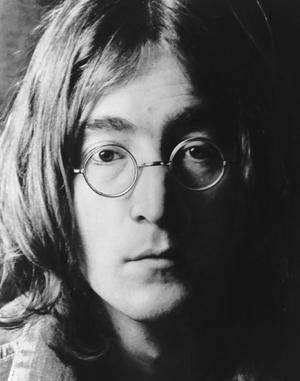
Today is another one of those. Although not on the same scale of lives lost or immediate consequence, December 8, 1980 saw a moment that defines a generation, and world, thirty years after the fact of an act of murder.

The death of John Lennon put paid to an era born in the sixties and dying with John.

It could be the timing was coincidental … another decade had closed and the 80’s loomed large and voracious. Flower-power was giving way to the darker, disenchanted tones of Goth, Ronald Reagan was White House-bound and the 80s stretched before us like a ladder to be climbed one pricey rung after the other.

Could it be, however, it was the event that instigated at least some of the changes?

The violent death of a gentle musician and poet at the hand of a publicity-seeking nutjob seems a demarcation point.

Perhaps my rearview mirror has fogged over the past 30 years, but I recall the decades before Dec. 8, 1980 as hopeful … angst-ridden, yes, but that angst flowed from frustration that the world wasn’t moving quite quickly enough toward the peaceful garden we could still imagine at the time.

We’d seen our share of horrors, but felt we’d learned stuff … important stuff that could and would matter. We felt it was possible to actually give peace a chance.

Greed started driving the bus in the 80s and angst turned to the stone of cynicism. As communism fell by the wayside, that perceived specter morphed into the solid form of expanding markets, multiple debt crises, famine and a whole bunch of wars.

Hippies turned into Yuppies, Porsche became the new VW van and conspicuous consumption took over where conscientious objection left off.

Even the drugs got meaner as coke and crack took the place of acid and weed and ad copy became a viable outlet for poets since the pay was so much better.

I’m guessing those who missed the world John Lennon lived and influenced will consider this a geezer ramble … revisionist history not appreciative of the wonders of the past three decades, or not appreciative enough.

Could be. Could be.

But I can’t help but wonder how different the last thirty years might have been if that fuckwad Mark Chapman had not decided to stake his claim to fame by blowing holes through one of the world’s most important proponents of thoughtful consideration and hope.

The music, alone, we’ve been robbed of has left us poorer.

So … on this day, as every 8th of December, I celebrate the life and rue the death of John Lennon, wonder and imagine …

Read Full Post »

There was the guy who came to pick me up wearing a rabbit suit … 6’10” with ears, of white fur, fuzzy tail and floppy feet. He doesn’t qualify for this post, however, since I didn’t actually go out with him after he scared the shit out of my son (Ack! The Easter Bunny’s looking at me!) and I realized he was a nutjobfuckwad of immense proportions and far too comfortable, tip-to-toe, in polyester on an August evening.

December 7, 1941, though … that is an infamous date.

Yesterday, December 7, 1941 a date which will live in infamy the United States of America was suddenly and deliberately attacked by naval and air forces of the Empire of Japan.

The United States was at peace with that nation and, at the solicitation of Japan, was still in conversation with its Government and its Emperor looking toward the maintenance of peace in the Pacific. Indeed, 1 hour after Japanese air squadrons had commenced bombing in Oahu, the Japanese Ambassador to tie United States and his colleague delivered to the Secretary of State a formal reply to a recent American message. While this reply stated that it seemed useless to continue the existing diplomatic negotiations, it contained no threat or hint of war or armed attack.

It will be recorded that the distance of Hawaii from Japan makes it obvious that the attack was deliberately planned many days or even weeks ago. During the intervening time the Japanese Government has deliberately sought to deceive the United States by false statements and expressions of hope for continued peace.

The attack yesterday on the Hawaiian Islands has caused severe damage to American naval and military forces. Very many American lives have been lost. In addition American ships have been reported torpedoed on the high seas between San Francisco and Honolulu.

Yesterday the Japanese Government also launched an attack against Malaya.

Last night Japanese forces attacked Hong Kong.

Last night Japanese forces attacked Guam.

Last night Japanese forces attacked the Philippine Islands.

Last night the Japanese attacked Wake Island.

This morning the Japanese attacked Midway Island.

Japan has, therefore, undertaken a surprise offensive extending throughout the Pacific area. The facts of yesterday speak for themselves. The people of the United States have already formed their opinions and well understand the implications to the very life and safety of our Nation.

As Commander in Chief of the Army and Navy I have directed that all measures be taken for our defense.

Always will we remember the character of the onslaught against us.

No matter how long it may take us to overcome this premeditated invasion, the American people, in their righteous might, will win through to absolute victory.

I believe I interpret the will of the Congress and of the people when I assert that we will not only defend ourselves to the uttermost but will make very certain that this form of treachery shall never endanger us again.

Hostilities exist. There is no blinking at the fact that our people, our territory, and our interests are in grave danger.

With confidence in our armed forces with the unbounded determination of our people we will gain the inevitable triumph so help us God.

I ask that the Congress declare that since the unprovoked and dastardly attack by Japan on Sunday, December 7, a state of war has existed between the United States and the Japanese Empire.

FRANKLIN D. ROOSEVELT

A defining moment for a generation … and the final moment for thousands … sixty-nine years ago. No need for an accounting here of what followed, as we all know it wasn’t pretty.

Defining moments and infamous dates are often the points upon which we spin.

For those of us born after WWII, December 7th is just history … required reading, film fodder, a basis for free-ranging fears as the images in our minds were fed to us, not experienced first-hand.

Questions loom over what our world would look like had the outcome been different. Although it’s pretty clear Jewbacca wouldn’t be stretching out the dreidel season in Brooklyn this Hanukkah and likely those sushi-train restaurants would have popped up much earlier, one can’t help but follow threads in attempts to pick out possible patterns that might have made up today’s fabric of life.

Can we assume almost seventy years would see things smoothed over and people getting on with things in what would have to seem normal lives? Hirohito and Hitler would have died long ago even if their sides had won, that’s guaranteed, and the planet would come to be populated by people whose history books are colored in according to prevailing wisdom … crayons being one of the spoils going to victors. Perhaps our present would seem as odd, and as awful, to them as theirs does to us when we conjure images of a world ruled by Nazis and kamikaze conquistadors.

Our generation has 9/11, our “I’ll never forget where I was when” moment. And we won’t, not if we were five or fifty on that day in 2001.

We have yet to see anywhere near the end of the fallout from that attack on the US, and I wonder if sixty-nine years will reveal any clarity.

US involvement in WWII lasted less than four years. The Afghan War has now been going on for more than twice that and is now official the country’s longest in history.

And it ain’t over.

If we could jump ahead to 2070, what would be your guess as to what that world looks like?

I’m hoping my children and grandchildren have no more infamous dates to think back on in their history than the bunny-suit guy I didn’t go out with way back when … but, given our past, the present state of the world and the human inclination to grab and wield, I rather doubt that will be the case.

Read Full Post »

I admit that my post on the hotness of Julian Assange was tongue-in-cheek … his tongue/my cheek sounds good. Yeah … I think he’s cute, so shoot me.

True, he’s not my type in the physical sense, but I’ve always been flexible when it comes to looks. It’s brains and panache that reel me in, and he’s steeped in both. Although his élan is apparently not effusive, Julian’s reserved manner only serves to make him more attractive. That he grates, and grates so effectively, helps, too.

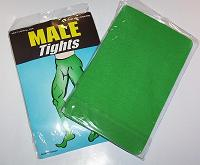
Stealing, as he does, from the rich (powerful movers-and-shakers running the show), and giving to the poor (the rest of us slobs who are supposed to be happy being spoon-fed cud predigested by the former), there is a temptation to brand him a Robin Hood. Although I would SO love to see him in green tights … and little else … that image doesn’t sit well with a whole lotta folks and I’m staying away from it out of a hesitation to stir this pot in that direction.

And speaking of pots … there seems to be a tempest in the one with the leaks, and the reaction to oozing goo is over the top.

Interpol issuing a “red notice” for him, smacks of sour grapes, harassment and a grasp at straws since actually coming up with something he could be arrested for seems beyond the realm:

The red notice does not amount to an arrest warrant. Instead, it asks people to contact the police if they have any information about his whereabouts.

Yes, Sweden wants to “detain him for questioning” on allegations of rape, sexual molestation and unlawful coercion, all denied by Julian, but don’t have enough to issue a warrant for his arrest, while Australia is trying to figure out whether or not he’s broken any laws there.

If Mr Assange were arrested he could face extradition to the United States, although analysts say that because the US Espionage Act carries the maximum death penalty, nations that do not have the statute might refuse extradition.

But that assumes he’s done something to be arrested for AND that the US Espionage Act has anything to do with him.

Smear campaign? Mega-bullying? Cart-before-horse? Guilt-before-innocence? Shut him the fuck up before he releases any more shit?

Sure, some peeps are right pissed off. After all, Wikileaks has given the world a peek up the bowels of power. And how ’bout that French president chasing a rabbit around the office?

The incident is described in one of the 251,287 classified cables the whistle-blowing website Wikileaks says it has obtained and shared with several newspapers.

Gasp!

If that’s not horror enough, how about the revelation that Silvio Berlusconi is considered to be “feckless, vain, and ineffective as a modern European leader.”

OMG!

Russia has mafia issues? Nyet shit …

No doubt there’s embarrassment … and well there should be. Some of these people are disgusting, some are morons … AND they’re in charge of stuff!

Rolling out the big guns, accusations of dire consequence are bouncing all over the place, but are these real concerns … or nothing more than ramping up the ante?

After the release of an enormous haul of US defence department documents in August, Pentagon spokesman Geoff Morrell told the Washington Post: “We have yet to see any harm come to anyone in Afghanistan that we can directly tie to exposure in the Wikileaks documents.”

… After this latest release a Pentagon official, who wished to remain anonymous due to the sensitive nature of the material involved, told the McClatchy newspaper group that even three months later the US military still had no evidence that people had died or been harmed because of information gleaned from Wikileaks documents.

A bit of historical perspective on hysterical reactions to letting people in on what actually happens in the world might help a bit, and who better to pull into the mix than Daniel Ellsberg, the man who gave us the Pentagon Papers back in 1971 and let us know what a fucking mess was happening:

The release of these papers was politically embarrassing to not only those involved in the Johnson and Kennedy administrations but also the incumbent Nixon administration. Nixon’s Oval Office tape from June 14, 1972, shows H. R. Haldeman describing the situation to Nixon:

[then cabinet-member Donald] Rumsfeld was making this point this morning. To the ordinary guy, all this is a bunch of gobbledygook. But out of the gobbledygook comes a very clear thing…. It shows that people do things the president wants to do even though it’s wrong, and the president can be wrong. John Mitchell, Nixon’s Attorney General, almost immediately issued a telegram to the Times ordering that it halt publication. The Times refused, and the government brought suit against it.

Although the Times eventually won the trial before the Supreme Court, an appellate court ordered that the Times temporarily halt further publication. This was the first successful attempt by the federal government to restrain the publication of a major newspaper since the presidency of Abraham Lincoln during the US Civil War. Ellsberg released the Pentagon Papers to 17 other newspapers in rapid succession. The right of the press to publish the papers was upheld in New York Times Co. v. United States.

As a response to the leaks, the Nixon administration began a campaign against further leaks and against Ellsberg personally. Aides Egil Krogh and David Young, under the supervision of John Ehrlichman, created the “White House Plumbers”, which would later lead to the Watergate burglaries.

So … what’s that thing about forgetting history and being doomed? And if I recall correctly, the White House Plumbers ended up in jail for doing shit that really was against the law.

Ellsberg’s take on Julian Assange and the present fracas:

He told the BBC’s World Today programme that US officials made that same argument every time there was a potentially embarrassing leak.

“The best justification they can find for secrecy is that lives are at stake. Actually, lives are at stake as a result of the silences and lies which a lot of these leaks reveal,” he said.

“The same charges were made against the Pentagon Papers and turned out to be quite invalid.”

For sure Julian is, unlike Ellsberg at the time, an unknown quantity and … relevant to ethnocentrics … not American, therefore out of grasp and very likely sub-human and of suspecious intent … all the more reason to tweak Interpol into Red Carding him.

A former UK ambassador to the UN adds an interesting spin:

“I don’t think it has been proven that this is dangerous to US troops, for instance. I haven’t seen that case made very clearly,” he said. “What I think this means is that we need to look at our own mechanisms for democratic accountability and foreign policy. We need to be much, much better.”

In what way is that a bad thing?

And, how about the statement from Max Boot, a senior fellow at the Council on Foreign Relations”

At the very least, they will make governments like Pakistan and Yemen and others, which are collaborating with the US in the battle against terrorism, more reluctant to co-operate.

Huh? Excuse me, but would it be rude to point out that Pakistan and Yemen collaborate with EVERYONE, including terrorists? If it takes Julian Assange to make that point … well … that’s just fucking sad, and scary.

Look … I don’t presume to know much at all about any of this shit other than what I read in the news, and maybe Julian is a total dick out to subvert a wonderful working model of civilization that protects us all without lowly peasants like me and you having to know anything about how that happens. Perhaps global leaders are benevolent heroes diligently striving toward peace and freedom with no hidden agenda and no thought toward personal gain, and exposing foibles … with attribution … should be considered a mortal sin.

Yeah, right. Pull the other one.

No matter. I’d still like to have him try that thing with the green tights, and although it’s raining today the view from my bed is still fab, Jules.

For further reading, check out Andy Borowitz’s take today, this from the BBC on what happens when you piss off the big guys, and this lame move from the Swedes covering their asses.

Read Full Post »
Let us not look back in anger, nor forward in fear, but around in awareness. ~James Thurber

Not that I have a lot of it spare, but I have been thinking about time quite a bit lately — the non-existance of, the travel through, the wastes of.

You reading me often and in various places must have noticed I have a monkey mind … and I’m not talking evolutionary remnants of a brow ridge but the aptly descriptive Buddhist term for one whose brain is: unsettled; restless; capricious; whimsical; fanciful; inconstant; confused; indecisive; uncontrollable. Yeah … that would be what happens under my hair most of the time, illuminated here in an article listing six steps to living in the moment.

“We’re living in a world that contributes in a major way to mental fragmentation, disintegration, distraction, decoherence,” says Buddhist scholar B. Alan Wallace. We’re always doing something, and we allow little time to practice stillness and calm.

When we’re at work, we fantasize about being on vacation; on vacation, we worry about the work piling up on our desks. We dwell on intrusive memories of the past or fret about what may or may not happen in the future. We don’t appreciate the living present because our “monkey minds,” as Buddhists call them, vault from thought to thought like monkeys swinging from tree to tree.

I’m a worrier by nature, a ponderer by profession and with a conscience that rarely has me leaving things to rest, all which have me agitating and ruminating when I should just be experiencing.

Today’s Huff Post puts me in this moment, however, so I pause to consider the ideas in an article called: How Often Are We on Mental Autopilot? You Might Be Surprised.

Although I’m not surprised a study suggests people spend 46.9% of their brain time doing a wander, nor that most don’t consider it a particularly happy path, there is some interesting science in the report.

They discovered that people have two distinct ways of interacting with the world, using two different sets of networks. One network for experiencing your experience involves what is called the “study by Kirk Brown found that people high on a mindfulness scale were more aware of their unconscious processes. Additionally these people had more cognitive control, and a greater ability to shape what they do and what they say, than people lower on the mindfulness scale. If you’re on the jetty in the breeze and you’re someone with a good level or mindfulness, you are more likely to notice that you’re missing a lovely day worrying about tonight’s dinner, and focus your attention onto the warm sun instead. When you make this change in your attention, you change the functioning of your brain, and this can have a long-term impact on how your brain works too.

Living where I do and working from my veranda, I have developed the habit of pulling myself out of my work or my ass or wherever my head might be at any given moment at intervals throughout the day to take some time to gaze upon and appreciate the beauty on offer. Right now, it’s a sapphire sea, the viridescent forest and a few puffy, white clouds navigating their way westward that fill my soul right along with my eyes. Throw in a couple of long-tailed tropic birds and the fruit bats in my jack fruit tree and I’m breathing again in that way I forget to breathe when my mind is full of whatever I’m writing, my heart is heavy with longing for what is no more and my nerves fray with concern over the illusive ‘what’s next’.

Inspired by beautiful music, I once wrote for the description of the video that went along with it:

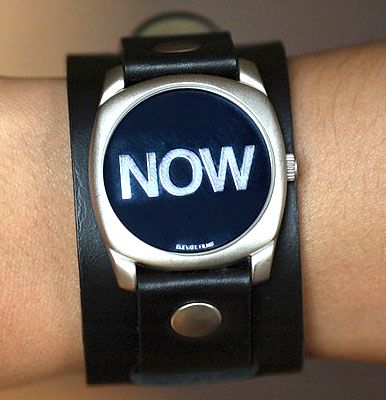
“For me, one of the most precious gifts the universe gives is the Now, and the Now embraced is the Eternal Hug … a gift without conditions of past or future, but only the joy of the moment. And what is life but a series of moments?

The moments bringing those words are now in my past, but I can and do continue to conjure their joys.

It’s remembering to do it that’s the key:

“Mindfulness is a habit, it’s something the more one does, the more likely one is to be in that mode with less and less effort… it’s a skill that can be learned. It’s accessing something we already have. Mindfulness isn’t difficult. What’s difficult is to remember to be mindful.” I love this last statement. Mindfulness isn’t difficult: the hard part is remembering to do it.

Having studied the work of Abraham Maslow way back when, I trust his assessment of moments.

The ability to be in the present moment is a major component of mental wellness.

But life does do its bit to beat that out of a girl, doesn’t it?

I’m not one for wallowing in regrets, and it’s too often the future that robs me of moments; not the desire of it, but the anxiety over having some asteroid of shit fall from this clear blue sky and splatter on my life. It’s an ancestor who provides perspective and a bit of solace on this concern:

The best thing about the future is that it comes only one day at a time. ~Abraham Lincoln

True enough, thankfully, and one day leads to another.

Yep. This moment is now the past and the next is still the future and each letter I type becomes a sentence and sentence is a pretty good description of life.

As for quantum physics and that business about the past, like the future, being indefinite and existing only as a spectrum of possibilities … well, I rather like a poet’s version today:

Forever is composed of nows.
~Emily Dickinson”

Read Full Post »

Before anyone weighs in with comments about how what follows is based on faulty logic, I’ll start the post off with a full disclosure: it makes no sense at all, has ’bout nothing based in science or fact or undisputed info and I don’t even end up agreeing with myself completely.

Okay?

This is simply a morning diversion, since, after all, I love to go a pondering along strangely convoluted tracks before I settle my brain down before the anvil and commence pounding away.

Today’s journey began at this article on sugar addiction.

One study out of France, presented at the 2007 annual meeting of the Society for Neuroscience, showed that when rats (who metabolize sugar much like we do) were given the choice between water sweetened with saccharin and intravenous cocaine, 94 percent chose the saccharin water. When the water was sweetened with sucrose (sugar), the same preference was observed — the rats overwhelmingly chose the sugar water. When the rats were offered larger doses of cocaine, it did not alter their preference for the saccharin or sugar water. Even rats addicted to cocaine, switched to sweetened water when given the choice. In other words, intense sweetness was more rewarding to the brain than cocaine.

But this isn’t about sugar, or cocaine and addresses addictions only peripherally. No, it’s about one of the big questions in life:

Why are all the good things so bad for us? And if they are so bad for us, why are they so good?

(Well … that and some other stuff …)

Those are two different questions, and it’s actually the second that interests me this morning since health professionals have no trouble reeling off reasons sugar, fat, alcohol, tobacco, drugs, casual sex and narcissistic men are bad, and we’ve heard them all; include them in your life at your inevitable peril.

My wander is more about why we’re so deeply attracted to shit we know will kill us, and in my wander I wonder if there’s a reason as primal as our ancestral genetic mandate to collect calories when we can.

Back in the early days of humans, life was a short prospect. Breeding started at puberty when hormone secretions kicked off the process that made sex desirable and babies possible, and anyone managing to live past thirty was considered either a burden or a deity. Feeding the clan took more effort than a stroll to the fridge and people were considered snacks-on-the-hoof by some of the neighbors. Yes, we lived fast, died young and … well … pretty is as pretty does.

Some of that fast living included a predilection for a tipple and a partiality for getting high, so there’s nothing new about our fondness for altered states.

Of course, the ancients didn’t know they were playing with their health.

We do.

We’ve made a slew of changes in the way we spend our time on the planet … we moved out of caves, traded our pelts for Prada and prefer Merlot over mead … so many so that our ability to conceptualize the way our ancestors lived has been greatly influenced by Fred and Wilma. These changes have resulted in extending our lives many decades beyond what would have been even remotely conceivable, but to date we have yet to unload the baggage that is a hankering for some stuff our species has been craving since Day One.

Again with the Why?

I’m guessing here one reason may just be that somewhere under our modern veneer, a place deep in our most primal of being, we actually understand that we will someday be dead.

Yeah, yeah … I know that’s a stretch. After all, we’re constantly getting messages about how if we reduce this and give up that and forego the fun of whatever we can cut the death rate (Funny how often that pops up.), giving some the impression that living forever is an option if rules are assiduously followed and enough sacrifices are made.

Okay … much is actually focused –in intent, if not in words — on dying younger than the average death or on being healthier in old age. Fine. I get that. But until there’s a way to stop the cycle — you’re born, you live, you die — there are only two options available; you die, or you get old.

Back in 1960, Maurice Chevalier summed up his ideas on the options when he said: Old age isn’t so bad when you consider the alternative.

Allow me to point out that Monsieur may now have a better base of comparison.

Actually, there are three options, the third being you live as best you can, and John Mortimer nails that point to the wall:

There is no pleasure worth forgoing just for an extra three years in the geriatric ward.

Could it be that we carry remnants of our Paleolithic selves — those beings we once were who knew for fact that life is short and then you die — that prompt us to go for the gusto?

An aside:

At this moment I have three friends engaged in fights against cancers of various types. All are significantly younger than I am (two in their 30s), none ever smoked, all followed reasonable dietary plans, drank in moderation and did not partake in illegal substances.

Back in the 80s I worked with a group of people who, although bound by certain interests, varied widely in lifestyle. My dear friend Robbie and I were the oldest of the bunch and by far the most debauched. Two of those people, perhaps the cleanest livers amongst us then, have now been dead for a number of years. Robbie and I are still kicking … and debauching.

I’m not afraid of death. It’s the stake one puts up in order to play the game of life. ~Jean Giraudoux, Amphitryon, 1929

Toss those dice … and while you’re up, can you pour me another glass of the white, please?

Read Full Post »

« Newer Posts - Older Posts »